The GE Brief: November 19, 2020
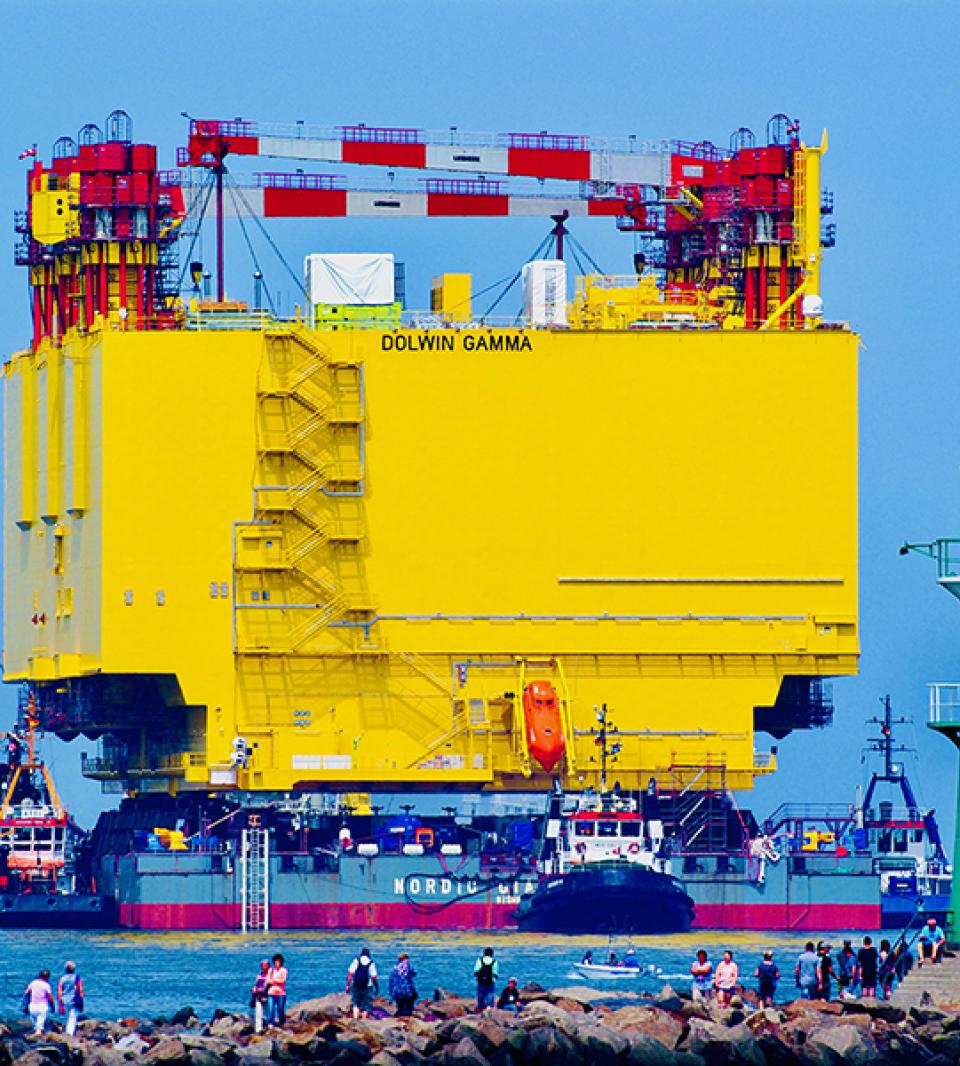



Wind farms are sprouting up off coastlines around the world, and that’s good news for countries with ambitious energy transition plans. Germany, for instance, aims to generate 80% of its power from renewable sources, including wind, by 2050. But catching the breeze is one thing — efficiently transporting it to German homes and businesses is another. A huge yellow structure rising in the North Sea will help: The 900-megawatt converter station known as DolWin3, a towering construction the size of the Arc de Triomphe, is capable of supplying some 1 million German homes with wind power. To do that, the facility changes the alternating current (AC) flowing in from the wind turbines to high-voltage direct current, or HVDC — a powerful energy-transport technology that’s recently gotten some state-of-the-art upgrades from GE Renewable Energy’s Grid Solutions unit.
It’s a shore thing: Built by GE Renewable Energy, the $1.4 billion DolWin3 station was the company’s first project using the latest HVDC conversion technology designed by engineers at Grid Solutions’ HVDC research park in England. Because they can transmit power much more efficiently over long distances compared to AC, HVDC lines have been proliferating around the world, onshore as well as offshore. It’s not the only fancy tech that DolWin3 boasts, though. Due to the frequent periods of stormy weather in the North Sea, the Dutch-German electrical transmission operator TenneT asked GE to design a control system that would enable it to operate the offshore converter station remotely.
Learn more about the converter station here.
Time was, it took four engines to power an aircraft on a long-distance flight — but the GE90 helped change all that. Introduced in the 1990s, the iconic engine allowed large passenger jets to travel with just two engines, lowering fuel and maintenance costs and ushering in a reinvention of the logistics, economy and aesthetics of jet travel. The GE90 reigned as the world’s most powerful aircraft engine until last year — when it was dethroned by another GE machine, the GE9X (See video below). But it’s still racking up achievements: Earlier this year the engine surpassed 100 million flight hours. And this month it marked another milestone, hitting 25 years since it entered service under the wings of the Boeing 777 family of jets.
An engine’s descendants: Record-breaking thrust was just the beginning. The technologies developed for the GE90, including 3D-printed components and fan blades made from tough, lightweight carbon fiber composites, served as a springboard for engines like the GEnx and the GE9X. (There was also the sheer elegance of the flared shape of the fan blade, which helped the engine efficiently capture air — and landed the blade in the collection of New York’s Museum of Modern Art.) Over the last quarter-century, the engines have covered approximately 55.7 billion miles — equivalent to 300 round trips to the sun.
Clearly, this engine is a star. Learn more about it here.
In the wake of World War II, looking for a way to maintain public interest in naval aviation, U.S. Chief of Naval Operations Chester Nimitz conceived of the Blue Angels, the Navy’s flight demonstration team. That group of expert pilots has been wowing audiences with deft combat maneuvers ever since. And while some things don’t change — the Blue Angels still perform eye-popping aerial feats at air shows around the country — some do: Earlier this month, the squadron made their final flight in the McDonnell Douglas F/A-18 Hornet, which the Angels have flown for 34 years. When they return to the skies in April 2021, it’ll be in a shiny new aircraft: Boeing’s F/A-18 E/F Super Hornet. One thing that’s been constant, though? GE engines propelling the Angels into the clouds.
The power of a long partnership: The Blue Angels’ old “legacy” Hornet, as it was called, came with GE’s F404 jet engine, a versatile machine that’s also powered Lockheed Martin’s F-117H Nighthawk and Saab’s JAS 39 Gripen. The new Super Hornets will sport a GE F414 engine, and will be the third Blue Angels aircraft operating with GE thrust: Prior to the retiring legacy Hornets, the Blue Angels operated the J79-powered F-4J Phantom II from 1969 to 1974. “The F414-powered Super Hornets folks see in action during Blue Angels shows next spring will make for a spectacular show, and we’re excited to continue being the propulsion behind this special team,” said Scott Snyder, director of GE’s F404/F414 U.S. Navy program.
The first Blue Angels show with the new planes will be in Florida in April. Learn more here.
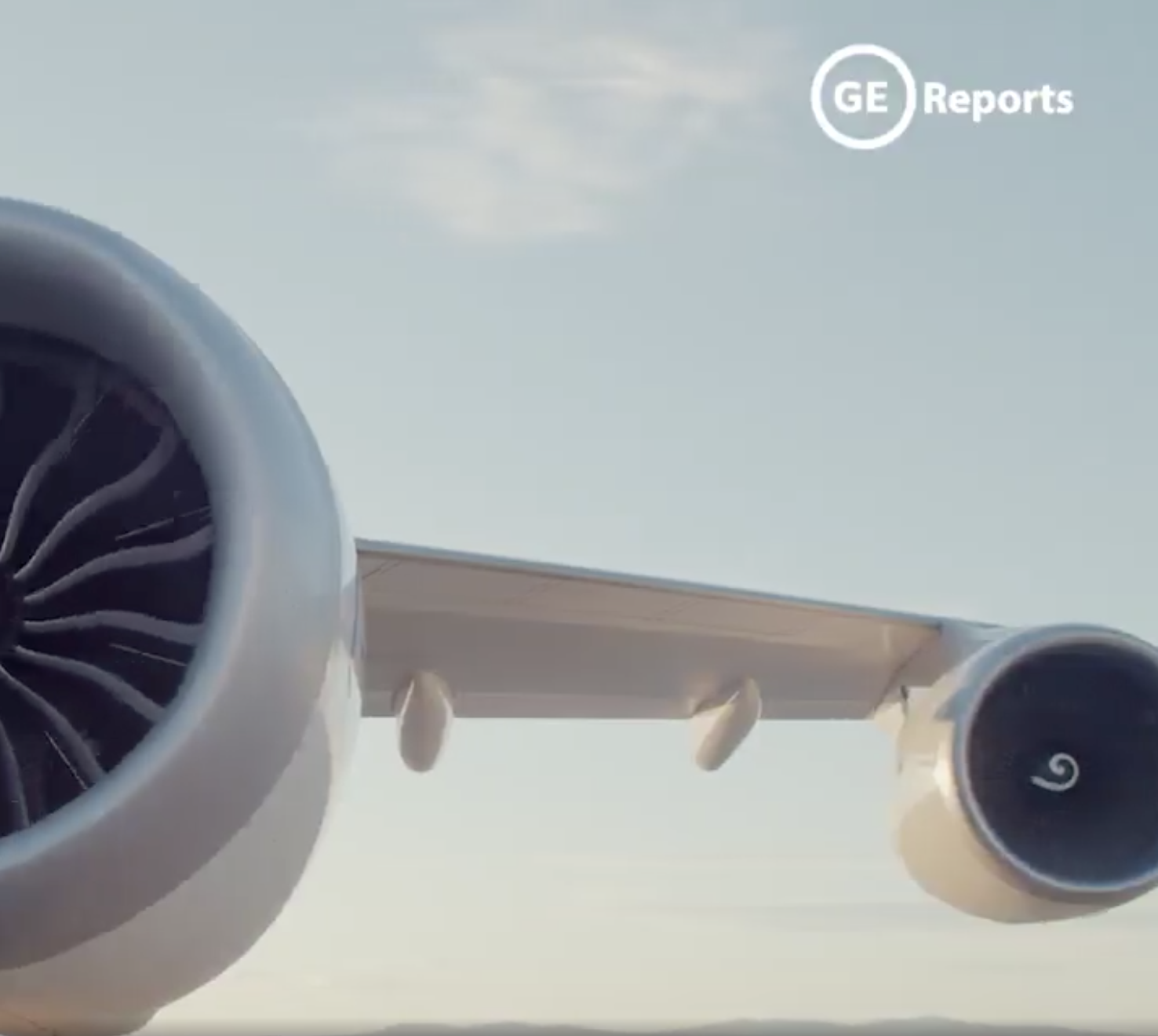
The world’s most powerful commercial jet engine is one step closer to passenger flight on the Boeing 777X.
— QUOTE OF THE DAY —
“It all started with this engine. It has exceeded all expectations and become the envy of the industry.”
— Jim Elliott, principal engineer at GE
Quote: GE Reports. Images: GE Renewable Energy, GE Aviation, Tom Lodge.