The GE Brief: November 13, 2020



ONE SMART APP
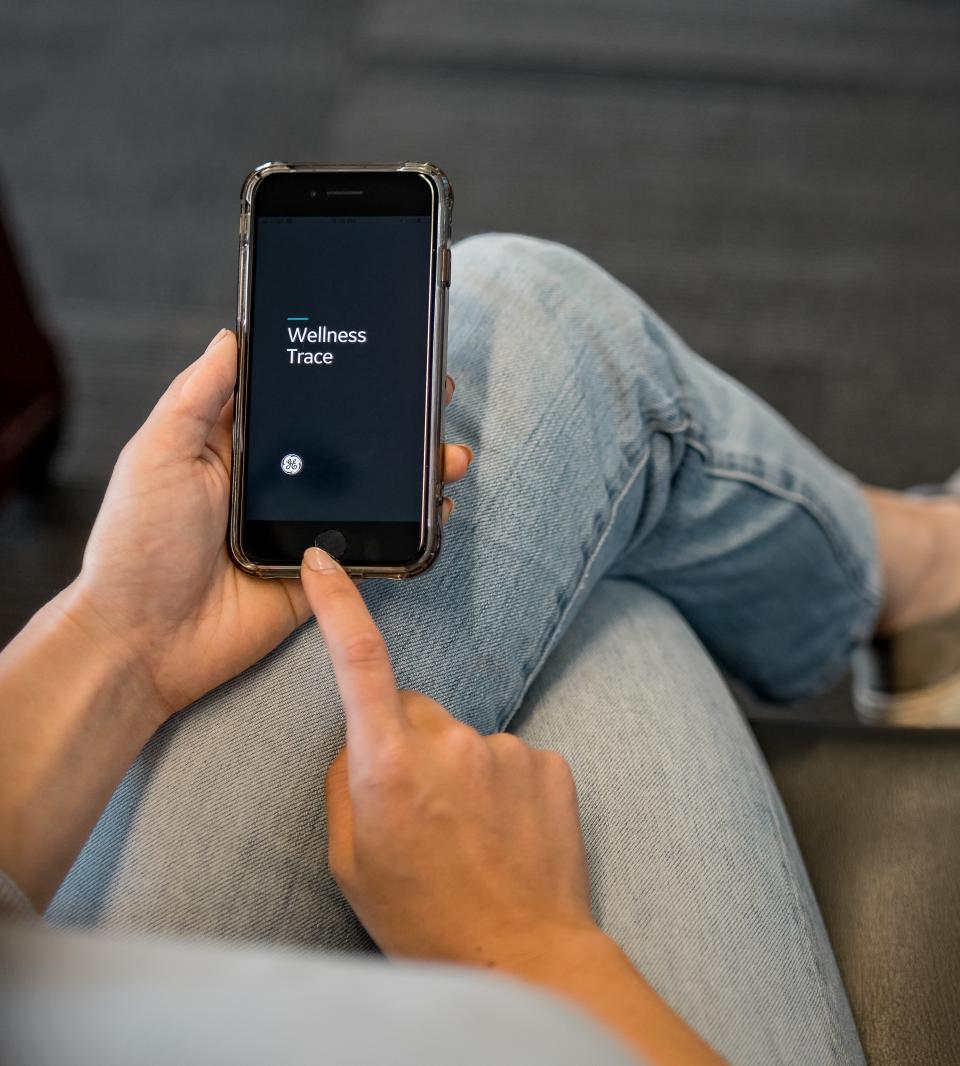
Flyers passing through the Albany International Airport may notice a new, albeit subtle, addition: stickers attached next to the bathroom entry door, check-in kiosks, even Starbucks counters. They may not look like much, but they could have a part to play as the aviation industry seeks to reassure passengers who might be uneasy about flying in the COVID-19 era: The stickers are affixed with QR codes that anyone can scan with a smartphone, then learn the last time that bathroom was cleaned, or when that check-in counter was sanitized. GE Aviation developed the app, which is called Wellness Trace, through a partnership with TE-FOOD, a company that uses the blockchain to track the food-supply chain, and the laboratory testing company Eurofins.
Pros and concourses: “After 9/11, the industry set up the Transportation Security Administration, introduced PreCheck, and fortified cabin doors — big things you could see,” says Andrew Coleman, senior vice president and chief digital officer at GE Digital. “Today, improvements aren’t so physical, because we’re fighting something you can’t see.” Coleman says Wellness Trace can give passengers “digital eyes” throughout their journeys. The Wellness Trace pilot program is the first step in turning the Albany airport into a “digital incubator” of sorts. It will explore a battery of cutting-edge technologies, including artificial intelligence and machine learning, with the aim of improving safety and transparency.
Find out more about the digital initiative here.
A TURNING POINT
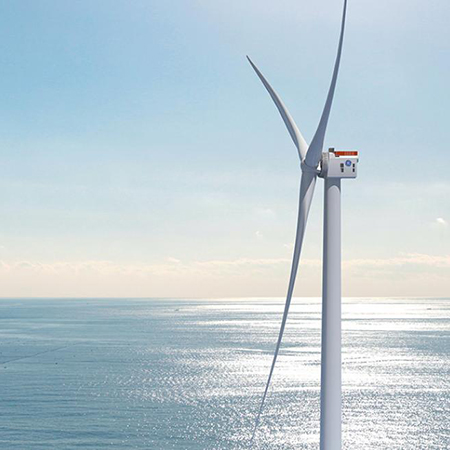
A little over a year ago, the Haliade-X offshore wind turbine set an important record when a working prototype of the machine, located at the Port of Rotterdam, produced 288 megawatt-hours of energy in just 24 hours — enough to power 30,000 households in that area. But that was not quite enough for the Haliade-X, which just outdid itself: In October, the machine produced 312 megawatt-hours of energy in a 24-hour period. That’s not the only big news the Haliade-X is making these days: This week it received its full “type certificate” from the independent certification body DNV GL, affirming that the Haliade-X will operate safely, reliably and according to design specifications.
Good to go: “This is a key milestone for us as it gives our customers the ability to obtain financing when purchasing the Haliade-X,” said Vincent Schellings, who leads development of the turbine for GE Renewable Energy. The first deal for the Haliade-X, the most powerful offshore wind turbine in operation today, was already in the news: In September, GE Renewable Energy signed a contract to deliver 190 of the mighty machines to Dogger Bank A and Dogger Bank B, the first two phases of what will be the world’s largest offshore wind farm, located in the North Sea some 130 kilometers off England’s Yorkshire coast. Scheduled for completion in 2026, Dogger Bank is projected to be capable of generating 3.6 gigawatts of electrical power — enough to supply 4.5 million U.K. households.
Read more here about the powerful potential of the Haliade-X.
BLADES OF GLORY
Some of the most striking features of the Haliade-X wind turbine are its blades — gracefully shaped components that stretch 107 meters from end to end. Longer than a football field, the Haliade-X blade might be one of the single biggest machine components ever built. As the turbine made its way toward certification, the blade had to undergo rigorous testing to obtain its own, separate stamp of approval, which also came this week, courtesy of the certifying body TÜV Nord. Manufactured in France by GE Renewable Energy subsidiary LM Wind Power, the blades were tested in facilities in Blyth, England, and Boston.
Special delivery: The huge blade is the result of an equally large engineering and management undertaking. “It was more than just the engineering of the product,” said Vincent Schellings, who leads development of the Haliade-X. “It was really also the engineering of the whole supply chain.” The capacious French factory in which they’re built is located in the old port city of Cherbourg, the better to move the blades onto boats and send them off. In Blyth and Boston, they underwent punishing fatigue tests that simulated conditions they would face in more than 25 years of service at sea — but not before a few further accommodations were made. As lead engineer for blade test systems Cornelis van Beveren said, “Even in the largest test centers at ORE Catapult (the testing facility in Blyth) the blade tip had to be cut off to enable the test facility door to close.”
Learn more about the fascinating turbine parts — and the significance of their certification — here.
— QUOTE OF THE DAY —
“I knew that we needed to make a very considerable investment to come up with a technology that not only differentiated GE in the marketplace, but was helpful to the overall offshore wind industry, could reduce the cost of electricity and could make it a sustainable industry for years to come.”
— John Lavelle, CEO of Offshore Wind for GE Renewable Energy
Quote: GE Reports. Images: GE Aviation, GE Renewable Energy.