

FAIRFIELD, Conn. --- Today the GE Foundation announced a USD$20MM commitment to advance maternal and child health in Africa, through the extension of programs that address Millennium Development Goals (MDGs) 4 and 5. The commitment supports developing countries in implementing simple and sustainable solutions for maternal health and child survival rates, and strengthening regional health systems.
sustainability
GE’s 2021 Sustainability Report Outlines How It Is Building A World That Works For Tomorrow
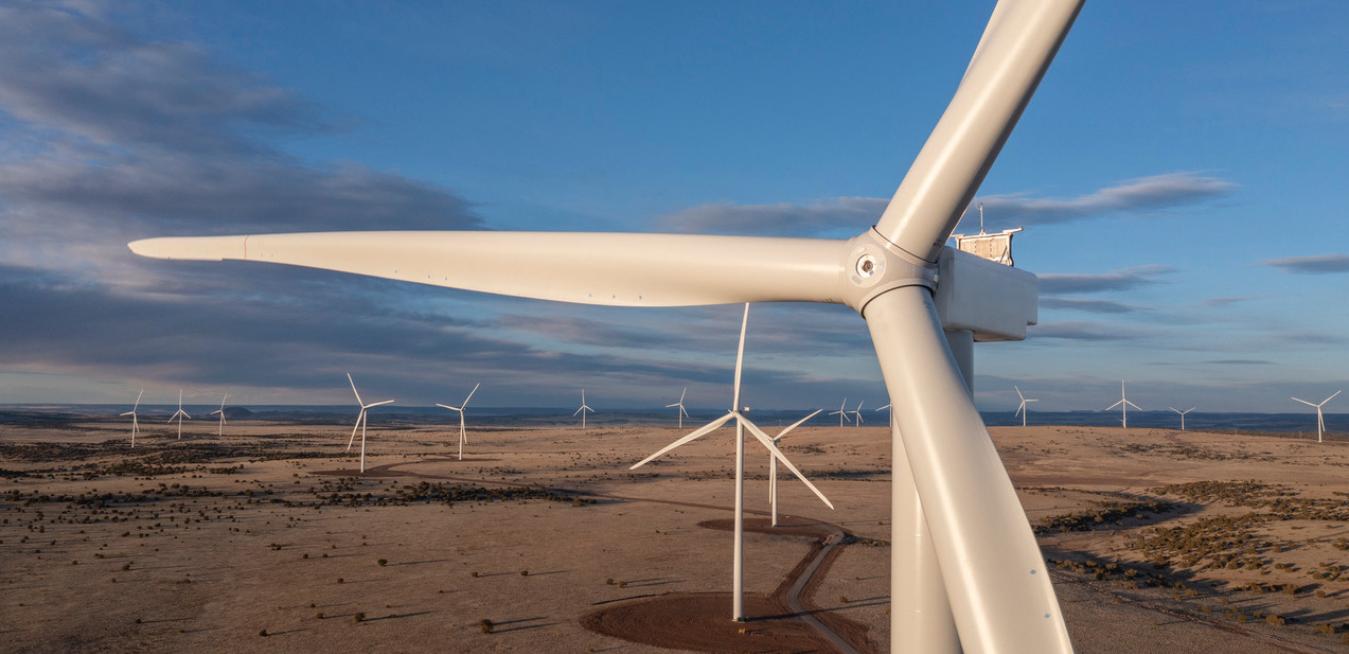
Last week, when President Joe Biden spoke at the launch of the new Federal-State Offshore Wind Partnership — set up to speed the growth of the offshore wind industry in the United States — he highlighted the Haliade-X, a powerful turbine developed by GE Renewable Energy to serve customers around the world.
Research breakthrough will vastly improve color and crispness of images on LED devices
NISKAYUNA, NY, July, 24, 2014 -- GE announced today a research breakthrough that will vastly improve the color and crispness of images displayed on LED devices -- everything from cell phones and tablets to televisions. Scientists at GE Lighting and GE Global Research developed a phosphor powder that, when packaged inside an LED, push the picture quality of LED electronics to new heights.
business unit
tags
GE Healthcare Receives FDA clearance of Discovery* NM 630, a SPECT system designed to enable low patient dose, short exam times and streamlined workflow without compromising image quality
San Antonio, Texas-- June 4, 2011---GE Healthcare is offering a new fully upgradeable SPECT technology that allows patient dose as low as 50 percent of those of standard nuclear medicine scanning protocols†, or the potential for patients to spend significantly less time on the table during exams†, all without compromising image quality.
business unit
tags
World Water Day Calling Attention to the Global Issue of Clean Water Scarcity
TREVOSE, Pa.--Wednesday, March 17, 2010-- According to the United Nations Development Program, more than 1 billion people, or about one in six worldwide, do not have safe drinking water and more than 2 billion lack access to adequate sanitation. If current water usage trends continue, by the year 2025 two-thirds of the world's population won't have enough clean water.