The GE Brief: December 8, 2020



INVENTION NEVER STOPS
Coming up with a world-changing invention is no mean feat. But it’s also not the last word — rather, it’s one milestone in a much longer process of refining that invention, bringing it to market, then constantly improving upon its production so that its impact can be felt as widely as possible. “As a culture, we celebrate the inventor and the bright, shiny object,” business website Bloomberg notes by way of introducing a new series, Building Momentum, which is sponsored by GE. “But the real heroes of American business are the scientists, engineers and front-line employees who make the product perform just a little bit better, year after year. Success lies in being adept at realizing incremental gains that add value.” That’s as true at GE as anywhere else.
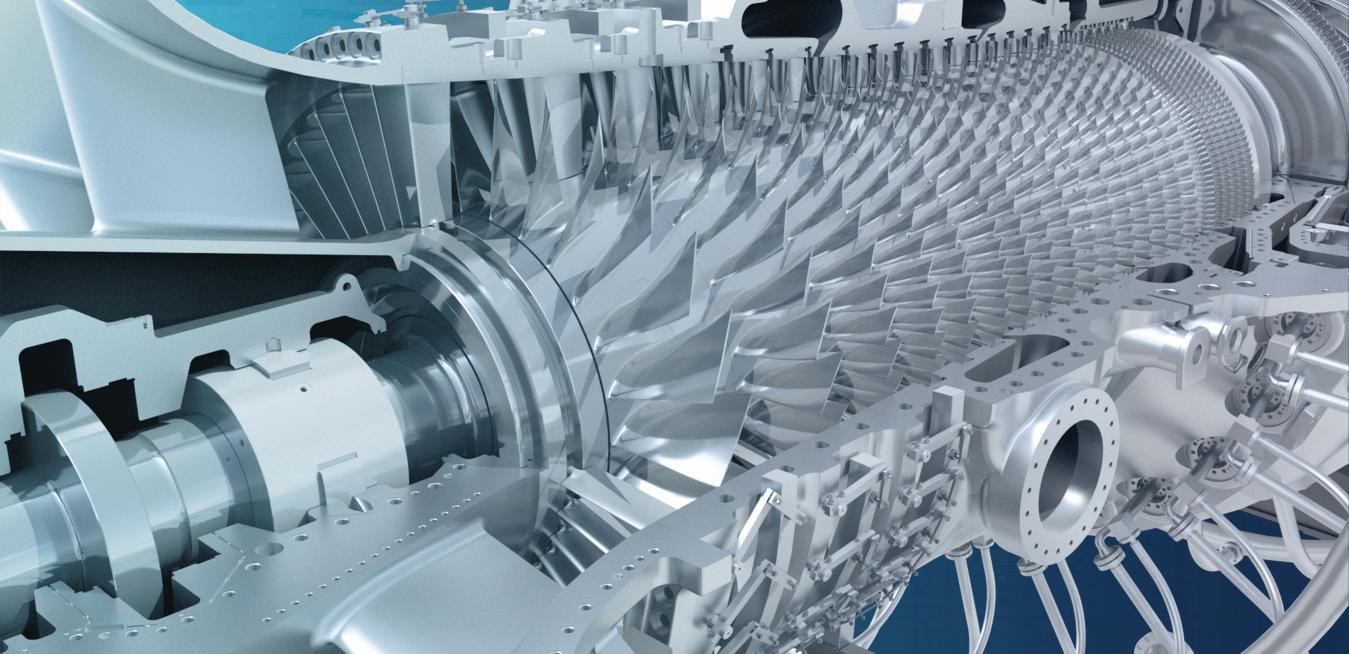
Shining a light: The first business to be featured in the series is GE Gas Power, whose CEO, Scott Strazik, explains that more gas power is one of the fastest ways to cut emissions. Wind and solar are crucial renewable sources, but they’re not available all the time — like when the sun sets or the wind dies down. Homes and businesses still need electricity after dark, though, and the grid still needs to maintain its delicate balance of supply and demand. That’s where GE Gas Power’s turbines come in: They can ramp up quickly to meet the demand. The company’s expertise comes into play too: “GE’s more than 125 years of experience across nearly all facets of the global power industry leads us to believe that gas power, together with renewables, will be part of the solution — today and in the future,” Strazik said.
About that future: Innovation is also a reason why GE Gas Power has recently signed an agreement to help Germany-based Uniper — one of the world’s largest utilities — achieve carbon neutrality in its European power business by 2035. To get to that goal, Uniper is looking toward hydrogen, which emits no CO2, as long as it is produced the right way. “We need cleaner gas, which means we are betting heavily on hydrogen,” said Andreas Schierenbeck, Uniper’s CEO. “If gas wants to survive in a carbon-free world, it has to find the way to be more climate-friendly. Substituting hydrogen for natural gas provides that solution.”
As part of Building Momentum, Bloomberg also explained how GE Healthcare has nimbly adapted to the demands of the coronavirus pandemic; future installments in the series will look at aviation and renewable energy. Find the entire series here.

AIR COVER
“It’s been kind of a crazy year,” Kevin Hopf admits. Hopf is the chief pilot for the aerial-firefighting company 10 Tanker — whose services have been in high demand in 2020, as forest fires have ravaged the West Coast. 10 Tanker is based in New Mexico, but Hopf and his crew have spent a lot of their time in California, which has borne a particularly heavy brunt. (There are still active fires there this week.) Some of the planes in their fleet might look a little familiar: They’re DC-10 airliners, which were originally designed as passenger jets. Powered by GE’s CF6 engines, these planes have been retrofitted with large belly tanks and can drop up to 9,400 gallons of flame retardant in one go. Once reports of a fire come in, Hopf and his colleagues fill up the tank — with three hoses, that process takes about 12 minutes — and fly straight for it.
Fighting fire with flyers: Earlier this fall, Hopf and a couple of colleagues from 10 Tanker walked GE Reports through a typical day on the job — though no day is entirely typical. The firefighting DC-10s have a crew of three, in constant communication with an incident commander, a lead airplane, and an overhead aircraft with a wide-angle view of the fire. The specific circumstances of firefighting are certainly unusual — flying at low altitude in a large jet heavy with flame retardant. But Hopf said he keeps in mind that “the airplane does not have any idea what is below it. It doesn’t know we’re in steep canyons. It handles like a sports car and that gives us the ability to get into places that you would think a big, sluggish airliner wouldn’t be able to get into or out of.”
Learn more here about a day in the life of a firefighting pilot.
COOLEST THINGS ON EARTH ?
1. Speed Reading
New software developed by researchers at Johns Hopkins University could “revolutionize how DNA is sequenced.”
2. Unfolding A Mystery
Protein folding is one of the biggest mysteries of biology and solving it could change how scientists understand and treat disease. Artificial intelligence may have just cracked the code.
3. Parts and Labor
Scientists in South Korea and the United Kingdom grew miniature lung parts in the lab to gain insight into how SARS-CoV-2 infection takes hold.
Read more here about this week’s Coolest Things on Earth.
— QUOTE OF THE DAY —
“Because electricity supply and demand must always be in balance, there needs to be a dispatchable source of power available for cloudy, windless days. Gas plants can come online quickly and can easily adjust power output levels to balance supply and demand as needed — throughout the day, over the course of a week or month and seasonally.”
— Scott Strazik, CEO of GE Gas Power
Quote: GE Reports. Images: GE Power, 10 Tanker.