The GE Brief: December 22, 2020


SEA POWER
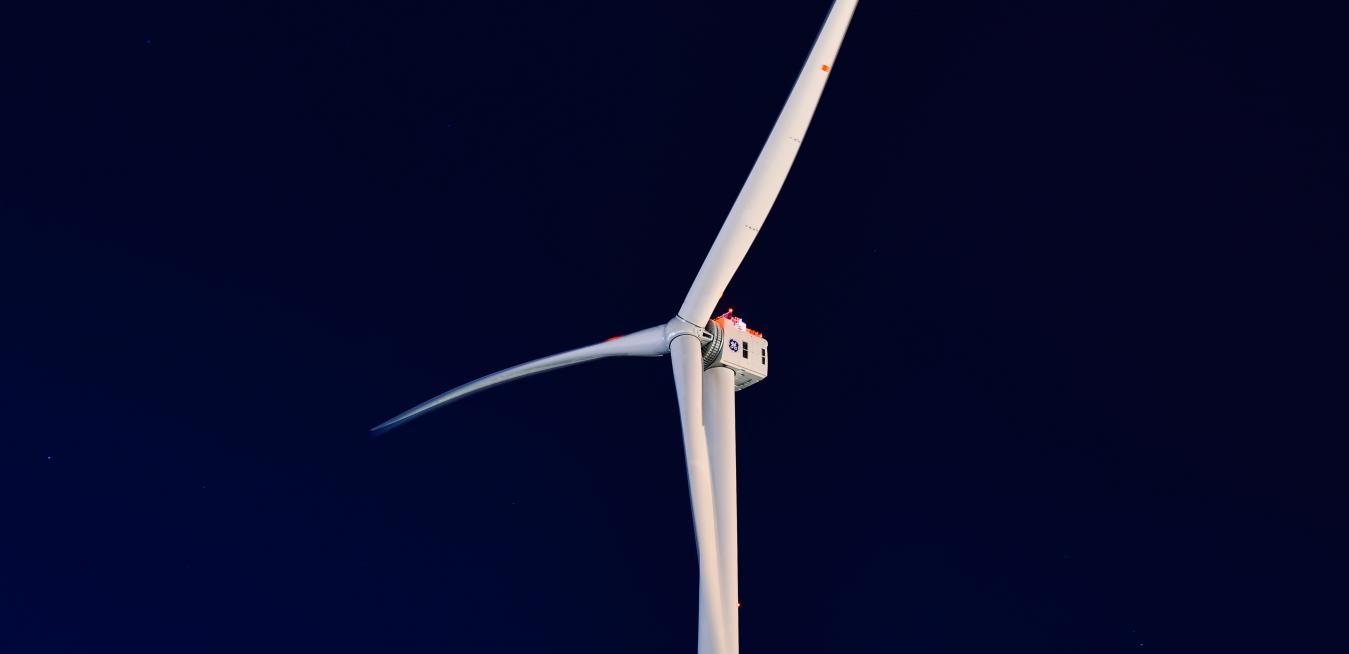
The Haliade-X offshore wind turbine was designed to evolve with the market, and evolve it has. The initial model produced 12 megawatts — and even at that level, a single rotation of the machine’s blades could generate enough power for one U.K. household for two days. But when engineers tested a Haliade-X prototype, they found it could be optimized to produce 13 MW. Now an even more powerful version will be rated at 14 MW — and it’s that machine that’s just been selected for Dogger Bank C, the third phase of the U.K.’s Dogger Bank wind farm. (At its 13-MW rating, the Haliade-X had previously been selected for the first two phases of the project.) When it’s completed in 2026, Dogger Bank is set to be the largest offshore wind installation in the world.
Leading the way: “This unique project will both continue to build on the U.K.'s leadership in offshore wind and serve as a showcase for innovative technology that is helping to provide cleaner, renewable energy,” said John Lavelle, president and CEO of Offshore Wind at GE Renewable Energy. But the U.K. is not the only nation transforming its energy sector and using more wind power. (Just last Friday, wind generated 40% of British electricity, a new record.) The Haliade-X was also recently selected to power Vineyard Wind, an 800-MW farm off the coast of Massachusetts.
Learn more here.
LIFE SAVERS
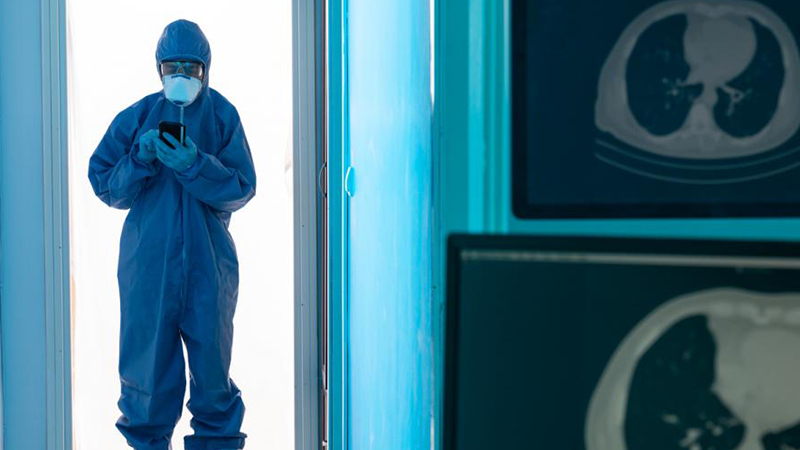
In 2020, as COVID-19 spread around the world, Pawel Kazior’s job took on greater urgency. A former radiologist, Kazior now works for GE Healthcare in Poland and trains hospital technicians who use computed tomography scanners. During the pandemic, doctors have turned to CT scanners to quickly image the lungs of patients, searching for the telltale white areas that are a common sign of the disease. GE Healthcare also rolled out a “CT-in-a-box,” a modular scanner that could help hospitals expand their capacity. Still, nothing could have been as urgent as the situation Kazior found himself in at a hospital 100 miles east of Warsaw, when a patient set to begin a scan suddenly went into cardiac arrest.
No time to panic: “It’s a situation where you don’t think too much,” said Kazior, who was training a new technologist in the hospital at the same time. “Sometimes such things happen, and you have to be prepared. You don’t panic and you do your job.” Everyone in the room did their job — Kazior joined members of the hospital staff in administering CPR until an anesthesiologist arrived to perform an intubation — and the patient stabilized. A later scan of his lungs showed signs of severe disease. Kazior returned home and went into isolation after his exposure. Eventually he received a negative COVID-19 test, allowing him to get back to work. When Kazior called a couple weeks later to check on the status of the patient, he learned that the man was alive, though in critical condition.
Read more here.
COOLEST THINGS ON EARTH ?
1. Air Hydrogen
The European planemaker Airbus expects a patent application to be published this month for hydrogen “pods” that could serve as a zero-emissions propulsion system for large commercial aircraft.
2. It’s Elementary
A team of researchers in the U.S. created a new catalyst for the efficient splitting of water molecules into oxygen and hydrogen, marking a possible breakthrough in the pursuit of clean energy.
3. Seeing The Connections
A new study from researchers in Japan has yielded the “most complete annotated resource” yet of the proteins that make up our neural synapses, paving the way for a better understanding of the causes of diseases like Alzheimer’s, Parkinson’s and more.
Read more here about this week’s Coolest Things on Earth.
— QUOTE OF THE DAY —
“I cannot remember any philosophical thoughts about it. It’s like you are in a shop and your neighbor falls down and is dying. You stop thinking and try to do something to rescue him.”
— Pawel Kazior, CT application specialist at GE Healthcare
Quote: GE Reports. Images: GE Renewable Energy, Getty Images.