×

GE.com has been updated to serve our three go-forward companies.

Please visit these standalone sites for more information

GE Aerospace | GE Vernova | GE HealthCare 

header-image
Innovation

5 Coolest Things On Earth This Week

Tomas Kellner
March 03, 2016
This week’s discoveries include a 3D-printed version of “frozen smoke” that could lead to invisibility cloaks, a mummy with a colon cancer gene mutation suggesting that colorectal cancer may not be solely a product of the modern lifestyle and fungus that may be the very first ancestor of all life on land.
 

A 3D-Printed Invisibility Cloak?
header-image
Innovation

5 Coolest Things On Earth This Week

Tomas Kellner
February 18, 2016
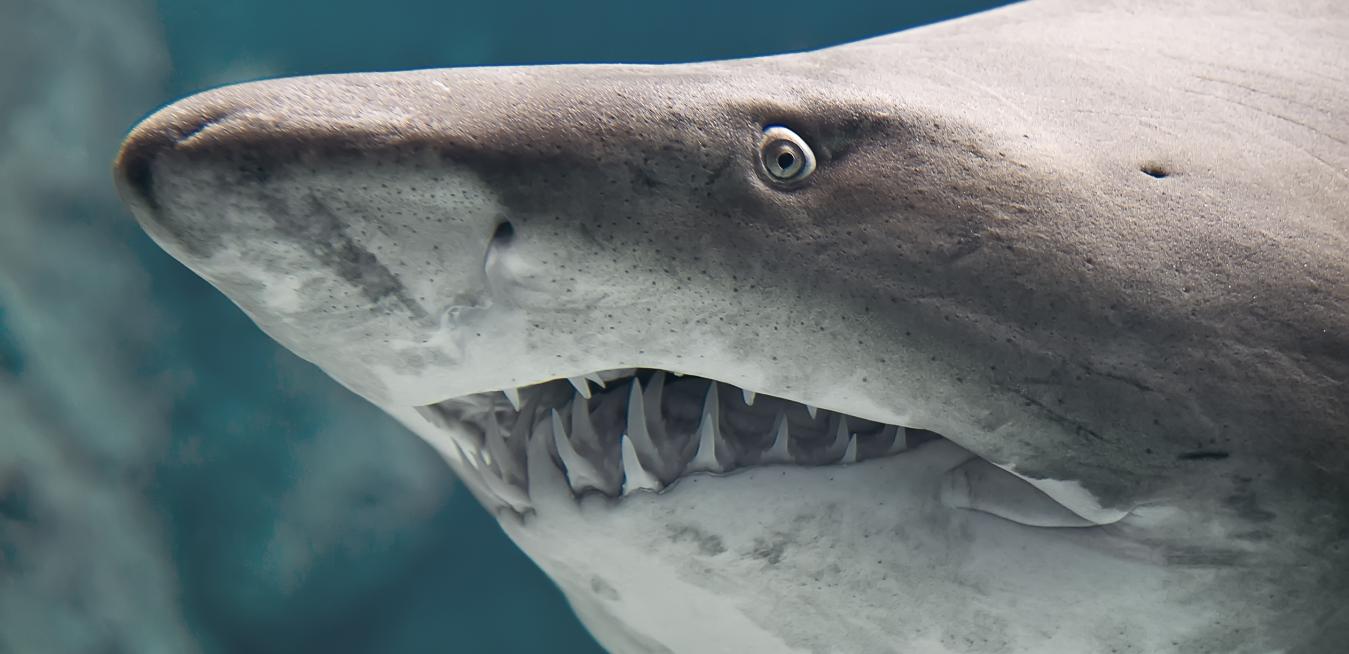
This week, we’ve learned how scientists are gathering insights from sharks on regenerating human teeth, using cotton candy machines to spin out artificial tissue and teaching a man to wiggle prosthetic fingers solely with the power of his thoughts. Take a look.


Running Will Shrink Your Gut And Grow Your Brain
header-image
Innovation

5 Coolest Things On Earth This Week

Tomas Kellner
February 11, 2016
A number of people, including reportedly Red Sox left fielder Ted Williams, have had their corpses frozen in the hope that they can be revived in the future. This process, called cryopreservation, presents many challenges, chief among them keeping the delicate structure of the brain intact. But that may be changing. Our haul this week includes that story, plus tales of the world’s fastest data line, gravity waves and more.
A Homerun For Ted Williams?
header-image
brain-research

Exploring the Brain’s Potential — Interview with Jon Sigurdsson of Össur
Jon Sigurdsson President And Ceo Of Ossur
January 12, 2016
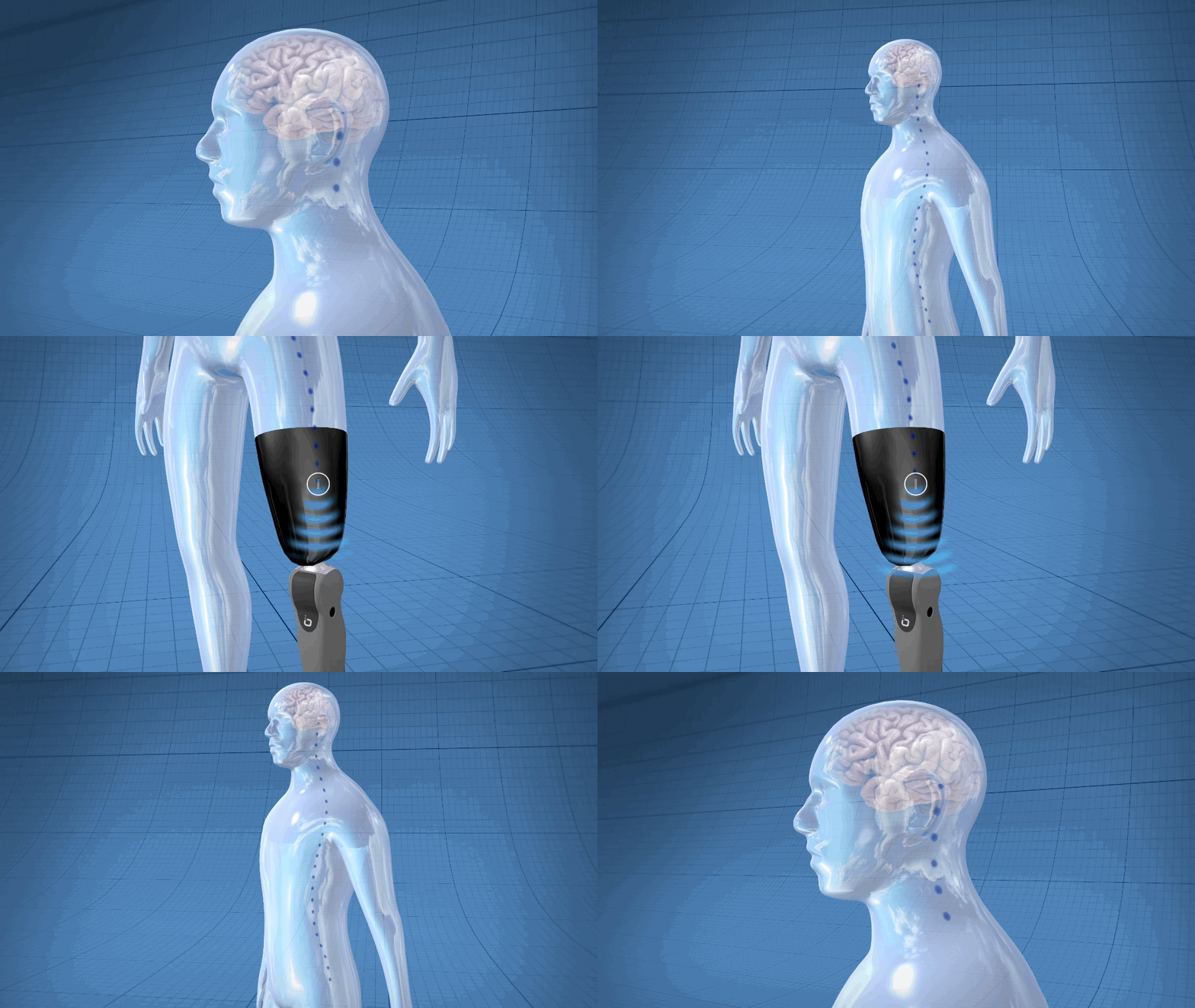
Having created the first mind-controlled Bionic prosthetic leg, the head of Icelandic firm Össur discusses the promise — and challenges — of brain research.One of the most exciting frontiers of exploration in science isn’t some faraway galaxy — it’s in our heads.
header-image
Brain

Strong Safety: Innovative Materials Could Reduce Football Brain Injuries
December 10, 2015
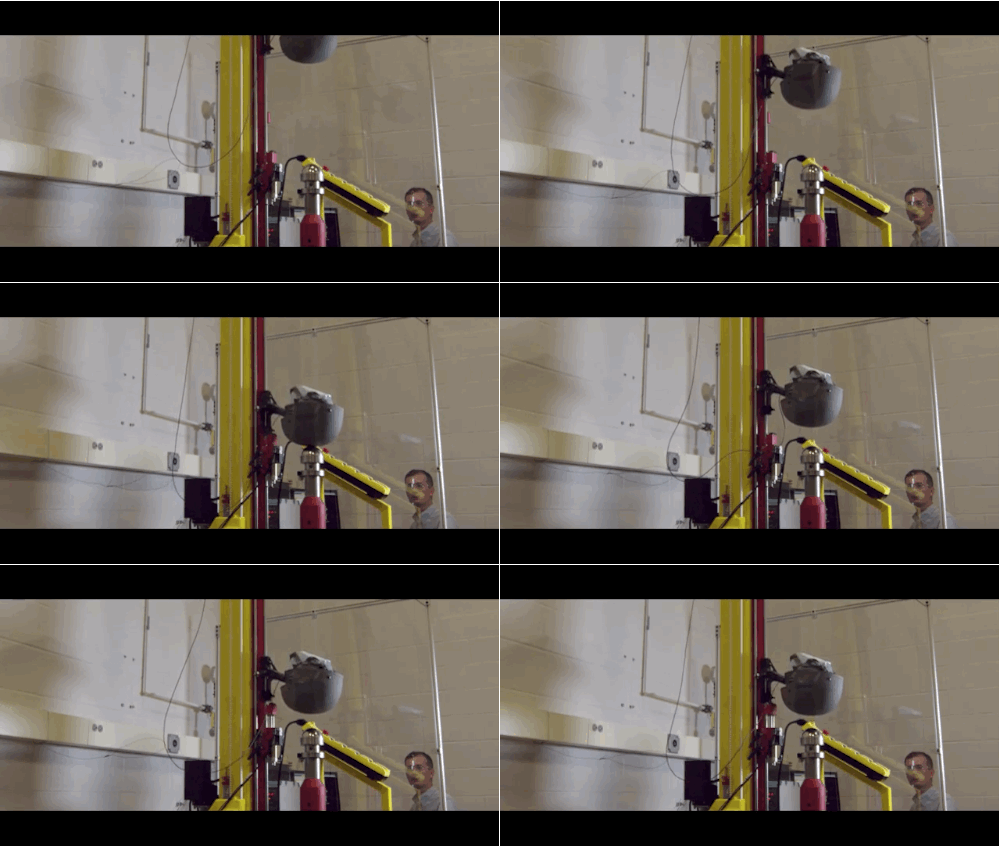
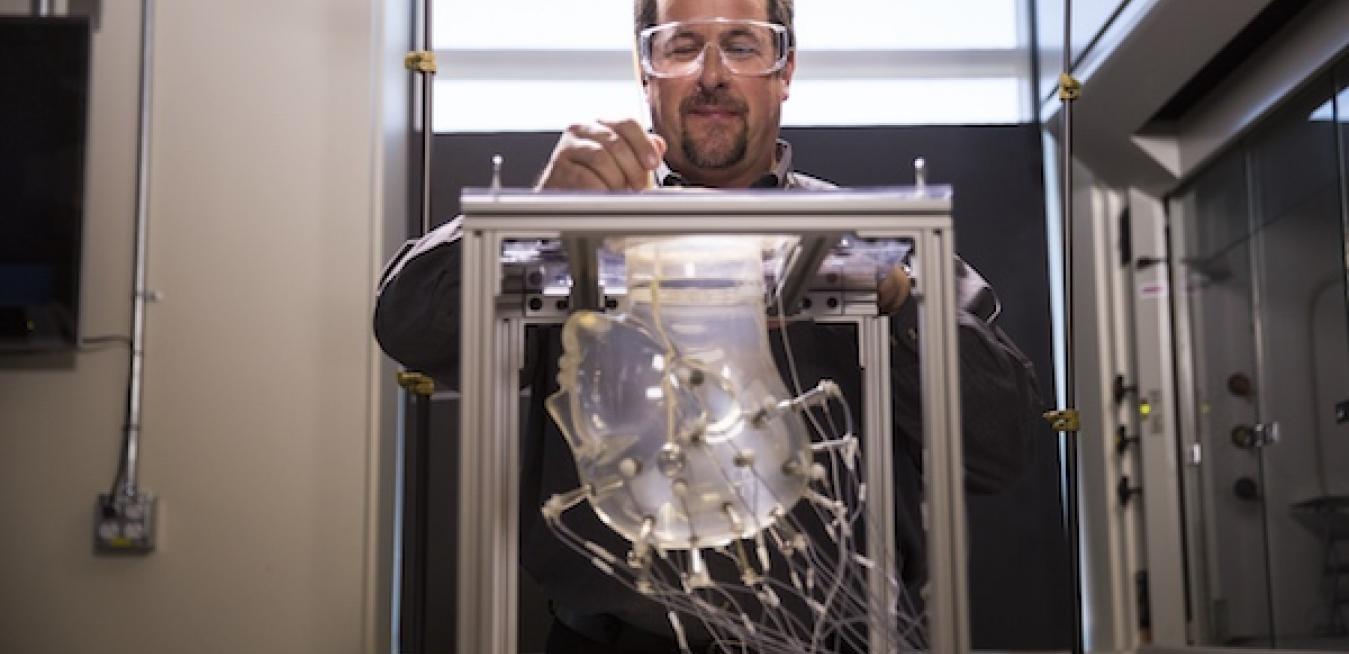
Making football safer may not only be about the equipment players wear; it could have just as much to do with the turf under their cleats. This systemic approach to improving safety in football was highlighted last week when GE, the National Football League and Under Armour announced the three final winners of Head Health Challenge II. In an open competition, the University of Washington, Viconic Sporting and the Army Research Laboratory bested four other finalists to find innovative approaches for preventing brain injury and tracking head impacts in real time.
header-image

It’s Personal: How a Premature Birth Spurred Jeffrey Ashe to Map the Brain

November 15, 2015
Jeffrey Ashe is building tiny brain implants, which could one day improve the lives of people suffering from Alzheimer’s and Parkinson’s. This groundbreaking work was inspired by one of the worst periods of his life.
In 1997, Ashe spent 10 weeks sitting in the pediatric intensive care unit with his son Andrew, who was born weighing just 2 pounds 3 ounces. As he sat and worried, buzzers and alarms went off every few minutes, further fraying his nerves.
header-image
Breakthrough

Steve Gullans: To Be Human Is To Adapt

Steve Gullans Managing Director Excel Venture Management
November 12, 2015

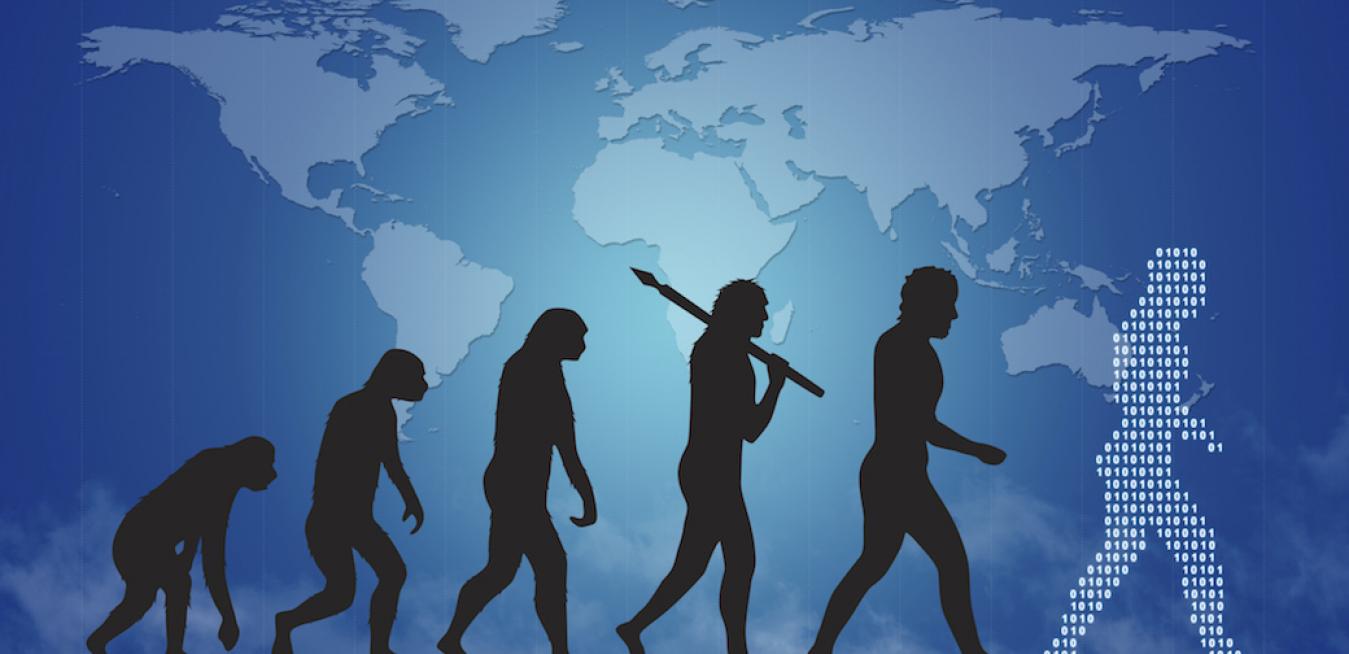
The pace of innovation may be accelerating, but our ability to adapt to the latest technologies remains undeterred.


Technology is not an obstacle to humanity. Humans evolve — behaviorally, physically, morally, biologically.

Over many millennia, humans migrated around the globe adapting to changing climates, predators, foods, pathogens, rival tribes and countless obstacles and opportunities. To be human is to adapt.
header-image

Mind-Controlled Robots Take Directions from Tiny Brain Implants

May 06, 2015
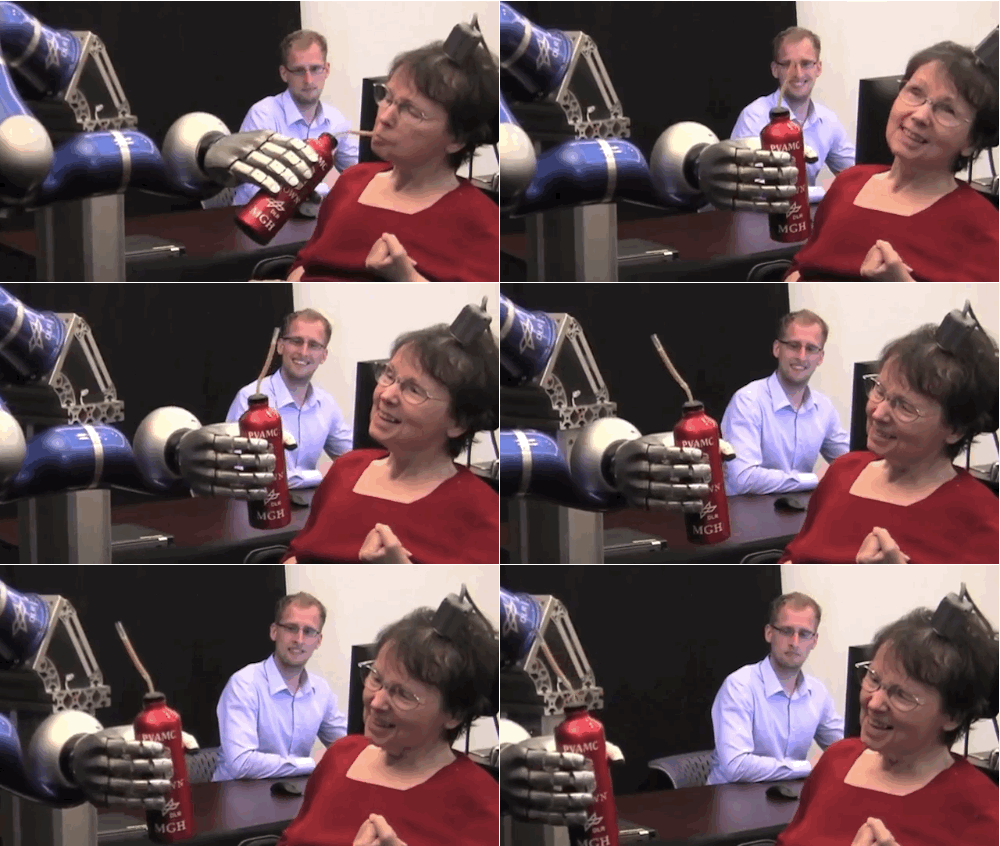
In 1997, Cathy Hutchinson suffered a brainstem stroke that left her paralyzed from the neck down. But in 2011, she was able to pick up a Thermos filled with coffee, bring it to her mouth and drink from it again.
Hutchinson, who was 58 at the time, didn’t regain control over her hands. She did it by moving a robotic arm with her thoughts.
header-image

Magnetic Brain Stimulation for Treating Depression Attracts GE Investment
April 27, 2015
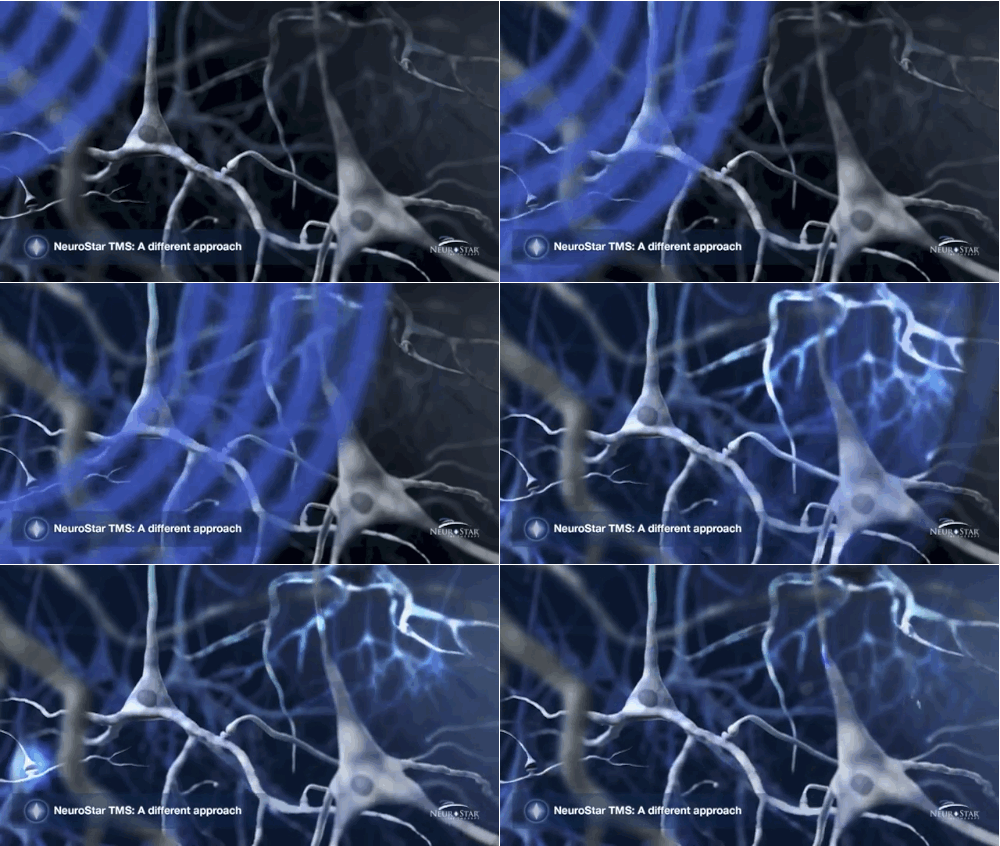
There are millions of Americans who battle depression every year and many of them fail to respond to pills and other standard treatments or suffer from side effects. “This group of patients often lives in agony, but we thought there must be another way to treat depression,” says Dr. Mark Demitrack, chief medical officer of Neuronetics. “What if you could stimulate the brain from the outside, without drugs, and make it heal?”
header-image

The Emerging Multibillion Dollar Cybernetic Brain Revolution

January 29, 2015

Where does the human end and the machine begin? In the era of neuroprosthetics, tiny electronic devices embedded in the body that stimulate the brain and other parts of the nervous system to improve their function, this question may soon get harder to answer.

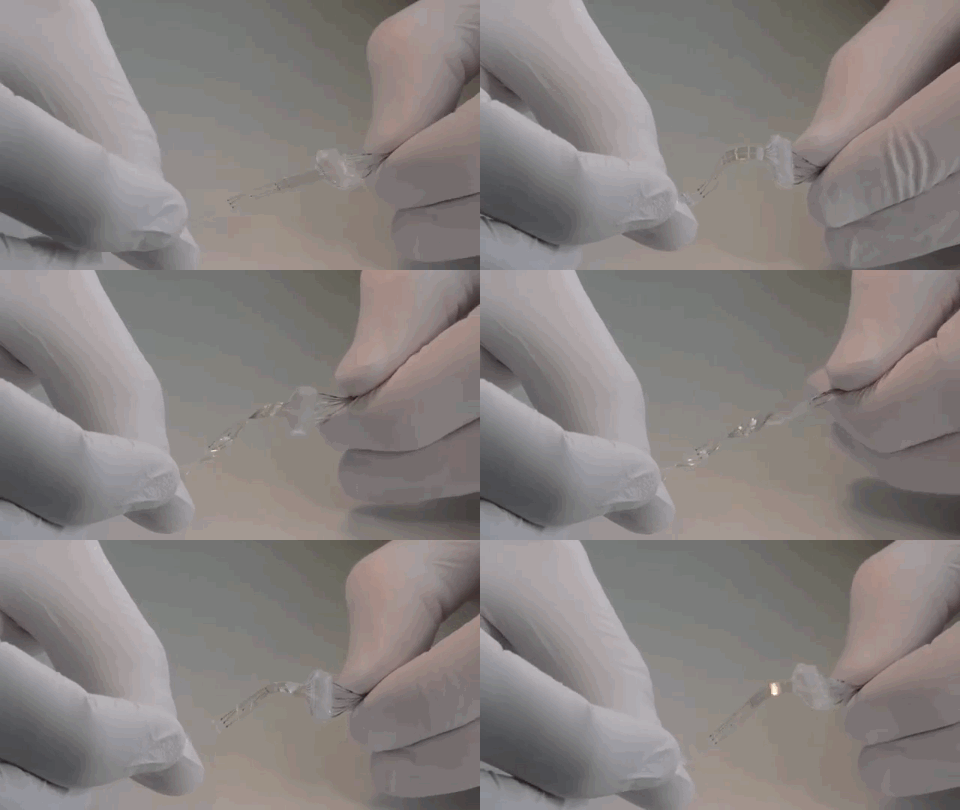
Last week, for example, researchers at the Federal Institute of Technology in Lausanne, Switzerland, introduced a flexible neural implant that delivers electric and chemical pokes directly to the nervous system. In early trials, it allowed paralyzed rats to walk again with fewer side effects than other treatments.

Subscribe to Brain