Towers of power coming to Crookwell



At last, Prell can see the wind at the end of the tunnel. Global Power Generation Australia’s 91MW Crookwell 2 project began construction in June, and several of the project’s 28 turbines will soon rise up on his farm, Gundowringa, and two neighbouring properties.
When generation commences from Crookwell 2 around September 2018, the 130-metre rotors of a total 28 GE 3.4MW turbines will produce enough electricity to power 41,600 Canberra homes.
In 2016, Crookwell 2 won the last ACT reverse auction and is one of two wind farms that will produce the final required tranches of renewable energy to meet the ACT government’s commitment to derive 100 per cent of the territory’s power from renewable sources by 2020, and by the same year to reduce greenhouse emissions by 40% from 1990 levels.
The ACT government has calculated that $125 million of benefits will flow to ACT and the region from Crookwell 2. The project will “directly support 80 construction jobs and 14 ongoing operational jobs in the local region,” says Geoff Culbert, president and CEO of GE Australia, New Zealand and Papua New Guinea.
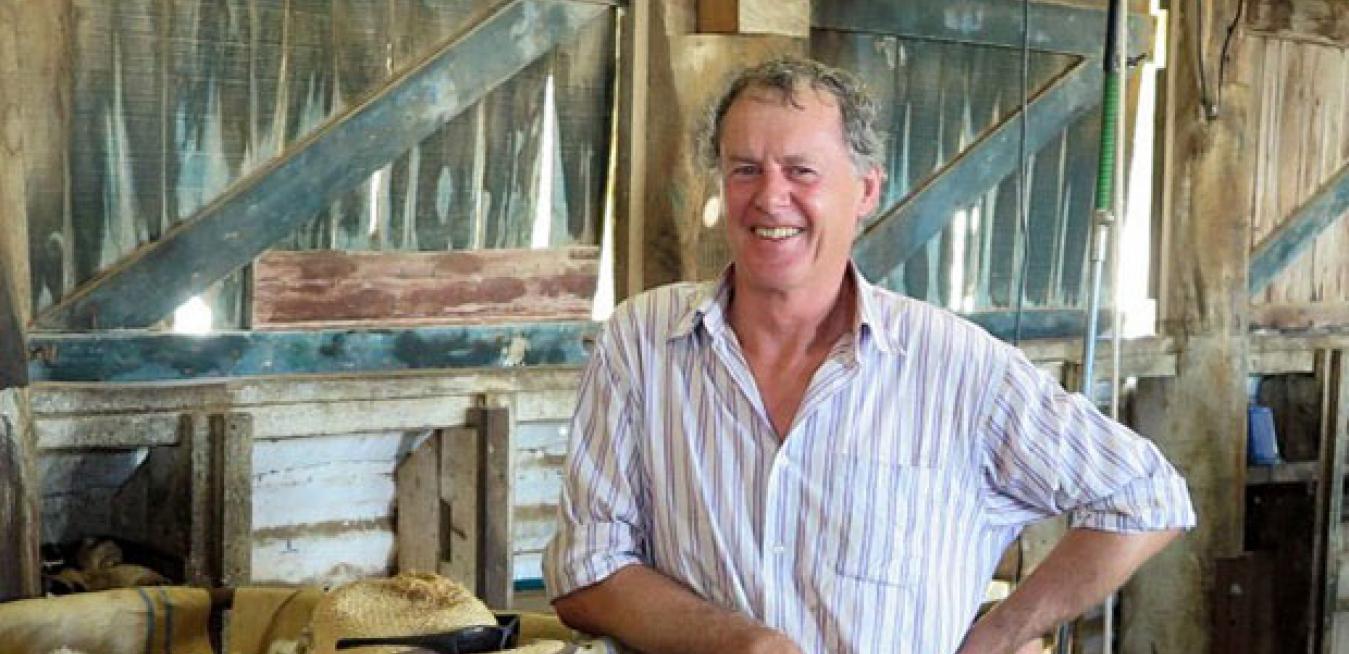
Charlie Prell, who joined Wind Alliance Australia about three years ago, says the passive income stream from hosting the turbines is “a game-changer” for him as a farmer. He’s also excited that Crookwell 2 will have financial benefits for neighbouring properties beyond the host farms.
“This project started as a traditional ‘hosts get the money’ concept,” says Prell. He’s been lobbying hard for a development model that includes neighbouring properties, and believes Crookwell 2 is a first for NSW, though it’s a common approach in the US and Europe, and projects in Victoria have adopted it, too. “The company, Global Power Generation Australia, has worked really hard to negotiate very generous neighbour agreements, with 20 or something neighbours of our wind farm.”
Prell also lauds Crookwell 2’s community enhancement fund, which will receive $2,500 per turbine annually, CPI-indexed for 25 years. A locally elected committee controls the fund, which will go towards LandCare operations, supporting the CWA, building new facilities such as swimming pools and other much-needed infrastructure upgrades and community endeavours.
“It’s really exciting,” says Prell, “and it’s also breaking down the paradigm that land is devalued by wind farms … that argument’s gone out the back door!”
On Gundowringa, and other family farms around Australia, says Prell, the hosting income affords “the opportunity to run the farm much more sustainably … it gives you the financial flexibility to change your stocking rate, to spell pastures, to manage water courses much more sustainably and environmentally because you’ve got the passive income stream and you’re not totally reliant on the income from the stock, which is totally related to the weather conditions and the pasture conditions.”
He’s seeing the weather extremes emanating from climate change up close on his farm, so being a part of renewable energy is “a no-brainer” for Prell. “We’re experiencing it right now, not in 20 years time,” he says. “We’ve had a really hot, dry summer, immediately following one of the wettest winters we’ve had for 50 or 60 years. Instead of having reasonably stable seasonal variations, the fluctuations in the weather are just extraordinary.”
Charlie Prell says wind farms are “transferring wealth from large, centralised generators to distributed renewable generators, including farmers. So, wow, I reckon that’s a fantastic solution … as an Australian, as a food producer and as a person. At the same time, we’re saving the planet.”