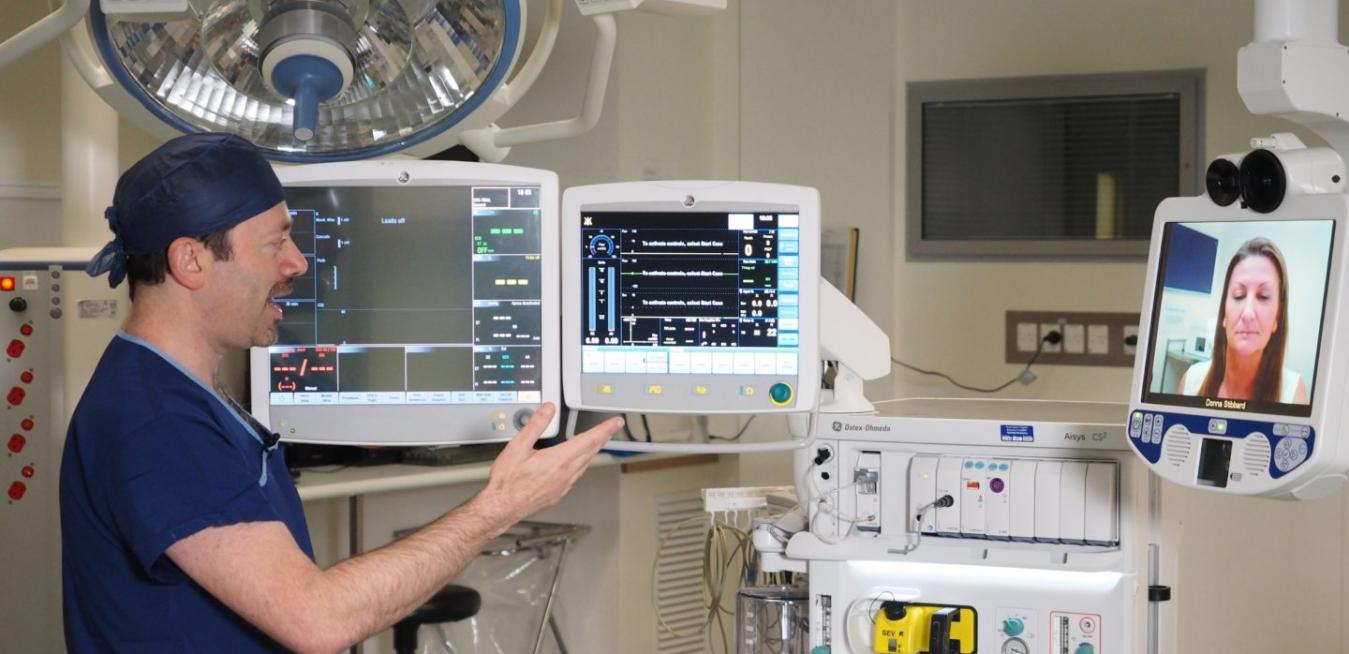
What’s up, Doc? The robot that keeps doctors in the know



In addition to his anaesthetists’ roster, Totonidis oversees care of the hospital’s anaesthetic equipment and runs training of doctors and nurses in his field. Last year, he took part in a groundbreaking trial that used a robot to help train medical staff in the operation of sophisticated life-support and imaging equipment.
The virtual onsite training (VOT) system he tested at Royal Hobart Hospital was so successful it’s already going viral.
“One of the greatest challenges for healthcare systems around the world is how to provide ongoing support and training to staff in the use of sophisticated and vital medical equipment,” says Donna Stibbard, education leader for GE Healthcare in Australia and New Zealand.
She’s referring to difficulties in capturing all involved staff at the one time for scheduled training; in any medical-care facility one or several simultaneous emergencies can drain a class of attendees in seconds.
Even staff who receive comprehensive training in the use of advanced equipment need refresher courses in features and capabilities they may not use every day. And new staff arrive, even as trained staff press the exit button.
So maintaining life-saving skills in the use of healthcare machinery is a constant priority for departments that are constantly responding to life-threatening situations.
What can a robot do?
GE Healthcare has a global goal to reach more than 2 million health professionals with training on its machinery by 2020. And as part of a commitment to provide ongoing easily accessible education to working medical staff, it decided to trial a VOT system to supplement its in-person training, at a few hospitals around the world.
The delivery mechanism is a Wi-Fi-enabled robot developed by InTouch, which is operated remotely by the trainer. This means the robot can be used in any room, theatre or laboratory where Wi-Fi is consistent—taking training right into the care environment, rather than in a training or lecture room.
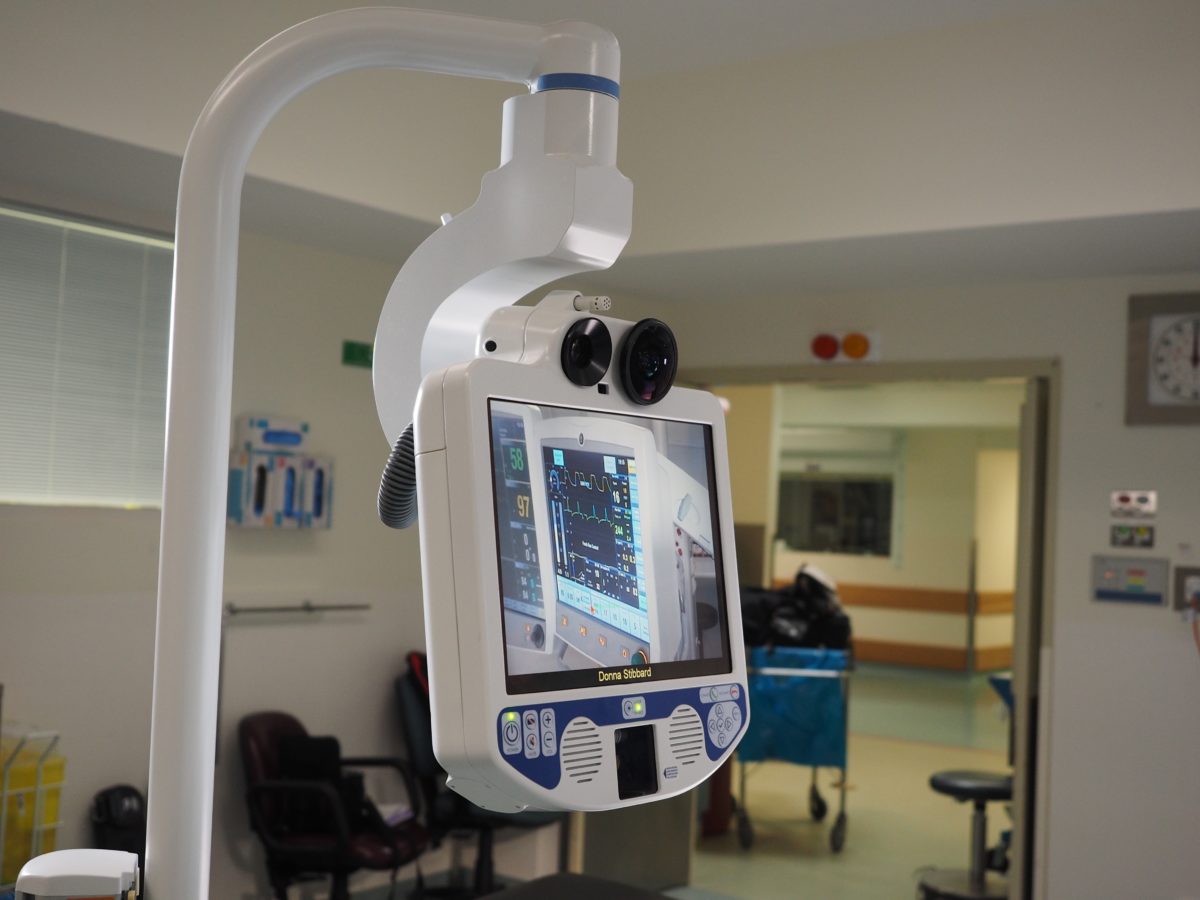 The virtual onsite training robot focuses in on the screen of the anaesthetic machine in the operating theatre of Tasmania's Royal Hobart Hospital. Photo: Natalie Filatoff
It also means the trainer can be anywhere in the world, delivering expertise to remote, or just distant, sites, from their laptop at any time of day. Suddenly, different time zones become an asset in catching shift workers during working hours while allowing trainers to work sensible hours.
The ‘face’ of the robot—aka a mobile telepresence device—is a screen that can show the face of the trainer, or what the trainer can see in the room. The robot's camera allows the trainer to zoom in on the smallest detail of machinery at the remote site. The screen can also project other training materials such as diagrams, videos or PowerPoint slides. And the ’bot is also equipped with a laser beam that the trainer can use to draw attention to aspects of equipment in the room.
The trainer can turn the robot’s screen visage—through 360° if required—to directly address people in the room, and ‘see’ everything around it. “It’s an incredible piece of technology,” says Stibbard.
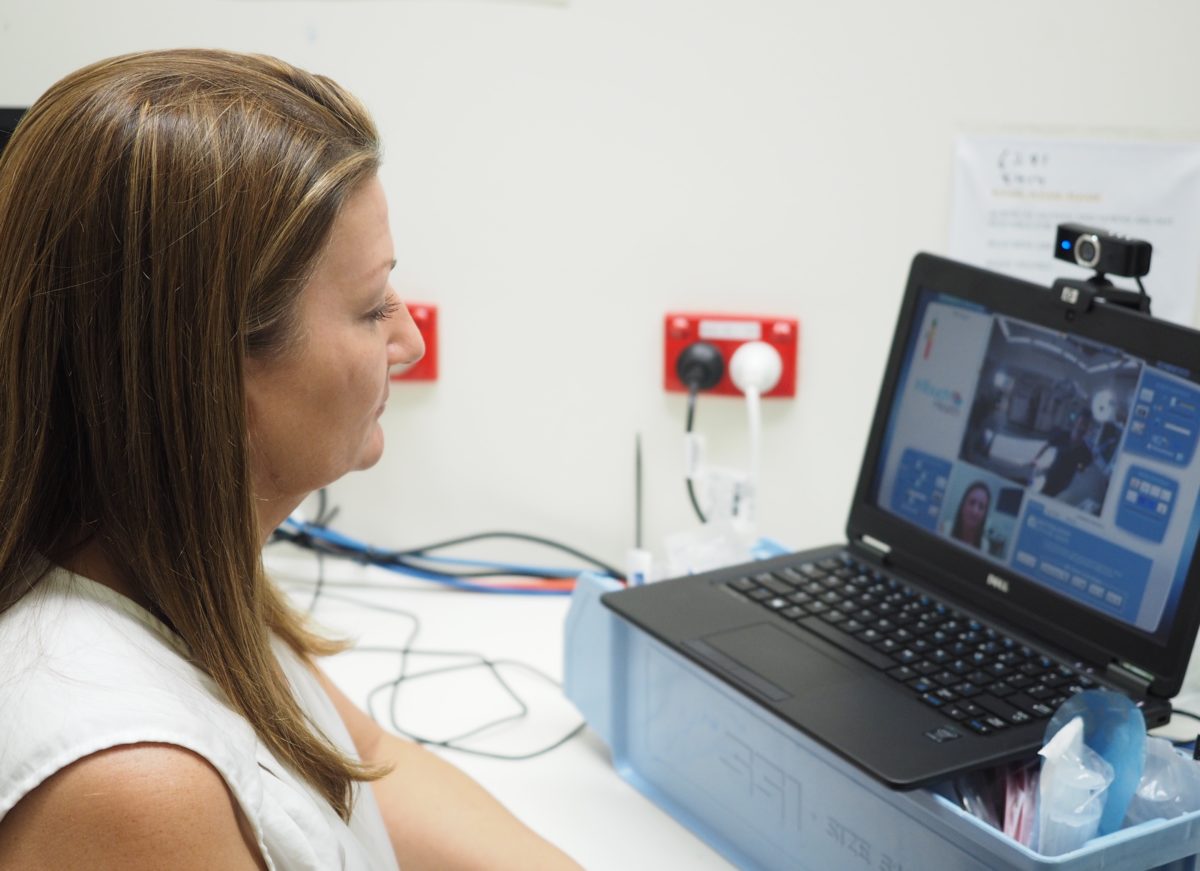 Donna Stibbard, GE Healthcare's education leader for Australia and New Zealand, delivers virtual onsite training remotely from her laptop to the operating theatre of Tasmania's Royal Hobart Hospital. Photo: Natalie Filatoff
“When they said they were looking for pilot sites, I was jumping up and down madly to get it for Australia because of the remoteness of a lot of our healthcare facilities,” she says. She easily identified Royal Hobart as the ideal test bed.
Totonidis explains the hospital’s circumstance: “We’re on an island, on the bottom of a bigger island, at the bottom of the world. We serve 500,000 people in the state. We look after the most complex patients. We have all the high-tech, advanced equipment that they have in every other major teaching hospital in Australia, and yet we’re geographically isolated from support services.”
Stibbard’s deal-clinching advantage in securing the world-first pilot opportunity was agility in being able to implement the trial and the training.
Her clinical experience in hospital operating theatres and delivery of training in the use of GE’s anaesthetic technology, and her long history of supporting Royal Hobart in its mission to provide the highest level of care, allowed her to place the robot, and quickly adapt her training style to remote teaching. “We had that edge to rapidly activate the trial. We were ready to go,” says Stibbard.
During the five months of the trial, around 60 doctors and nurses received short courses—20 to 30 minutes at a time—in the capabilities and use of anaesthetic and patient-monitoring machines in day surgery and the operating theatre, and with CT and ultrasound machines in the radiology department.
“We’re always looking to innovate and be involved. That’s part of a teaching hospital’s job—to see what’s new out there and give it a go.” Dr Savas Totonidis, Royal Hobart Hospital
The trial was structured to discover the trainees’ level of satisfaction with the training, how many people from which departments using which machines could be trained, and the effectiveness of VOT. The findings, gathered by surveying doctors and nurses post training, were both measurable and anecdotal, and overwhelmingly positive.
“The consensus was that if we had the expert here, that would be better,” says Totonidis, “but as an extra, supplementary, way to teach people it’s great. It works better with smaller groups of 5 to 10 people.”
He adds that on first experience, the robot-delivered VOT “is a bit disconcerting—it’s like something out of Minority Report, but once you get used to interacting with the person on the screen, and to having them manipulate the robot and swing it around, it’s fine.”
That Royal Hobart has retained the robot and is now paying for GE’s training service is confirmation of satisfaction. So too are subsequently designed surveys that require trainees to rate their knowledge before and after training. “We’ve had a 68% improvement of staff self-assessment of their knowledge of the equipment,” says Stibbard.
“Now we can book training for whenever suits us best,” says Totonidis— “Nurses especially are getting a lot of great education from it that they might not usually get in such a timely way. We often have nurses who are just starting on a three- or six-month rotation.”
It can be hard, he explains, to organise in-person courses that fit in with their shifts and their time at the hospital. The VOT service makes that easy to organise.
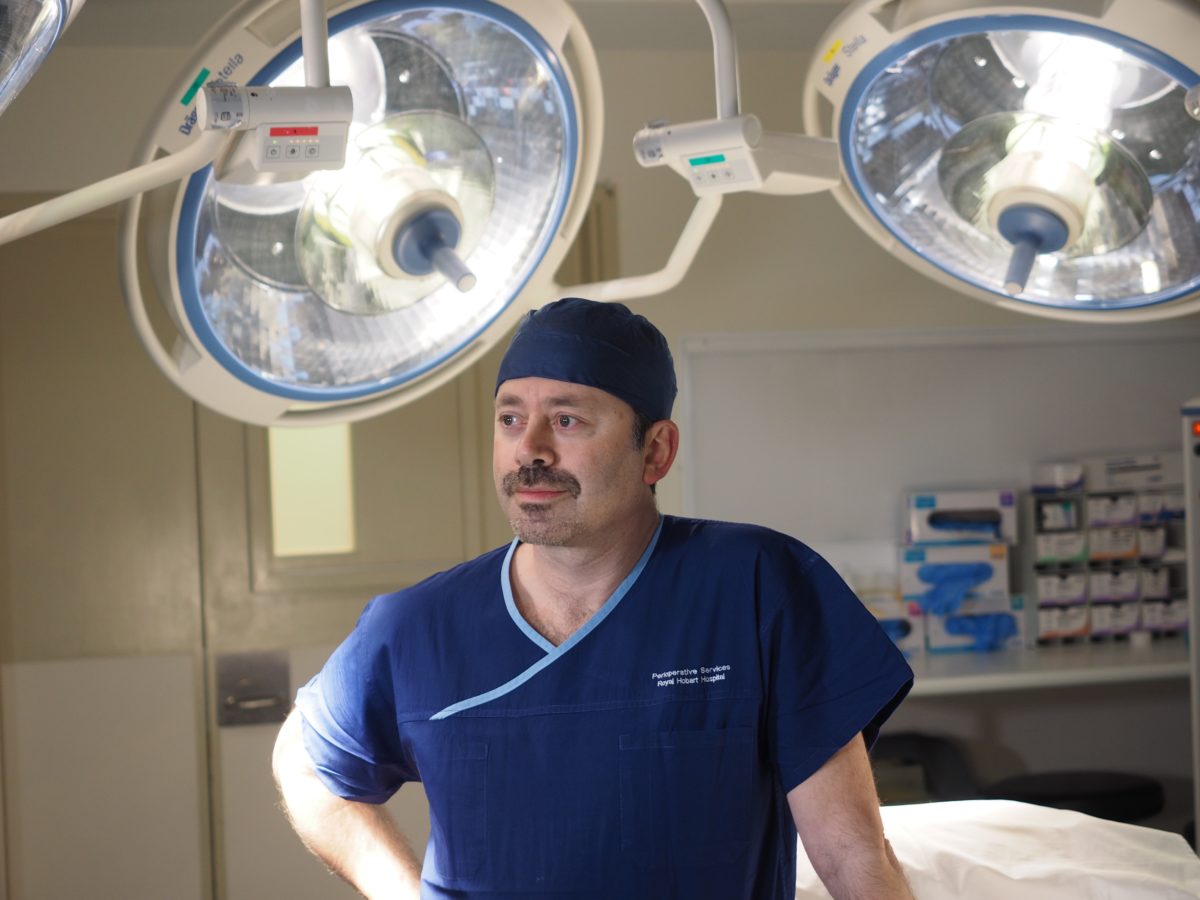 'Sav', as Royal Hobart Hospital's staff specialist anaesthetist is known, says, "We’re always going to have to provide the services at the level that all the other capital cities provide, but we’re always going to be geographically isolated, so it’s always going to be harder to get training support to come down." VOT helps to deliver training whenever the hospital needs it. Photo: Natalie Filatoff
“I think it would be good for any hospital,” he adds. “You might be closer to support services, but the expert from Sweden is not in Sydney, and the guy from New York who knows about ‘xyz’
isn’t there either.” Stibbard recently organised for Royal Hobart doctors to extend their clinical knowledge of paediatric neonatal ventilation, using VOT: “We have one of the world’s leading neonatal paediatric specialists, Dr Patrick Farrell, here in Newcastle. Dr Farrell uses our equipment and we have a great relationship with him, so I took my laptop with the VOT software on it up to him and he delivered a session to the paediatric specialists in Hobart that they would otherwise not have had access to.”
The most outstanding benefits of VOT in Hobart, says Totonidis are: “Flexibility of education, the ability to train and maintain training and education of staff becomes much easier with this system. And also the ability to assist hospital support staff in maintaining and servicing our equipment—to help them keep it in good working order so that machines don’t have to be sent away for repair so frequently—reducing downtime of equipment.”
“Everything about this service excites me. VOT is bringing what we do as an educational service for our customers into the digital era.” Donna Stibbard, GE
Stibbard has recently been able to assist engineers and staff at two Australian hospitals now using VOT to restart or reprogram machinery. “I’ve jumped on my computer in Sydney, they’ve taken me via robot to the equipment and I’ve been able to troubleshoot. At Mt Isa Hospital I was able to direct the nurses to get the equipment up and running so that patients in the operating theatre didn’t have to be delayed or postponed.”
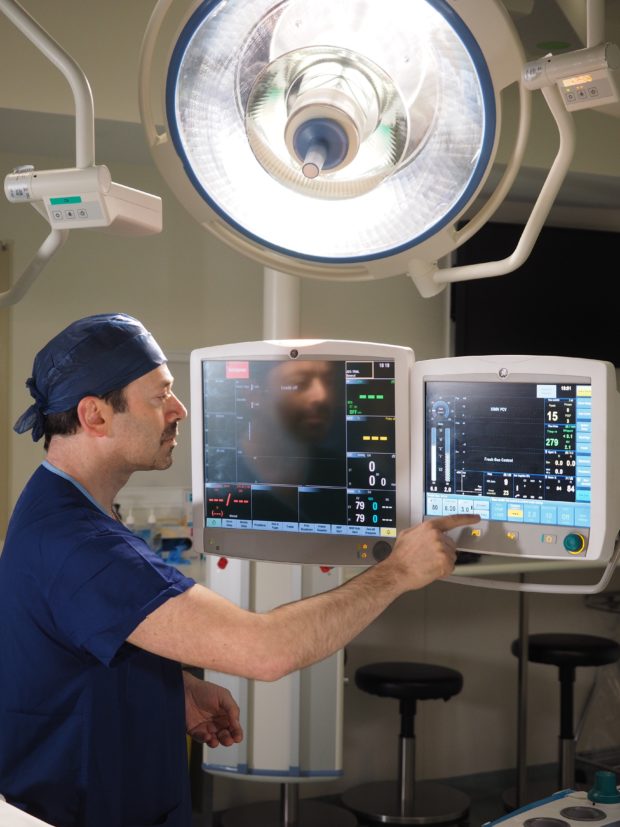 Dr Totonidis uses the GE Aisys CS2 anaesthetic machine at Royal Hobart Hospital. Photo: Natalie Filatoff
As a global company, GE has Healthcare staff in almost every region, and with the VOT system it can provide support anywhere in the world, 24/7.
Based on the successful Hobart trial, several sites in the US and India have in recent months signed up for the training service. “At a VOT site in Florida we were training their night duty at 2.30am, when it was 4pm here. At another US site they need training between 7pm and 9pm for an evening shift and we can deliver that from Australia at a time that fits with our normal working hours. They’ll do the same for us. We’ve managed to get up and running with 24-hour global support incredibly quickly,” she says.
VOT is allowing GE to provide shorter training sessions more frequently than the two-hour sessions usually offered to make the greatest use of visiting in-person trainers.
Stibbard says 20- to 30-minute sessions on specific aspects of machine use result in better recall of information, and that with courses run on demand clinicians have a chance to apply their knowledge and come back with questions—the answers further reinforce their learning.
In this way the robots paradoxically bring GE closer to the customer in a critical realm. Stibbard illustrates the need for the closest possible relationship with medical machine users by comparing manufacture of medical equipment to manufacturing mobile phones: “Most people can pick up a phone and work out how to use it. But when you’re manufacturing massive MRI magnets and CT units and ventilators, it’s imperative that clinicians are educated and continually supported in applying the technology. We have to be confident in our teaching, because we’re teaching specialists who need to know it’s right, to be able to deliver the best outcomes for patients.”
Royal Hobart Hospital has led the way: “This hospital,” says Stibbard, “is passionate about developing its staff and doing research that will assist staff and patients—it’s a wonderful site. They’re fabulous people. The way that the trial was conducted led us to have confidence in this technology, to investing in it as a company, and to the success we’re having now.”