Aerospace
Advanced Aircraft Research Will Help America Keep Its Aerospace Edge



Nations are neck and neck in the race for innovative aeronautics. Taking a page from history, the U.S. can't miss the opportunity to continue leading the aviation industry, writes Rep. Steve Knight, R-Calif.
In 1903, the Wright brothers captured the world’s imagination by flying the first successful airplane. Their flight placed America upon the summit of world aviation, a feat we celebrate to this day.
Unfortunately we didn’t remain there very long.
Triumph bred overconfidence. Tortoise-like, the Wrights and other American designers failed to innovate. Hare-like, Europe’s designers learned from the Wrights, then they applied laboratory-rooted theories of aerodynamics and structural design to produce far more advanced airplanes. In the First World War, Uncle Sam’s pilots flew French, British and Italian designs and were, as General John Pershing wrote, “entirely dependent upon our Allies.”
In 1915, Congress established the National Advisory Committee for Aeronautics, the predecessor to NASA, to undertake scientific aviation research. Thanks to that, to the private sector and to the lessons from World War I, the United States regained its position as the world’s preeminent aviation nation, setting the international standard for airmail service and building a colossal aeronautical industrial base.
But America’s recovery took fifteen years. America’s airmen had learned a hard lesson: mere invention wasn’t enough. Aviation superiority, like democracy itself, requires sustained commitment and focused, robust effort- particularly in steadily advancing flight technology.
Sadly, we’ve forgotten that lesson—and we are in grave danger of having to relearn it.
On the surface, all seems well. Last year the U.S. aerospace industry generated $144 billion in export sales and an $82.5 billion trade balance while supporting 1.2 million jobs.
Such success reflects decades of responsible stewardship giving us the aerospace industry that America now enjoys. But it also masks a growing crisis in American aviation: a century after inventing the airplane, the United States is now neck and neck in new races that will determine whether America remains a leader or becomes a follower in global civil and military aviation.
Over the next 17 years, the number of air passengers will nearly double to 7 billion worldwide. The market for new aircraft sales, parts and services will grow to $8 trillion to $10 trillion. A host of countries—China, Russia, France, and Japan—are pouring billions of dollars into aerospace research and development (R&D) to compete directly with the United States.
If America is to undertake a breadth of programs worthy of its aerospace legacy and its national heritage of imagination, invention, innovation and exploration, we must restore our ambition to push the boundaries of flight and reverse declines in our aeronautics R&D. It is essential that we do so not only for commercial advantage, but also for our national defense. New challenges to our security are engineered every year, from new high-speed missiles to advanced “threat” aircraft that stand to undermine the fundamental underpinnings of American military supremacy.
That is why I introduced the Aeronautics Innovation Act. This bill lays out a roadmap to realign our aeronautics research and development policy to recover and secure our technological edge in commercial and military aviation.
This bipartisan legislation is a commitment to sustained support of aeronautics programs to develop the technological and air power capabilities that will define air transport and air power projection this century.
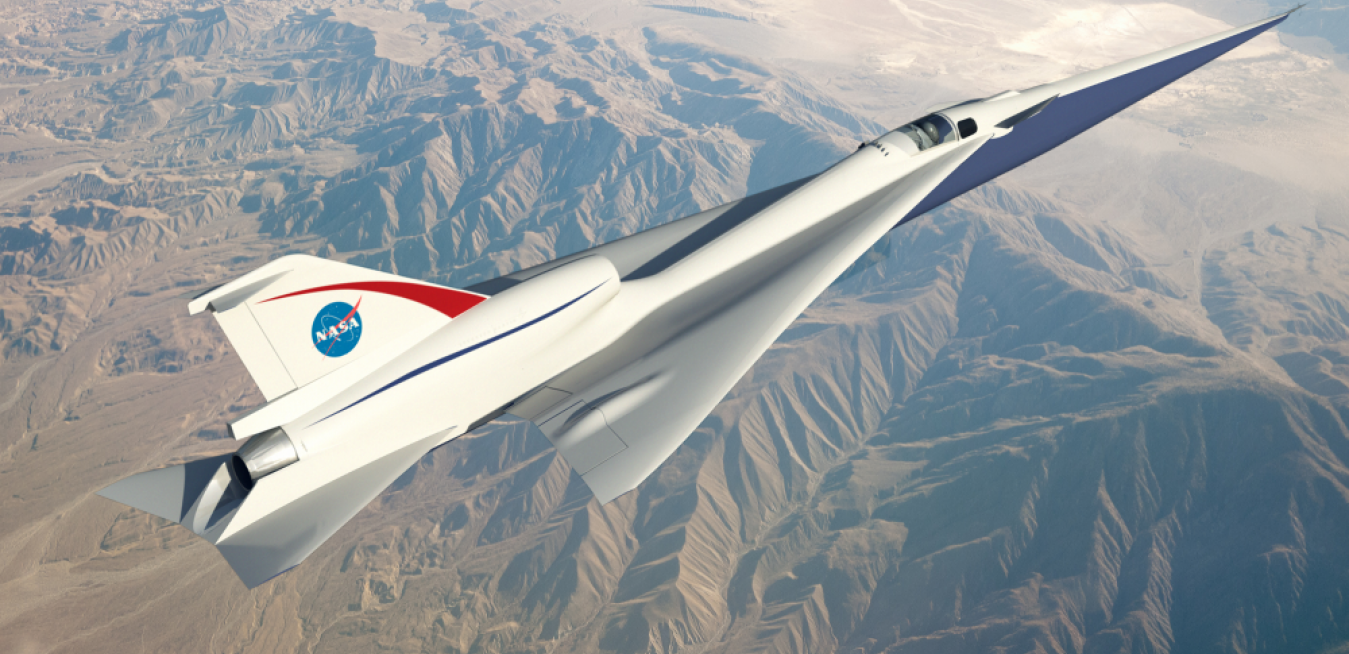
First, it commences a new series of X-Planes proposed by NASA and assures each the necessary funding to see them through to completion.
Second, The Aeronautics Innovation Act expands the research and work opportunities on the most important aeronautics challenges of the day so we can incentivize students to pursue the study for their careers, instead of being entirely diverted to other scientific fields. The risk of losing half of our nation’s aeronautics workforce as the baby boomers retire is too great, and the consequences would be irreversible.
Third, it establishes a dedicated fund to modernize the aging infrastructure of our nation’s aeronautics facilities.
Last, and perhaps most importantly, this bill seeks to provide continuity and budget stability for aeronautics R&D, even in the midst of administration changes and political shifts in Congress. Policy stability is critical to ensuring new technologies are transitioned from the lab to civil and military air fleets.
These investments must be made. Pursuit of new technologies today determines the winners of war and industry in the not-too-distant future. The cutbacks we have made in R&D over the past two decades have allowed our competitors to put at risk our commanding leadership in an industry that is crucial to both our military and our economy.
The United States has been here before, several times. Each and every time we have allowed our competitors to catch up to us in developing the next great design or technology, we refocused, recommitted and raced ahead. The choice is clear: we can be surprised and play catch-up yet again, or we can begin that work now. With the Aeronautics Innovation Act, I plan to begin the work to push the next great leap in America aeronautics technologies and continue our leadership in this industry well into the 21st Century.
(Top image: Courtesy NASA)
 Rep. Steve Knight represents California's 25th district.
 All views expressed are those of the author.