This Gas Turbine Could Pump Up the Goodyear Blimp in About 10 Seconds. But How Do You Test It?



In just 3 months, they ran the turbine through operations that would normally take years to encounter in the field. They tested it at the maximum power output and simulated extreme events like severe grid instability caused by the oversupply of power, and observed the turbine respond and bring the grid back to normal. “You can’t do his in the field without wrecking the grid,” King says. “This hasn’t been done before. More than 50 customers flew in to see the test, including representatives from France’s Électricité de France.”
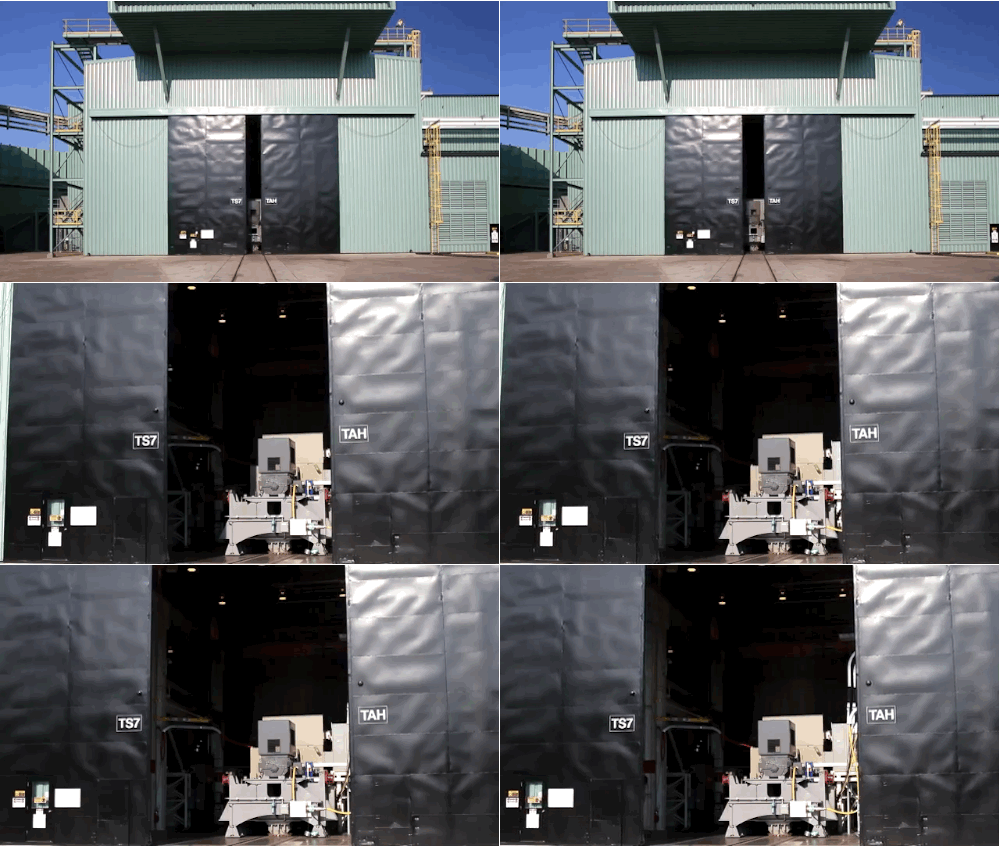
In fact, the turbine is so large and powerful, and the tests are so extreme that GE had to build a dedicated gasworks that can store 180,000 gallons of liquefied natural gas to feed it, and North America’s largest railroad turntable to maneuver it inside the test bed. “The city of Greenville is a light industrial and residential area,” Carey says. “It does not have the infrastructure to give us the gas flow rates we need for this type of equipment.”

The engineers feed the data into custom-made, proprietary software that allows them to monitor the immediate health of the turbine and measure parameters like output heat rate and emissions.
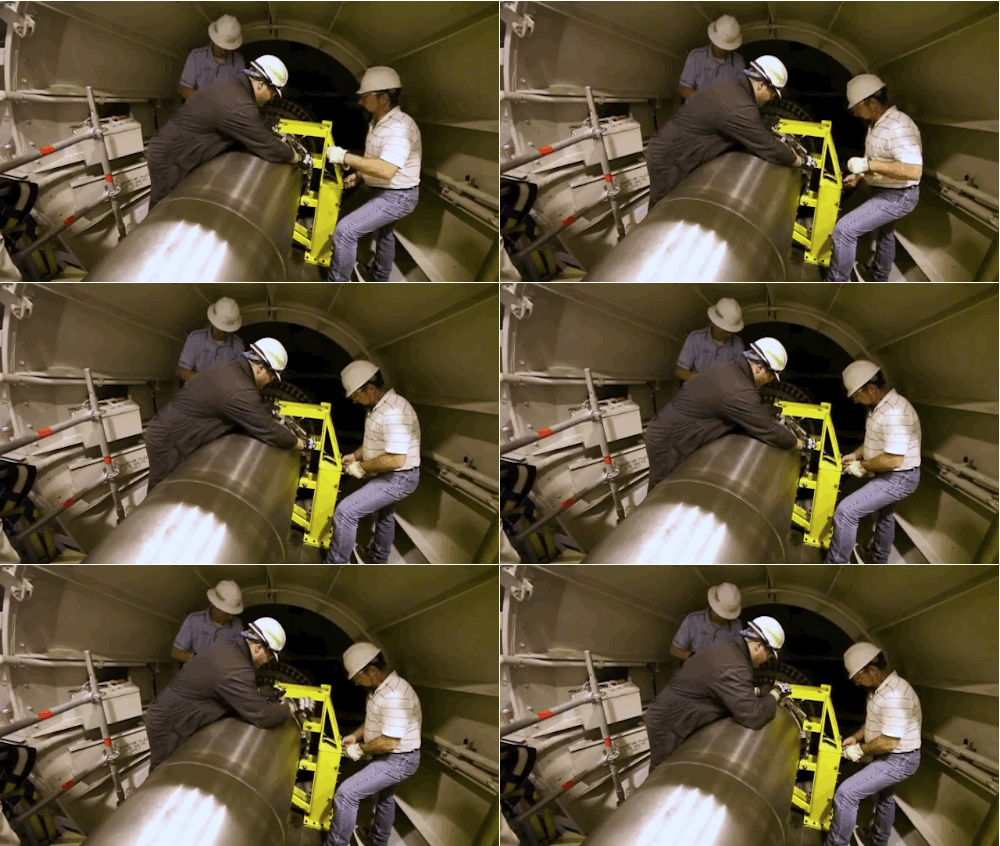
The tests will help engineers to fine tune Harriet before the first one starts producing electricity in France next year. GE also already has 15 backlog orders for the turbine from customers in the U.S., Japan and the E.U. “Knowing what each component does will also allow us to make changes and improve the turbine in the future,” Carey says.