



September 24, 2019
HYBRID, NICE TO MEET YOU
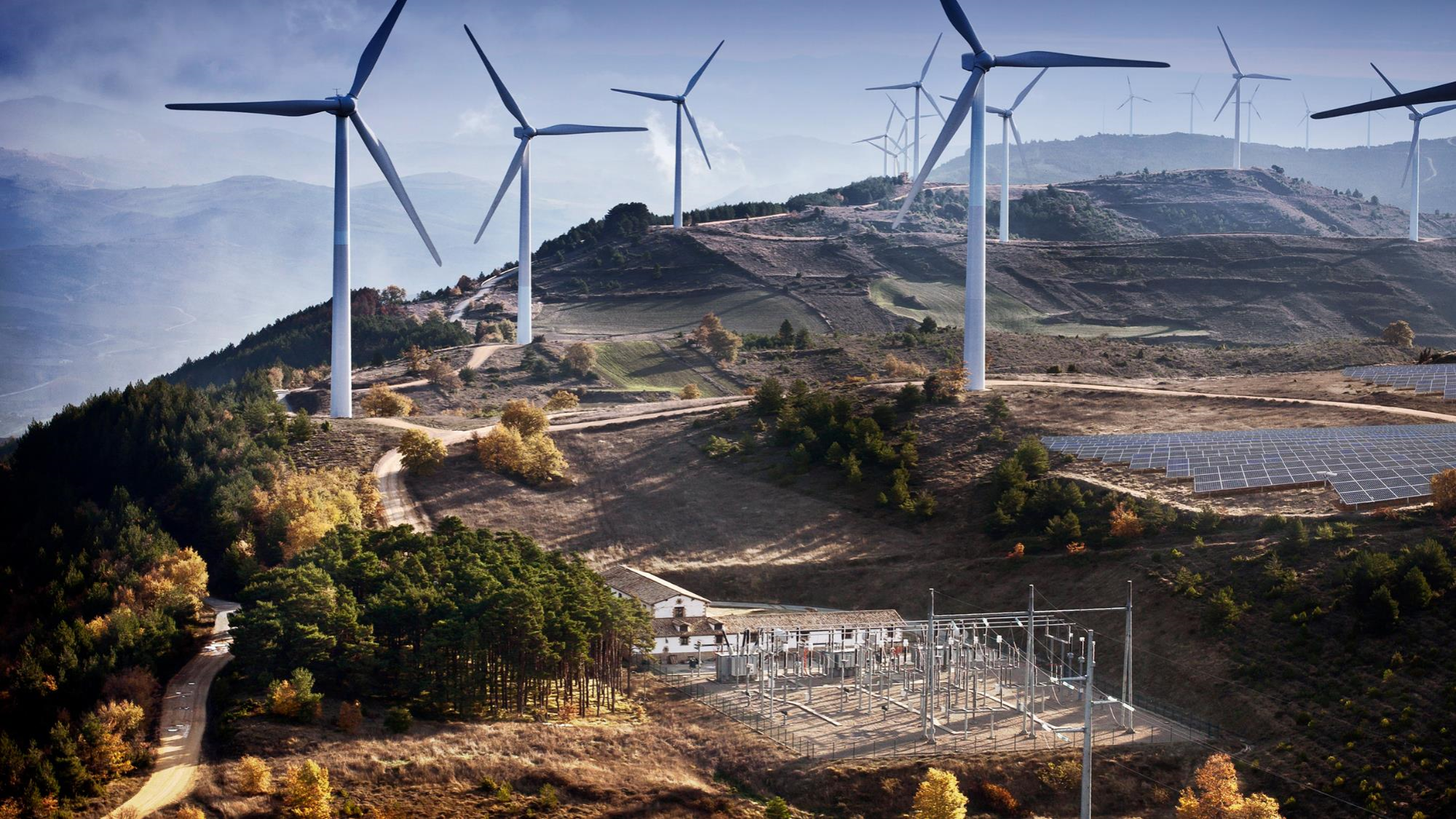
Climate is the talk of the town in New York this week at the United Nations General Assembly, and so are renewables. Sources like wind and solar are on track to grow nearly 50% in global capacity in the next five years. Still, more capacity isn’t the whole story. Producers need to take some of that sunshine and do what Kenny Chesney suggested in a 2015 song: “Save It For A Rainy Day.” That’s where grid-scale battery technologies like GE’s Reservoir — and a new business called Renewable Hybrids, part of GE Renewable Energy — come in. The new division will work with utilities and developers to create hybrid power networks, combining solar and wind farms, efficient energy storage and software to create a more predictable supply of renewables. The Reservoir, for example, can store enough to power 145 U.S. homes for a day. Mike Bowman, chief technology officer of the new business, put it this way: “Hybrid is the next frontier in renewables.”
Renewable vows: The dramatic drop in the cost of energy storage is making hybrid systems a winning business proposition, said Tom Cuthbert, executive engineering leader at Renewable Hybrids: “If every generating asset has some form of storage with it, it’s going to change the market.” Batteries are just one component, though. Another is wind and solar units co-located at the same site, complementing one other: Wind tends to blow at night, but that’s not when the sun shines. GE’s Renewable Hybrids business has already signed a handful of deals for hybrid projects, and is ready to shine, said Bowman: “GE is positioned to make a huge impact and be a leader in the space.”
What else does the new business unit have up its sleeve? Learn more here.
WHEN ORVILLE WRIGHT CAME CALLING
Earlier this year, GE Aviation threw a party at its global headquarters near Cincinnati for a new member of the family: the GE9X engine, which the company developed for Boeing’s next-generation 777X widebody jet, and had just been declared the world’s most powerful jet engine. The GE9X is a big deal in more ways than one, but far from the first luminary to be feted in GE’s Ohio facility. Before it even belonged to GE, in fact, the campus had a storied history as an engine plant for Wright Aeronautical, and at a grand opening celebration in 1941 it hosted an especially storied guest — the company’s namesake. Almost four decades after he and his brother introduced the world to powered flight, Orville Wright drove himself about an hour from his Dayton home to take a look at the new plant.
Family of flight: Then 69, Orville was nearing the end of his life, but Wright Aeronautical was just ramping up, and would employ more than 30,000 people during its wartime peak. The end of the war spelled the end for Wright Aeronautical, but a new beginning for the facilities that housed it: A few years later, GE Aviation began moving into the empty plant in order to produce the GE J47 engine — which would become the most produced jet engine in aviation history. Today the facilities house the global headquarters of GE Aviation, which has racked up a few stories of its own to tell — it’s celebrating 100 years in business in 2019.
Take a look here for a little stroll down memory lane.
HOTTER AIR
Coffee drinkers know two things about the ceramic mugs they drink from every morning: The material is great for handling heat, but it breaks easily. When the Institute for Defense Analyses published a report in 2001 on uses for ceramics in aviation, it considered those qualities and came to a bearish conclusion: “There may be more pigs flying than ceramics in the future.” Eighteen years later, pigs are far from airworthy, while ceramics are the key to an advanced material that’s one of the most exciting parts of the aviation business. Combining silicon carbide, ceramic fibers and ceramic resins, ceramic matrix composites are lightweight and as tough as metal, while retaining the superior heat-handling characteristics of ceramics. CMCs are just one of the next-wave technologies that GE Aviation used in the GE9X jet engine.
When ceramics fly: GE spent decades and more than a billion dollars researching and developing CMCs as a component of engine turbines, and nowadays it manufactures the materials at four interrelated American production sites. CMCs can withstand temperatures up to 2,400 degrees Fahrenheit — when most metal alloys begin to soften — and are used to build a crucial turbine component in the best-selling LEAP engine, produced by CFM International, a 50-50 joint venture between GE Aviation and Safran Aircraft Engines. That’s just the beginning of their promise, though, said GE Aviation’s Gary Mercer: “As you think of the future of flight, light and hotter are two constants. With the re-emergence of supersonic, hypersonic, and reusable space vehicles, it is easy to see how CMCs will add value to future propulsion and airframes alike.”
Read more here about how engineers are launching CMCs into the clouds — and beyond.
COOLEST THINGS ON EARTH ?
1. AI With An Ear To The Ground
A geophysicist at Los Alamos National Laboratory is investigating ways that artificial intelligence could be used to predict earthquakes.
2. The Ultimate Cleanse
In a small clinical trial, researchers at Minnesota’s Mayo Clinic used drugs to clear old and decaying cells from the bodies of human patients — an advance in a promising field of treatments, called senolytics, to combat the effects of aging.
3. There’s No ‘I’ In ‘Robot Teamwork’
In what could signal a new paradigm for the field of small robotics, researchers at Georgia Tech made a robot from smaller robots. Just how far down does this thing go, anyways?
Read more about this week’s Coolest Things on Earth here.
— QUOTE OF THE DAY —
“We’ve got the right horsepower, the right people, the capabilities, the connections and the brand. We’re excited about it.”
— Mike Bowman, chief technology officer of GE’s Renewable Hybrids
Quote: GE Reports. Image: GE Renewable Energy.
ENJOY THIS NEWSLETTER?
Please send it to your friends and let them know they can subscribe here.