
The Vanguard
The 5 Coolest Things On Earth This Week



Quantum batteries, a biological computer that plays Pong, and an anti-smog cannon. This week’s coolest things arrive with a bang.

What is it? Virologists at Ohio State University have observed a method that SARS-CoV-2, the virus that causes COVID-19, uses to evade the immune system.
Why does it matter? The findings, published in the Proceedings of the National Academy of Sciences, could help explain why the COVID-19 pandemic is still raging two years on and causing many asymptomatic cases, according to Ohio State’s Shan-Lu Liu, lead author on the study
How does it work? Comparing SARS-CoV-2 with the virus that caused the 2003 SARS outbreak, the researchers found that the current virus is particularly adept at hopping directly from one cell to another. This means it avoids spending time in the no-man’s-land between cells, where it is vulnerable to antibodies formed after infection or immunization. “Cell-to-cell transmission’s resistance to antibody neutralization is probably something we should watch for as SARS-CoV-2 variants continue to emerge, including the most recent, Omicron,” Liu said. His lab will continue to study exactly how the virus gets from one cell to the next, and whether that increases the number of new variants that arise.

What is it? An international team of researchers demonstrated a theoretical principle that could bring quantum batteries closer to reality.
Why does it matter? Quantum batteries could revolutionize energy storage with their ability to charge quickly. And because they are charged by light, the technology could provide a radical new way for solar panels to harvest and store energy, reducing the unpredictability of energy from solar. The advance opens up the possibility of a “new class of compact and powerful energy-storing devices,” said Peter Veitch, head of University of Adelaide’s School of Physical Sciences.
How does it work? Let’s just say that it’s complicated. While larger batteries take longer to charge with traditional technologies, the opposite is theorized to be true of quantum batteries: The more particles there are, the quicker they are to absorb and hold on to energy. The scientists proved that concept, called superabsorption. “It is theoretically possible that the charging power of quantum batteries increases faster than the size of the battery, which could allow new ways to speed-charging,” said James Q. Quach of the University of Adelaide, first author of the new findings, published in Science Advances. In their experiments, the physicists created nano-scale wells containing different numbers of organic semiconducting molecules and charged them with a laser. The cavities with more molecules charged faster.
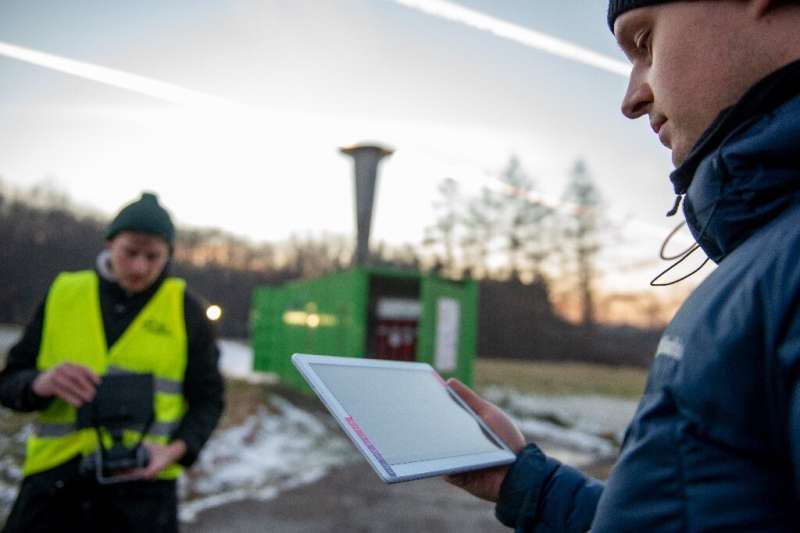
What is it? Polish scientists invented a smog-repelling “cannon” that blasts toxic air pollution away from the ground.
Why does it matter? Air pollution can get bad in some Polish towns, especially during winter, when cold air can trap smog generated by residential heating and other sources. “We have found that if we use the cannon for between half an hour and an hour, the pollution is reduced by 15 to 30 percent within a perimeter of two to three kilometers (1.2–1.9 miles),” said Dominik Grybos, from the Academy of Mining and Metallurgy in Krakow and one of the inventors.
How does it work? The device uses a reaction between acetylene, a gas commonly used in welding torches, and air to produce a sound like fireworks going off. The sound waves exit through an upward-facing cone and push hovering particulate hundreds of meters higher in the air, where it won’t be inhaled. The creators are tinkering with the frequency and duration of the sound. Right now, the effect of producing blasts every six seconds persists for up to three hours. PhysOrg reported that residents of the Polish town Kalwaria Zebrzydowska “are broadly in favor of the idea despite the sound.”
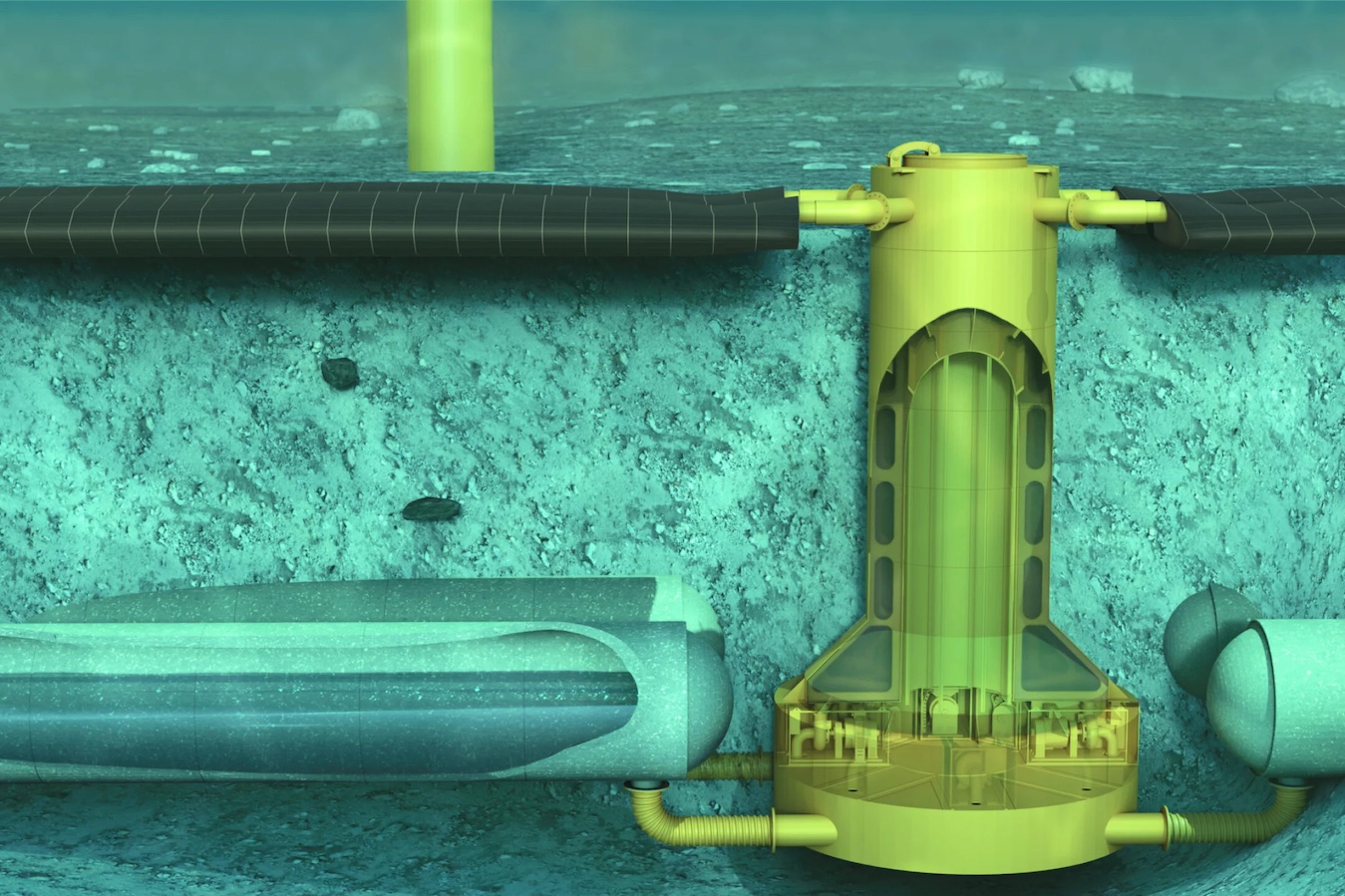
What is it? A system called the Ocean Battery uses the flow of water to store renewable energy at the bottom of the sea.
Why does it matter? Engineers are working on new technologies to store growing amounts of renewable energy from offshore wind and solar farms. These systems could help keep supply steady when production dips.
How does it work? Developed by Dutch company Ocean Grazer, the Ocean Battery repurposes another storage technology known as pumped hydro. The modular batteries can be placed near existing or planned offshore renewables like wind turbines to store excess energy. According to New Atlas, the design uses a concrete tank that holds more that 5 million gallons of fresh water. The tank is buried in the seabed, and a flexible bladder rests on top of the seabed. The system uses surplus energy to pump water from the low-pressure tank into the inflatable bladder. When that energy is needed to meet demand — say, after the sun goes down, or when there’s no wind — the bladder releases, and the high pressure of the seawater above it forces the fresh water inside back into the reservoir through a turbine that generates electricity.

What is it? Scientists in Australia made a miniature computer using human brain cells — and taught it to play Pong.
Why does it matter? As remarkable as artificial intelligence is, it doesn’t hold a candle to the broad sweep of human intelligence. “Harnessing the computational power of living neurons to create synthetic biological intelligence (SBI), previously confined to the realm of science fiction, is now tantalizingly within the reach of human innovation,” wrote the scientists in an as yet unpublished paper.
How does it work? The researchers seeded a silicon circuit board with hundreds of thousands of human neurons, grown from brain stem cells. They then trained the hybrid chip to play a video game much like the classic Atari game Pong. Not only did the human cells learn to react to the bouncing digital ball with an impulse that approximates hitting it with a paddle, but they did so in less than five minutes, according to The New Scientist. Similar experiments with AI systems reportedly take over an hour.