
The Vanguard
The 5 Coolest Things On Earth This Week



Making oxygen with magnets, internal knee cushions, and contact lenses that spot cancer. This week’s coolest things make life (on Earth or in space) more livable.

What is it? Boston University neuroscientists improved memory in older adults with electrical brain stimulation.
Why does it matter? There are multiple types of memory, including working memory (keeping necessary information in mind for the task at hand) and long-term memory. Both types can degrade with age. The researchers found that zapping certain brain regions with particular wavelengths of electricity improved both working and long-term memory in older adults, at least temporarily. The results could lead to noninvasive clinical techniques for boosting memory, the researchers wrote in Nature Neuroscience.
How does it work? The study participants, between 65 and 88 years old, wore electrode caps while listening to a list of 20 words. The researchers delivered different electrical currents to two brain regions. Targeting the inferior parietal lobule at a frequency of 4 hertz improved people’s recall of words from the end of the list, stored in working memory. Hitting the dorsolateral prefrontal cortex at 60 hertz improved recall of words that were early in the list, i.e. long-term memory. Twenty-minute sessions on four consecutive days resulted in memory improvements that lasted a month or more.
What is it? Researchers in the U.K., the U.S., and Germany demonstrated a new method for producing oxygen for astronauts in space using magnets.
Why does it matter? Traditional ways of generating breathable air for humans in space — typically by splitting water into its elements and separating out the oxygen — are energy-intensive or unreliable for future missions to Mars, according to a recent analysis. The magnetic method could “have tremendous consequences” for the further development of long-term space missions, said Katharina Brinkert of the University of Warwick and Germany’s Center for Applied Space Technology and Microgravity.
How does it work? On Earth, separating mixtures can be as easy as popping open a can of soda: Gas bubbles naturally float to the top of the liquid. In the absence of gravity, separating oxygen gas from water molecules requires force and energy. In a study in NPJ Microgravity, Brinkert’s team demonstrated that in a microgravity environment, it’s possible to use magnets to passively draw oxygen to one side of a collection vessel.
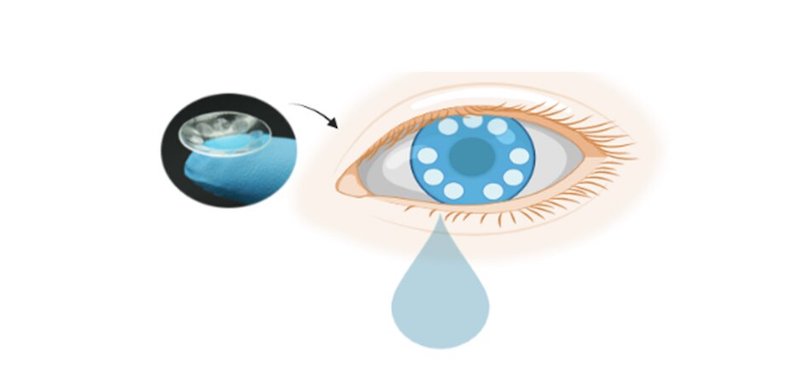
What is it? Biomedical researchers at the Terasaki Institute for Biomedical Innovation in Los Angeles invented a contact lens that could detect cancer.
Why does it matter? Nanosized packets called exosomes that float in fluids like plasma, saliva, and urine can carry surface markers that indicate the presence of tumors in the body. But isolating and screening for marker-laden exosomes is difficult and time-consuming, limiting their utility for diagnostic purposes. Ali Khademhosseini, corresponding author of a study in Advanced Functional Materials, said the lens technology allows scientists to easily “tap into” a rich source of exosomes: tears.
How does it work? The team laser-engraved contact lenses to create microchambers and lined them with antibodies that capture exosomes by grabbing onto their typical surface proteins. (The chambers are placed around the outer edge of the pupil so they don’t interfere with sight.) After exosomes have been trapped in the chambers, they’re soaked in a solution including gold-tagged antibodies for cancer-related surface markers. If those markers are present, the gold-tagged antibodies will attach to them and make the microchambers appear red. The platform can be adapted with antibodies for other disease-related exosomes as a tool for noninvasive screening and diagnosis, the authors wrote.

What is it? MIT scientists developed a software model that can boost the productivity of any wind farm.
Why does it matter? Though often arranged in lengthy rows, wind turbines are programmed to operate as individual units, each at its maximum efficiency. But the wake produced by one turbine can interfere with others downwind of it, reducing their output. A team led by MIT’s Michael F. Howland developed an algorithm that determines how to optimize the collective energy generation of an entire wind farm, which may require some individual turbines to operate below their peak capacity.
How does it work? The group used a wind farm in India to test the model. They found that, for example, angling one turbine 20 degrees out of optimal positioning more than made up for a loss of productivity by increasing the efficiency of the turbines in its wake. Under some conditions, controlling turbines to maximize their collective efficiency increased output as much as 3%, according to the research, published in Nature Energy. Overall, it yielded an average 1.2% increase in energy output. That would be roughly equivalent to getting 100 turbines’ worth of power out of 99 turbines.
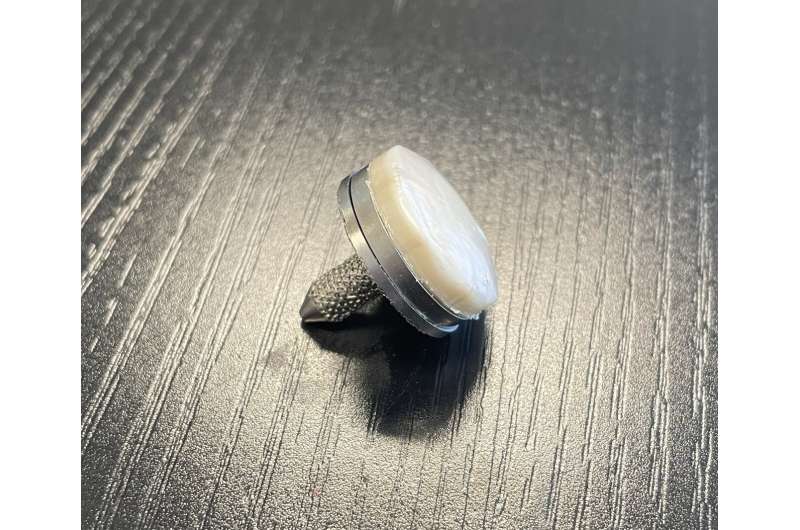
What is it? Duke University chemists and mechanical engineers created a soft, squishy cartilage replacement that’s stronger and more durable than the real thing.
Why does it matter? Nearly one in six adults suffer from osteoarthritis, the painful wearing down of cartilage in the joints. Knees in particular are a common site for damage; they take the force of two to three times a person’s body weight with each step. The Duke replacement is even stronger than natural cartilage, and stays in place better than other solutions.
How does it work? Led by Benjamin Wiley, the team created a Jell-O-like material from cellulose fibers and a gooey polymer called polyvinyl alcohol, described in a study in Advanced Functional Materials. The cellulose acts like connective collagen in cartilage, while the polyvinyl alcohol helps the implant bounce back into shape. The material can withstand 26% more stretching and 66% more pressure than cartilage. “It’s really off the charts in terms of hydrogel strength,” Wiley said. The researchers attached the implant to a metal base that can be anchored into the bone so it doesn’t slip out of place, as other cartilage replacements can.