Technology Driving U.S. Manufacturing Renaissance



“After decades of losses—of work, factories and jobs—the U.S. manufacturing industry has clear momentum again,” says the report, “2014: Manufacturing’s New Momentum,” which outlines four key areas driving the resurging U.S. manufacturing sector:
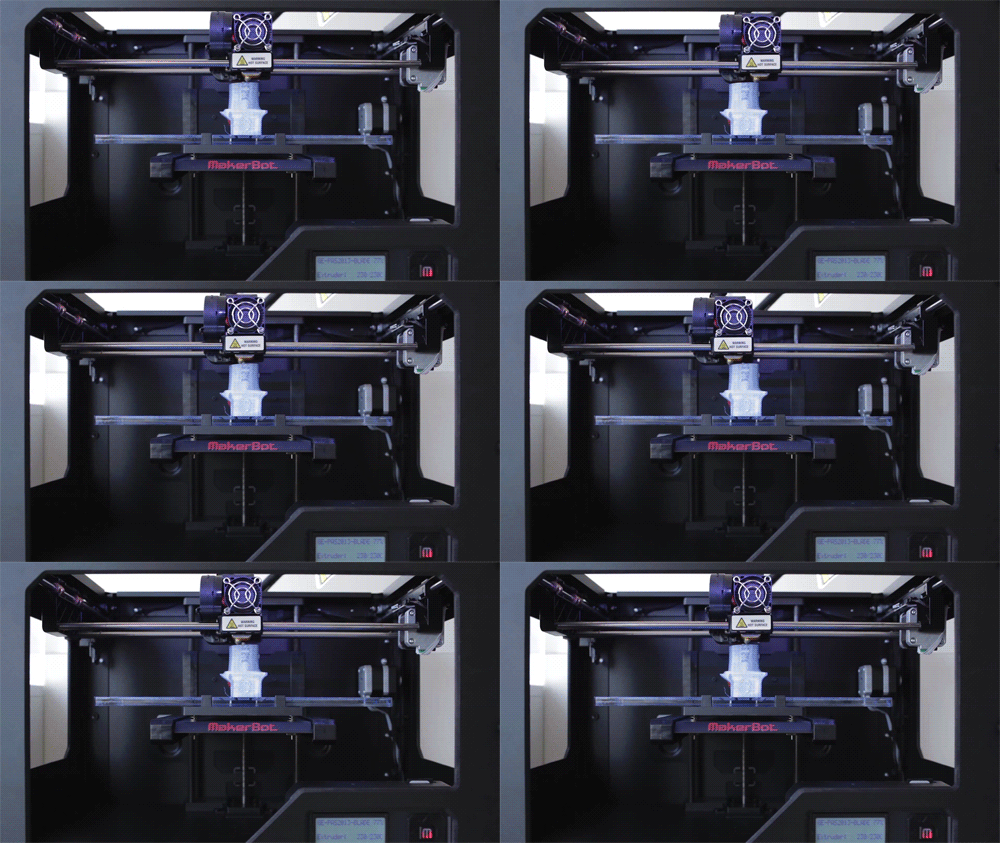
- Innovation in advanced manufacturing technology: An array of new, software-enabled manufacturing machines and tools are improving productivity and leveling the playing field when it comes to competing for work globally.
- A revolution in energy production: The growth of unconventional extraction of oil and natural gas has led to a boom in demand for manufacturing parts to extract, store, and transport energy. It has also lowered industrial energy costs, which is often a company’s biggest operational cost, while making it more attractive to manufacture in the U.S., too.
- Growth in post-recession demand: Organic growth in post-recession demand for key durable goods such as light vehicles and commercial airplanes, many of which are being redesigned for improved fuel economy. These goods are made domestically and are driving the retooling of machine shops nationwide for new materials, processes, and other new technologies.
- Investments in clean energy technology: The nation’s investments in wind and solar technologies, as well as regulations for more fuel-efficient vehicles, are spurring manufacturing growth and investments in new ways of making things.
Despite what some feel is a faltering economic recovery, the numbers being logged by the manufacturing sector tell a strong story. The U.S. trade deficit narrowed to $34.3 billion in November. “While much of that narrowing is due to decreased petroleum imports, the value of exported goods also rose to $137 billion,” the report notes—an all time high. Total manufacturing exports totaled $1.2 trillion for the 12-month period ending in September of 2013, an increase of 38 percent since 2009.
The U.S. job market for manufacturing is “doing the unthinkable,” the report says—“growing.” According to the latest job figures, the U.S. economy has added 622,000 manufacturing jobs since early 2010, including more than 80,000 over the last four months, bringing the total manufacturing workforce to just over 12 million.
Public-Private Partnerships
Another driver of this manufacturing resurgence is the public-private partnerships being promoted by the government. The most significant of those partnerships is the National Network for Manufacturing Innovation.
“These institutes would accelerate innovation by investing in industrially relevant advanced manufacturing process and product technologies,” says Rob Atkinson, president of the Information Technology and Innovation Institute, in a piece on Ideas Lab. These manufacturing hubs “would play a vital role in enhancing U.S. industrial competitiveness by supporting development of technologies that will enable U.S. manufacturers to develop the cutting edge technologies needed to compete in the global marketplace” Atkinson writes

Challenges Remain
Though the manufacturing sector recovery is promising, challenges and obstacles are very apparent. The defense sector is still reeling from significant cutbacks; the medical device makers are still trying to parse out how much their industry will be unsettled by Obamacare; the overall economy is on shaky, but steady footing.
There’s also the continuing challenge of finding enough skilled workers for advanced manufacturing jobs. Estimates of the manufacturing skills gap range as high as 600,000. “In the past year, there had been some debate about the severity of this shortage,” the report says, “with some experts arguing that manufacturers simply need to pay higher salaries, even as study after study shows the U.S. students and employees are far behind their global peers in STEM knowledge.”
Manufacturers, however, continue to report difficulties finding enough workers, the report says. The depth of the skills gap is open for debate; however, there is little denying that it will grow in the coming years owing to an aging workforce. About half of the current manufacturing workforce is at least 45 years old, the report notes, “and as employers look to replace retiring Baby Boomers, qualified candidates simply aren’t there.
Despite the challenges, the industry is poised for continued growth, particularly in the aerospace, automotive and energy sectors, the report says.
And the U.S. still has the world’s most favorable economy the report says, citing a study by PwC.
“The U.S. remains the growth driver in the industrial manufacturing sector, with continued signs of healthy demand, pricing strength, new product investment and hiring,” said Bobby Bono, U.S. industrial manufacturing leader for PwC, quoted in the report. “Overall top line growth expectations remain moderate and management teams are continuing to take a careful approach to capital allocation and cost management while preserving liquidity.”
Technology Driving U.S. Manufacturing Renaissance was originally published on Ideas Lab