It’s in the Blood: Microbubbles Help Biologist Jason Castle See Inside the Body



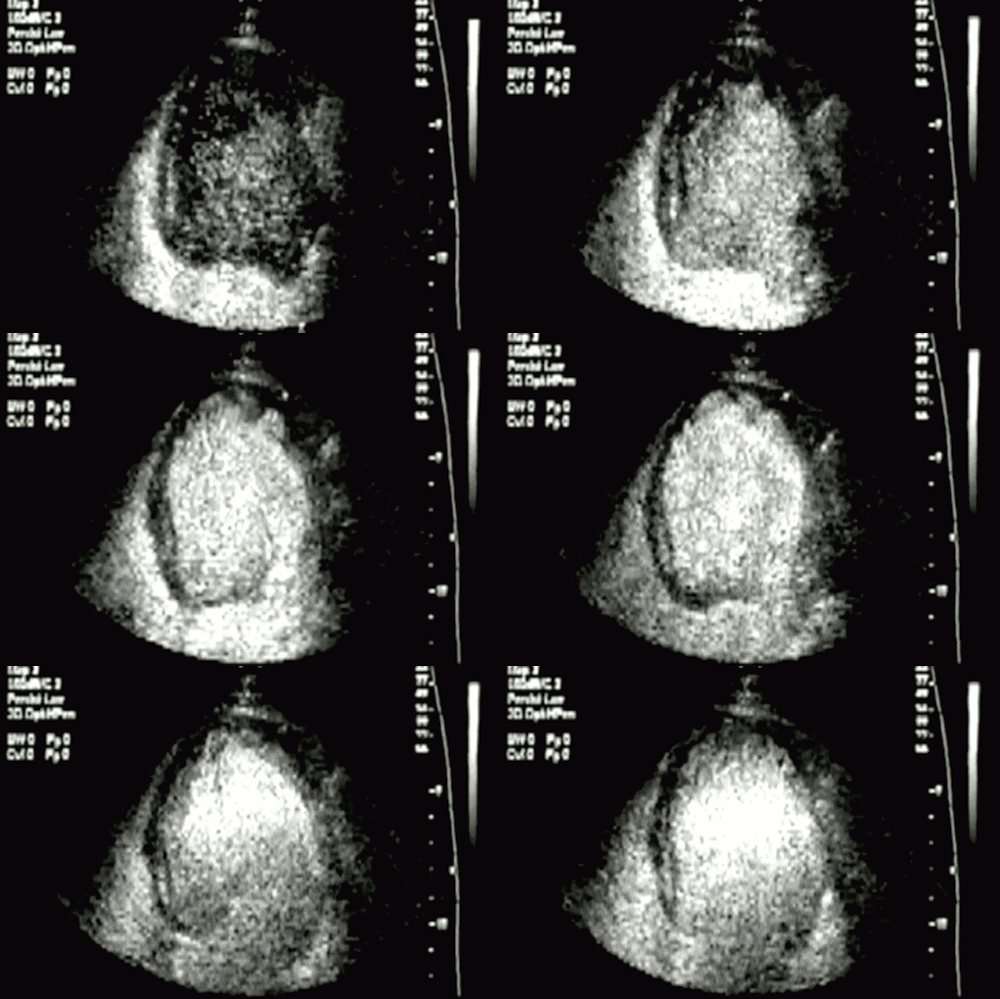
Now, Castle is using his research skills to help speed treatment through “microbubbles,” tiny gas-filled spheres that can flow through the bloodstream, reflect sound waves and help define otherwise grainy ultrasound pictures. “Anywhere blood flows, these microbubbles can travel,” he says. “If you are in a car accident and have internal bleeding, we could tell right away, identify what organs have been injured and where the blood is pooling. These tests could be started as soon as the ambulance shows up, rather than waiting for arrival at the hospital.”
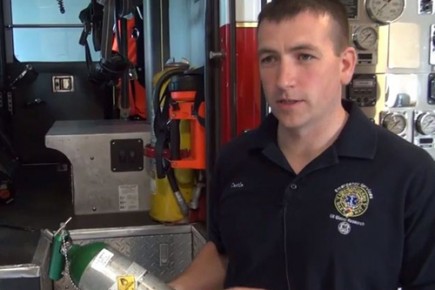
Top image: “When you inject these microbubbles, it’s like turning on the light inside the heart,” says GE biologist Jason Castle (above).
The new ultrasound technology could ride inside the ambulance and help medical staff diagnose patients on the spot, potentially saving lives. EMTs could deliver microbubbles in the vein through an ordinary IV injection. The bubbles dissolve minutes after the test and the gas leave the body in the breath. “When you inject these microbubbles, it’s like turning on the light inside the heart,” he says.
The biggest potential upside of microbubbles, however, is as a vehicle for delivering therapies. Castle and a team of GE scientists are experimenting with using microbubbles to ferry drugs, antibodies and even DNA payload to tumors, clogged arteries, and whole organs like the liver (see image below).
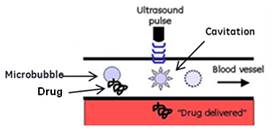
When they reach the target, doctors could change the acoustic setting of the ultrasound and burst the bubbles with sound waves. “You disrupt the bubble and deposit the drug where the body needs it most,” Castle says. “With great precision, you could deliver a full dose of chemotherapy to the tumor, right where it’s needed, reducing side effects. It could have a huge potential for the quality of life of cancer patients.” In fact, a recently published study from Norway reported that microbubbles have been used in patients with pancreatic cancer.
Castle hopes that in the near future doctors could use microbubbles to image a patient’s heart and deliver anticlotting drugs at the same time. “Becoming an EMT as well as a biologist working to improve ultrasound gives you a chance to really see both fields,” he says. “As an EMT you see the current standards of care, how things are done, and how they could be done better.”