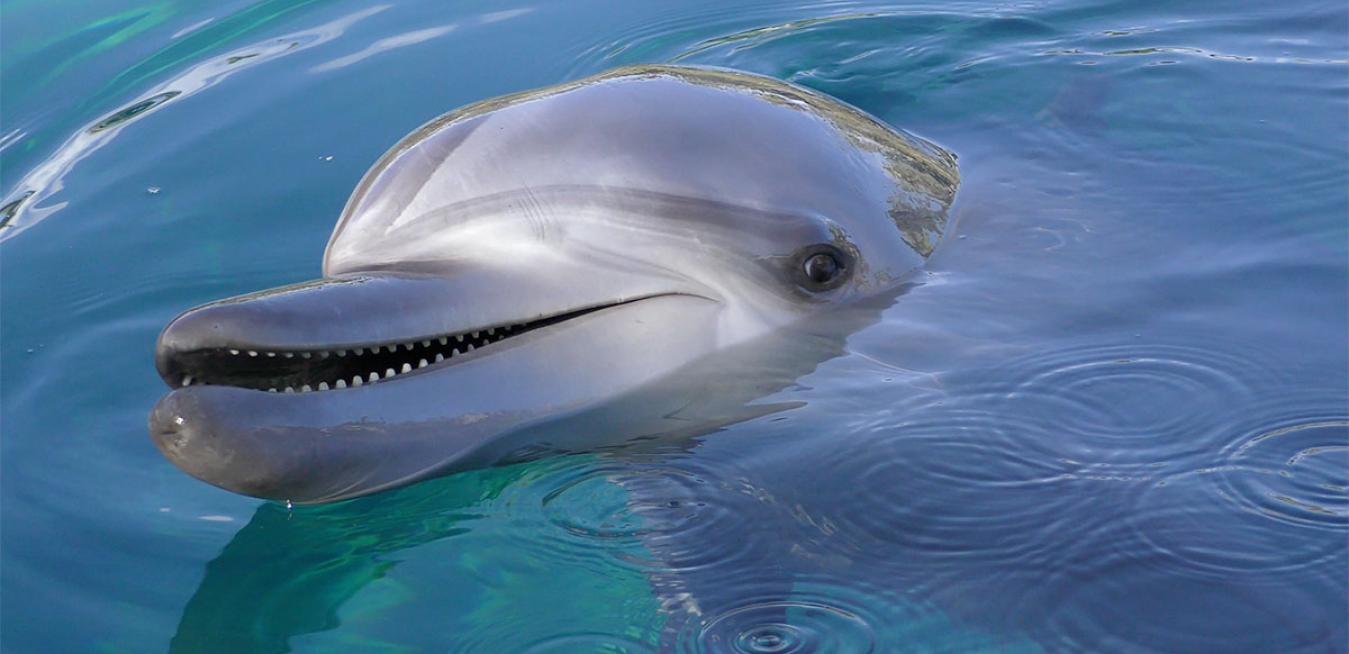
The inside story: watching a baby dolphin grow



“The beautiful thing about ultrasound is that we can determine how old the foetus is and we can determine a due date for parturition, so that we can manage her a bit better,” says Dr David Blyde, “because we will generally separate the female out a few weeks before she’s due to give birth.”
The patient, Jinx, is a 200kg bottlenose dolphin at Sea World on Queensland’s Gold Coast, and she’s due in November after a 12-month pregnancy—her first.
These marine mammals are well-known for their intelligence and congenial natures, so Jinx’s ultrasound checkup really does play out like a routine, albeit wet, visit to the obstetrician.
“We’re going to get her to slide alongside the platform upside-down in a relaxed position,” says trainer Andrew of the manoeuvre known as a ventral present. “I’ll support the tail, Cath’s at the other end positioning her head, and then we’ll come in with the ultrasound.”
Sea World veterinarian Blyde goes into action, lying on his side on the floating pontoon as the dolphin, having been fed a few tasty fish as an advance thank you, glides expertly into position.
Blyde has the laptop-sized GE LOGIQBook ultrasound machine positioned inside a plastic crate to prevent the dappled sunlight from playing on the screen. He’s slides the transducer across the dolphin’s belly, checking the size of the curled-over calf pulsing gently inside Jinx’s uterus.
“Dolphins have a completely different placentation,” he explains, indicating the image on the screen. “It’s called an epitheliochorial placenta, and it goes right the way around the lining of the uterus. It’s not a zonal placenta like it is in primates. When her placenta comes out, it’s shaped like a bag, and it’s the size of her uterus.”
One day in November will see Jinx deliver her calf, fluke first. Says Blyde, “From the time you see the fluke, they want to be out in about three hours.” The ultrasound helps him to predict when that day will be and also check for any complications along the way.
“I’ve been working here 15 years and we’ve had about 20 dolphin births over that time, so it is pretty routine for us,” he says. “We routinely monitor them during pregnancy via ultrasound and it gives us the ability to diagnose that they are pregnant, monitor the size of the foetus, so that we know the age and the predicted parturition date. We separate them prior to parturition to make it a more controlled environment for us. We don’t want other dolphins swimming away with the calf, or traumatising the calf. It makes it easier for us to manage, and it makes it easier for them to look after their calf in the first few days.”
The second patient up for her ultrasound checkup today is Sunnie. Fish treats grinningly gobbled up, she slides into place by the pontoon as gently instructed by the two trainers.
As she floats upside down, Blyde slides the transducer and scrutinises the ultrasound screen. “She’s not detectably pregnant today,” he says. “She got mated about three months ago, so the foetus might be eight weeks and might be undetectable at this stage, but we’ll have another look in about two weeks.”
And with that, the morning’s consultation is complete. Other dolphins are beginning the first show of the day in the adjoining pool. Jinx and Sunnie make the most of their treats-for-transducer session, gliding about their pool and clicking noisily at onlookers.
“Dolphins are great patients,” says Blyde. “The real key to looking after dolphins is getting them conditioned and trained for this kind of procedure. It takes a lot of time and effort from the trainers to get these animals comfortable to do that. If we didn’t have them trained as well as that, we’d have to physically capture them. But instead, it’s very stress-free for the animal, and stress-free for us.”
He has other patients in the park; are the seals equally good patients? “Not so much,” says Blyde with a laugh.