The inner athlete: medical imaging and psychology at the Olympic Games



In Rio, Burne has temporarily handed over his day job as chief medical officer for Water Polo Australia, to work in the Australian Olympic Team Medical Headquarters, which is set up to treat the more than 700 Australian Olympians and officials at the Games. Over the past 16 years, he says he’s learned that psychology is the most challenging side of medicine at the games, and that medical imaging helps engage athletes in their own healing.
A GE LOGIQ e portable ultrasound is part of the kit Burne brings to the Headquarters, where a staff of around 35 medicos—including sports doctors and physiotherapists, massage therapists, dietitians, psychologists and a nurse—are working throughout the Games to manage every kind of illness and injury. One of five specialised sport and exercise physicians in the Headquarters, Burne says, “In sports medicine, treatment starts with patient history and we move to a diagnosis on the basis of clinical signs. We don’t always need medical imaging.”
In the Olympic Games situation, however—where decisions need to be made swiftly, treatment periods are compressed, and diagnoses and healing require confirmation—medical imaging by ultrasound, MRI and X-ray, can be the difference between an athlete confidently returning to competition after treatment, and limping in doubt, or being ruled out of play on unconfirmed suspicions.
Pinpointing trouble spots with portable ultrasound
In his usual practise, Burne uses portable ultrasound to guide injections of treatment medications to specific areas of muscle: “A lot of our work is with soft tissue in tendons and ligaments and muscle, so if you’re doing injections you need to be really, really accurate with where the tip of the needle ends up going, because it determines whether something is successful as an injection or not. So to have that portable device that you can move from place to place and to the side of the field if you have to is fantastic—I’ve found it really useful.”
In Rio, he is also using it to rapidly confirm some diagnoses, and to show athletes what their injury looks like. He says that actually being able to see the damage “helps them to understand it a lot more”, and to understand what they need to do to recover.
Burne and other Australian-team medical staff are also utilising the GE-equipped Polyclinic at the Rio Games. As part of its Worldwide Partnership with the Olympic Games, GE has provided advanced medical-imaging equipment at each Olympic Games Polyclinic for the past 10 years. “The Polyclinic is there for all nations to access medical care,” explains Burne, “and it’s pretty much a self-sufficient place: there’s a pharmacy, clinicians attending to both primary care and some specialist care, and the imaging services—MRI, ultrasound, X-ray, that sort of thing.”
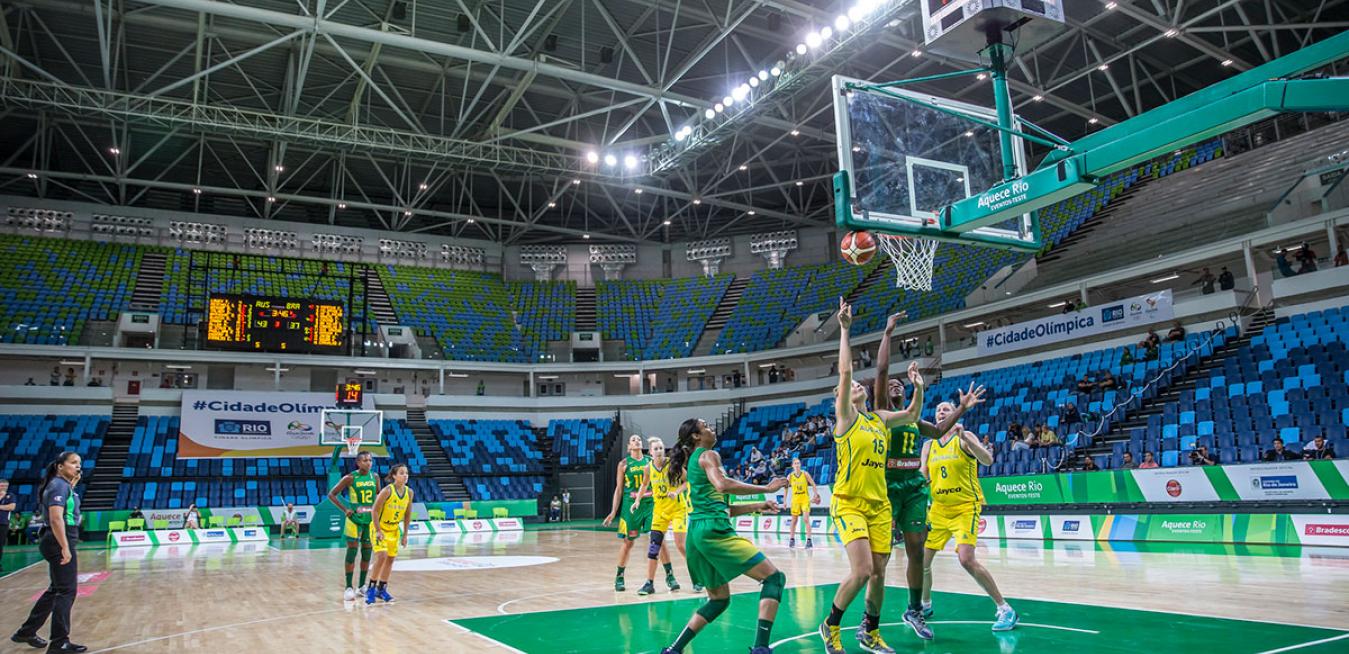
Burne used the Polyclinic at both Athens 2004 and Beijing 2008, which he attended as sports physician to the Australian Women’s Basketball team. He says that in Beijing, “One of our athletes had an ankle injury in the quarter final. It was a bit nasty, so we had to have that X-rayed to make sure there was no fracture, and we used the Polyclinic in that instance. We were lucky enough to get her ready for the final, which was a miraculous turnaround largely on her part.”
The hardest thing, says Burne, “is when athletes get injured and they cannot compete, and you have to rule them out—in some sports they’ve only got one chance, one event, that’s it—and when they get injured in training, delivering that news is a big challenge.” Imaging is crucial in confirming such decisions, and in demonstrating to the athlete the severity of the injury, and therefore the indisputable need for them to withdraw from competition for their own well-being.
Electronic medical history builds trust
Burne has been looking forward to the challenge of working with a diverse medical team to help athletes from all 28 sports in which Australia is competing. Although some individual teams, such as rugby and basketball, are accompanied by their own doctors and physios, the Australian Medical Centre is there for the entire Australian contingent to access as needed.
And in the absence of having personal knowledge of each athlete, Burne says staff at the centre will be able to access the Athlete Management System, an electronic medical and training record of every Australian competitor considered for Olympic-team selection. Past injuries, allergies, and vaccination and training history are among the details recorded, and will help medical staff tailor treatments, in the same way that the Polyclinic’s development of an Electronic Medical Record (EMR) for all Olympians on GE’s Centricity Practice Solution platform will help direct treatment for international competitors.
Individual patient knowledge helps to quickly build rapport between doctors and athletes, and patient confidence in the prescribed course of action. It allows sports physicians to do their work according to the established first principle of considering patient history before diagnosis or applying treatment, and helps athletes trust in their decisions.
Burne says that returning to first principles helped him stay calm in the dizzying atmosphere of his first Olympic Games involvement at Sydney 2000, and still informs his approach to guiding athletes in the charged atmosphere of this most elite event. It’s natural, he says, that “there are a lot of highly anxious athletes”. He says they have a lot to deal with, in an unfamiliar environment, and, “There have been times when I’ve had to be more of a psychologist than a doctor, and just being prepared to step up in that role, to be a real support person is often the bigger challenge.”