
×

GE.com has been updated to serve our three go-forward companies.

Please visit these standalone sites for more information

GE Aerospace | GE Vernova | GE HealthCare 

header-image

Going Solo: Formula 1′s Lone American Driver Alex Rossi Talks About Racing in the US, F1 Technology and Building Better “Upside-Down Airplanes”

November 15, 2013
image
Formula 1 is arguably the most popular motorsport in the world, but when the race series arrives in Austin, Texas, this weekend, it will mark the end of an era. Starting in 2014, new technical regulations will dramatically alter the F1 car and reduce the size of the engine, shrink the fuel tank, affect aerodynamics and alter the gear box. “Everybody is starting with a blank slate,” says Caterham F1 Team’s 22-year old reserve driver Alexander Rossi.

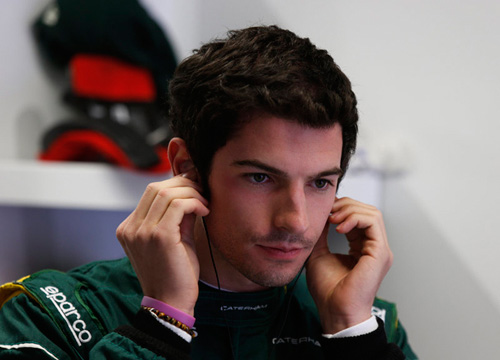
Caterham is working with scientists from GE Global Research to prepare for the changes. GE Reports managing editor Tomas Kellner talked to Rossi, currently the sole American with a “superlicense,” the document required to drive an Formula 1 car during an official F1 race weekend, about racing, using Big Data and GE science to build a better car, and the future of Formula 1 in America.

Tomas Kellner: In 2012, you became Caterham’s Formula 1 test driver and now, in 2013, you’re their reserve driver. Can you talk about your job?

Alex Rossi: Unfortunately, being a test driver is not what it used to be. Budgets and new regulations made testing very restricted. I get anywhere between three to six days per year in the car. We test things that may be a bit radical, which you would not try on a race weekend, like features that just came out of the wind tunnel or CFD [computational fluid dynamics] simulations. My responsibility is to have a good understanding of the original car and then test the update, what it should do and what it’s actually doing.

For 2013, as reserve driver I’m basically the guy waiting in the wings if anything happens to the race drivers. I’m what the name suggests, the reserve. I go to the races with the team, and I am there if needed. For me, that’s a great role. It means I’m embedded in the team. I see and experience everything the race drivers do without actually racing. That’s critical in helping me develop the skills you need when the race seat opportunity comes along.

TK: The 2014 rules replace the current 2.4 liter normally-aspirated V8 engine with a much smaller 1.6 liter turbocharged V6 engine, among many other things. Have you seen the new car?


AR: I’ve seen a mock up and it won’t be recognizable as a 2013 Formula 1 car. It looks more like a Champ Car. Everything from the aerodynamics to the tires, suspension, engines and electronics is changing. There is no past experience to fall back on. Everybody is starting with a blank slate.


TK: There seems to be a lot of regulations in F1.


AR: True, but there’s a lot of reasons why that’s how it is. One of the main goals is to help the smaller teams and get the budgets even so it’s more of a level playing field, not just a spending race. You used to have teams that would put in a new engine every week. It got to the point that it was not sustainable.
 /><br />
<br />
<strong>TK: Why do you think Formula 1 is not as popular in the U.S. as it is in the rest of the world?</strong><br />
<br />
<strong>AR: </strong>I think that is to be expected. Before Austin last year there were no U.S. races all the way back to 2006. When there is no American driver and no American team involved, no Chevrolet or Dodge, it’s going to be very difficult to get people behind it.<br />
<br />
<strong>TK: What appeals to you about Formula 1, compared to NASCAR or IndyCar?</strong><br />
<br />
<strong>AR: </strong>Formula 1 is so different from anything else we have in the U.S. because technology plays such an important role in it. It’s not just about driving the car quickly. It’s about who can be the most creative and most ingenious within the rules and regulations. It’s amazing to see the level of creativity that goes into it.<br />
<br />
<strong>TK: Why do you want to race F1 cars?</strong><br />
<br />
<strong>AR: </strong>Many athletes will tell you that they want to compete against the best. At the end of the day, Formula 1 machinery is unlike anything on the planet. To have the chance to drive the car and compete against what are in my opinion some of the best drivers in the world is something that’s truly incredible.<br />
<br />
<strong>TK:<strong> Thank you for the interview and good luck!</strong></strong><br />
<br />
</div>