



May 9, 2019
DRONING ONWARD
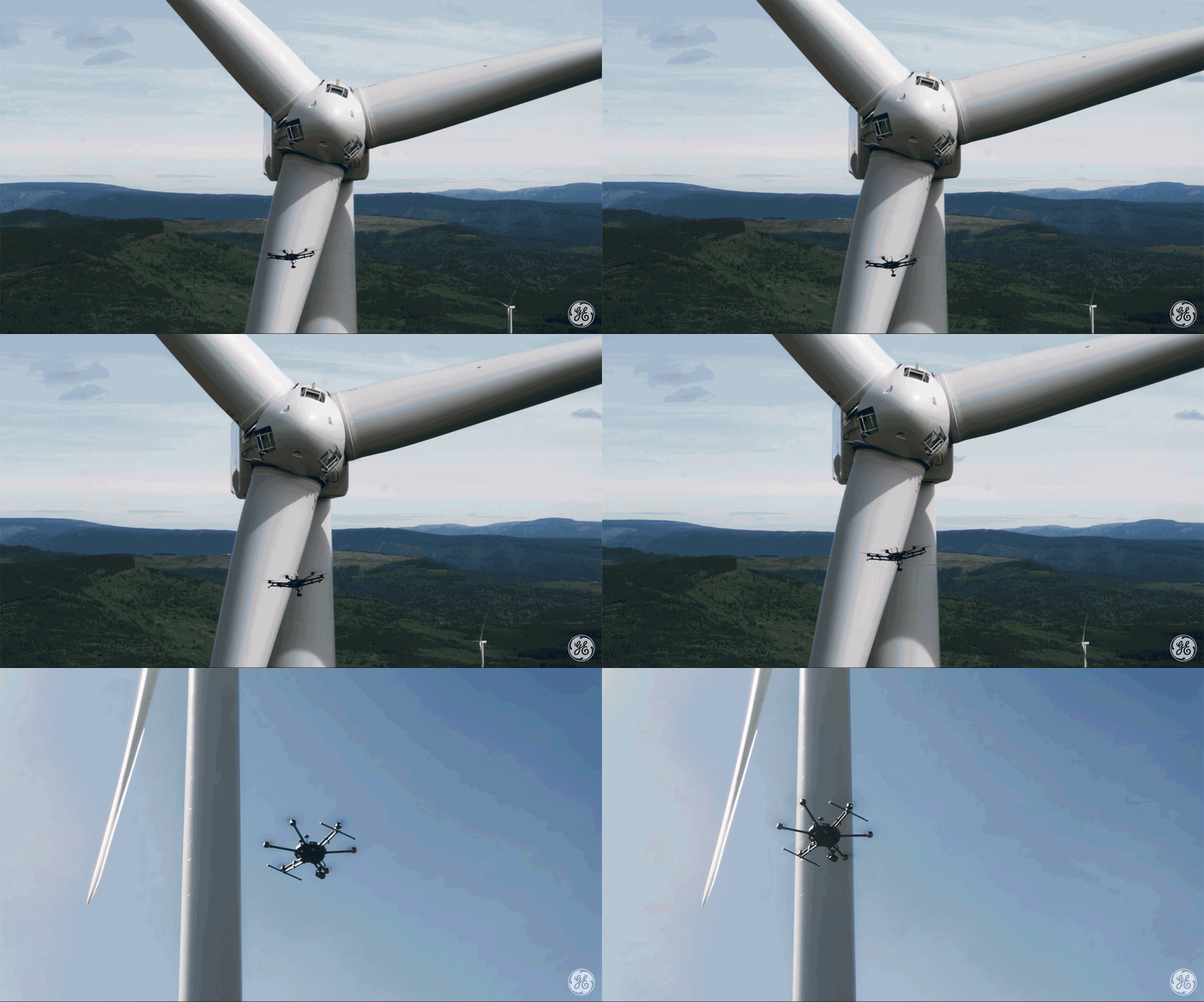
Drones have a natural fan base among certain segments of the American public — hobbyists, photographers — but so far those folks are just about the only ones buying them: Of the million-plus unmanned aerial vehicles in U.S. skies today, 90% are sold as high-priced toys in retail stores. If drones can get the OK for use in commercial situations, analysts see the potential for an industry worth tens of billions of dollars over the next few years. But the small craft will have to buzz over some hurdles on their way to the commercial marketplace — and GE and its partners are helping them get there.
Eyes in the sky: Package delivery has generated a lot of hype, but it only scratches the surface of what unmanned aerial vehicles, or UAVs, can do. The machines could also inspect pipelines and help maintain wind turbines and power lines. “They can conduct different types of missions that either humans cannot conduct or are better suited for humans not to do,” said Marc Luley of GE Aviation, which has joined a group of scientists, other companies and government agencies to develop a set of rules for the safe commercial operation of drones. They’re testing hardware and software concepts over the skies of Reno, Nevada — first at a local airfield and then, later this year, hopefully over the city itself. For UAVs to be viable on any scale, they have to operate well in uncontrolled environments where they share space with manned aircraft, and where the terrain isn’t known ahead of time.
Learn more here about the ins and outs of the burgeoning commercial UAV industry.
HAVE A HEART
Organs grown in the lab can’t come soon enough. More than 100,000 people in the U.S. are currently on waiting lists for transplants, with donors few and far between; even if they do receive a new organ, recipients have to spend the rest of their lives on immunosuppressant drugs. Lab-grown organs could solve two problems with one kidney (or heart or liver): They could fix the shortage, and because they can be grown from a patient’s own cells, they can also avoid the problem of organ rejection. Scientists are “tantalizingly close” to making this dream a reality, according to Singularity Hub — and now 3D printing is getting them even closer.
It was all yellow: Growing tissue in the lab is the easy part, as it turns out. Where scientists have encountered difficulty is in reproducing the vastly complicated systems of blood vessels that bring nutrients and oxygen to organs and ferry waste out. Now a team led by researchers at Rice University have devised a 3D printer “that can print vessels less than a third of a millimeter wide in biocompatible hydrogels,” Singularity Hub reports. Their technique relies on a 3D-printing method called projection stereolithography and a staple of the kitchen cupboard: yellow No. 5. This common food dye is also a key ingredient that helps scientists build blood vessels layer by microscopic layer.
How’s that work? Read more here.
INTO THE WILD BLUE YONDER
In its long history, GE can claim the production of the first U.S. jet engine, the production of the world’s largest jet engine and many other high-flying bona fides — which wouldn’t be worth much if the company didn’t also have a historic roster of talented pilots who’ve taken those engines into the sky. Recently, in honor of World Pilots’ Day, GE Reports rounded up some of the most remarkable stories of aviators in the GE lineage.
Aiming high: Take John A. Macready, the pilot who pushed his Le Pere biplane up to 38,000 feet, a record altitude at the time, with the help of a turbosupercharger designed by GE engineer Sanford Moss. Or Jon Ohman, GE’s chief test pilot, who was inspired by his hero Chuck Yeager to do things no pilot has done before — in Ohman’s case, that meant helming the first flight powered by the GE9X, the world’s largest jet engine. And then there are two Australian pilots with a couple of big notches in their own belts: In 1988, Deborah Jeppesen and Robyn Clay-Williams were the first women to graduate from the Royal Australian Air Force’s grueling 14-month pilot training program. “We learned to try to meet the challenges and try to break down the barriers, and eventually they opened those roles up,” Jeppesen said.
And just wait till you hear about Copper Man! Click here for these stories and more.
— VIDEO OF THE WEEK —
— QUOTE OF THE DAY —
“We have the opportunity to influence the future of aviation.”
— Matt Vacanti, senior product manager at GE Aviation
Quote: GE Reports. Image: AiRXOS.
ENJOY THIS NEWSLETTER?
Please send it to your friends and let them know they can subscribe here.