Forget the Garage, GE Research Was Born in a Barn


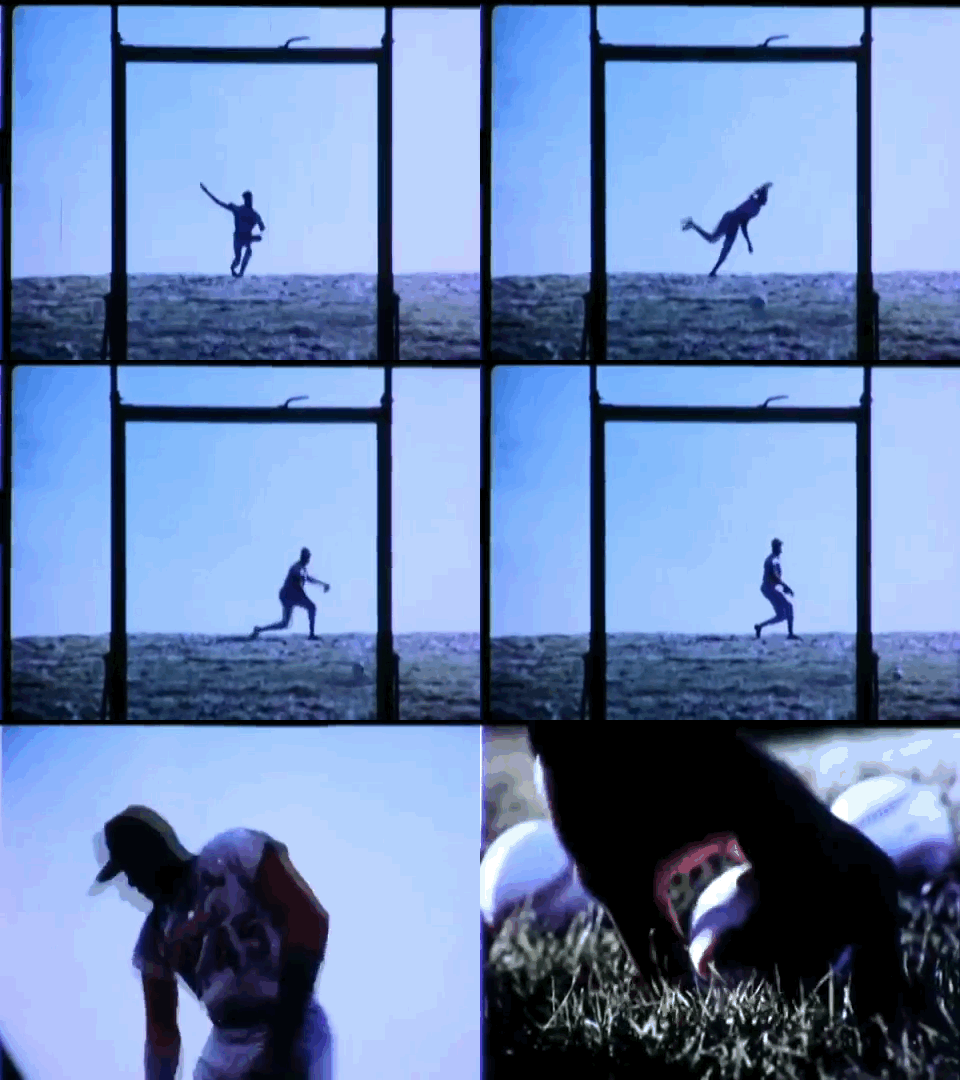
GE engineer Ivar Giaever tried something similar on the atomic scale and succeeded. Using electrons instead of baseballs, Giaever figured out how to send them through a piece of superconductor and demonstrated the “quantum tunneling“ effect in the material. Giaever shared the 1973 Nobel Prize in Physics for his breakthrough, which helped GE build its magnetic resonance machine (MRI) a decade later.
Both Fox and Giaever did their research at the mothership, GE’s global research headquarters near Schenectady, N.Y. But that lab is now part of a global research network of some 3,000 scientists stretching from New York to Germany, India, and China. Yesterday, GE added Brazil to that list, when it opened the Brazil Technology Center in Rio de Janeiro, its first R&D center in Latin America.
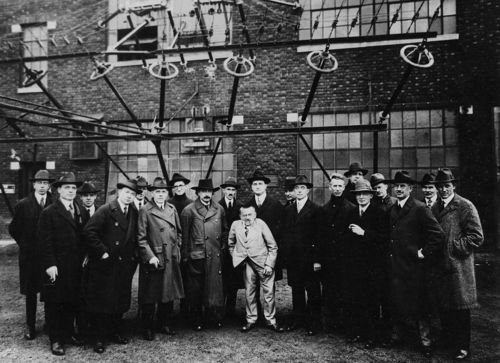
Charles Steinmetz (wearing light suit in the middle) flanked by Albert Einstein at RCA’s wireless station in Brunswick, N.J., in 1921. Steinmetz’s barn in Schenectady was the original GE research lab. Image credit: Franklin Township Public Library archive

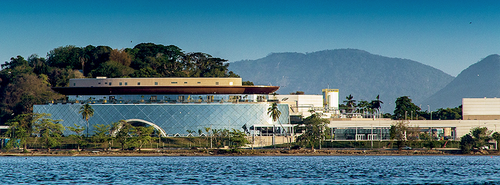
The barn lab (above) opened in 1900 and employed three people. But it caught fire (below) and Steinmetz and Thomson found bigger and safer premises in Schenectady.
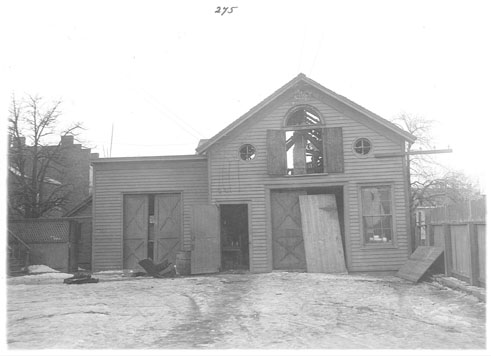
Image credit: Schenectady Museum of Innovation and Science
The new lab soon attracted many famous visitors, including wireless telegraph pioneer Guglielmo Marconi, quantum physicist Niels Bohr, and I.P. Pavlov famous for his conditioned dogs. Steinmetz hired MIT chemistry professor Wilis Whitney as the lab’s first director and each visitor had stop by his desk and sign a guest book.
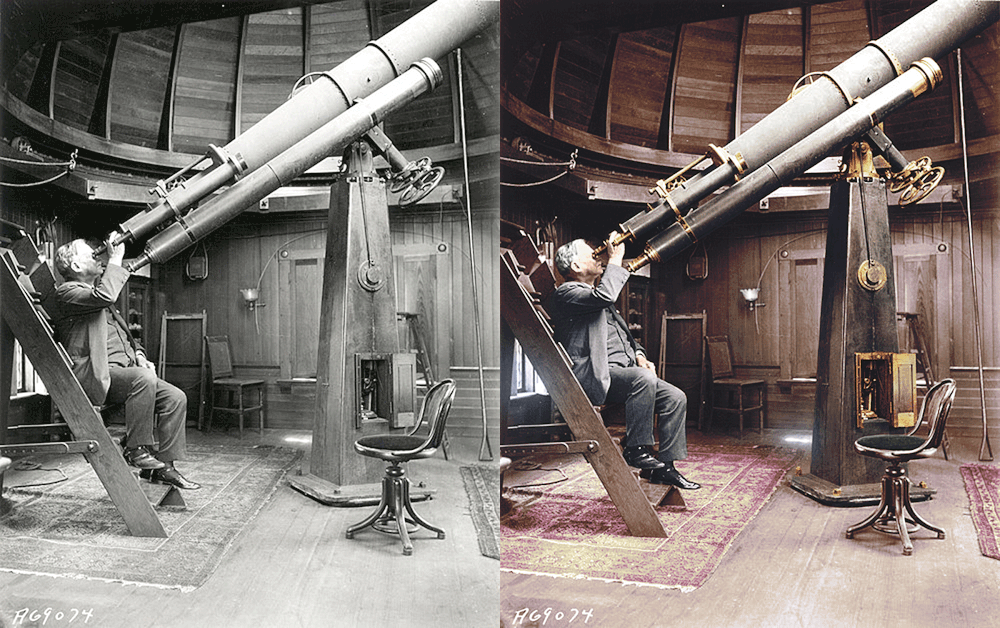
Elihu Thomson at his observatory. Image credit: GE Global Research
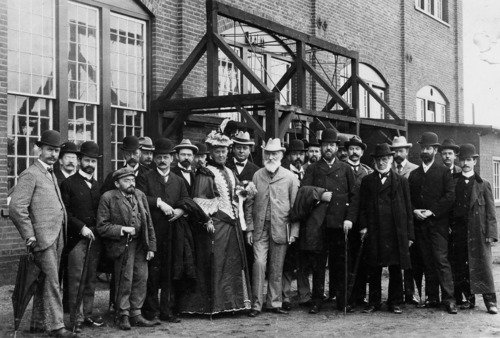
Visitors to GE labs included Lord Kelvin (light suit in the middle) and his wife. The Kelvin absolute temperature scale was named in his honor. Image credit: Schenectady Museum of Innovation and Science
The labs also attracted famous non-scientists, including Presidents Franklin Roosevelt, Kennedy and Nixon, as well as Amelia Earhart and Harry Houdini. They spoke to local citizens from WGY, GE’s radio station in Schenectady. It began broadcasting in 1922 from a 1,500-watt transmitter. It was one of the first radio stations in the U.S. with regularly scheduled programming.
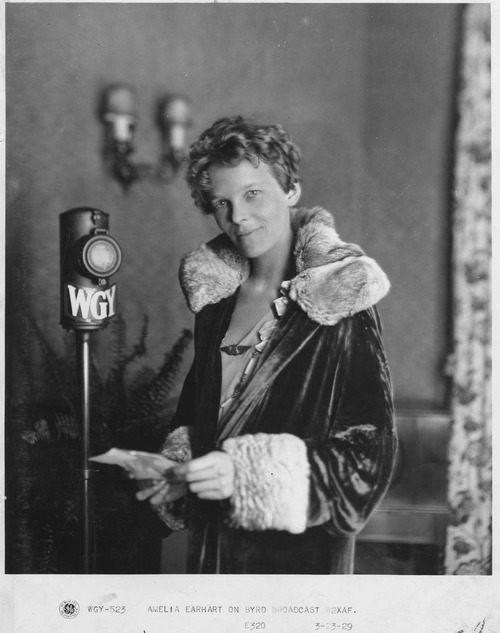
Amelia Earhart visited GE. Image credit: Schenectady Museum of Innovation and Science
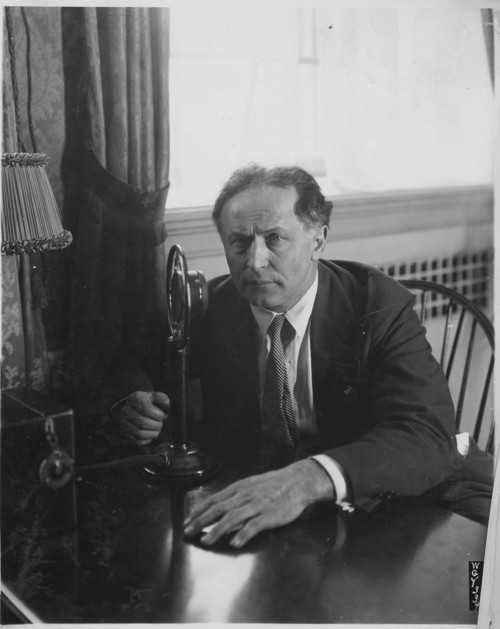
As did Harry Houdini: Image credit: Schenectady Museum of Innovation and Science
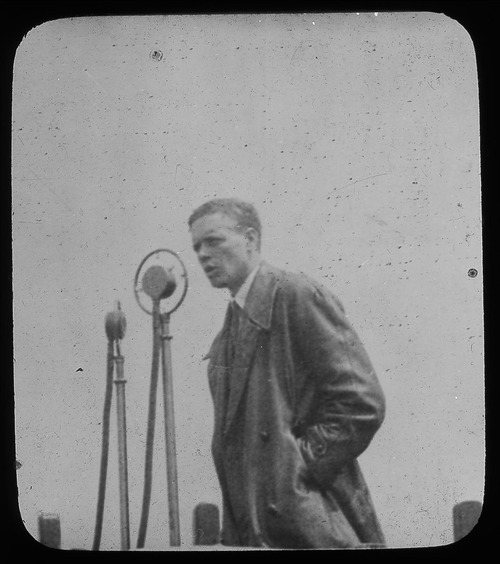
Charles Lindbergh. Image credit: Schenectady Museum of Innovation and Science
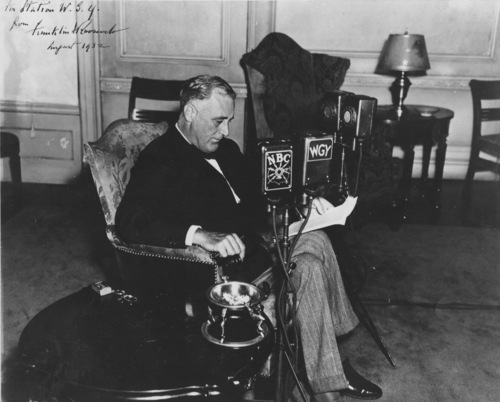
F.D.R. came to Schenectady during his 1932 presidential campaign. Image credit: Schenectady Museum of Innovation and Science
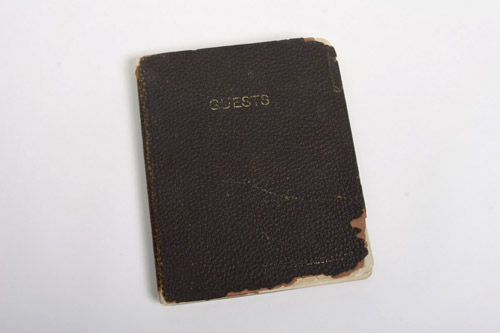
Whitney’s guest book. Image credit: GE Global Research
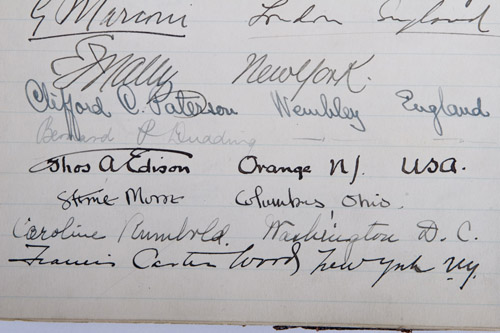
Edison’s signature (middle left) and Marconi’s (top left). Image credit: GE Global Research
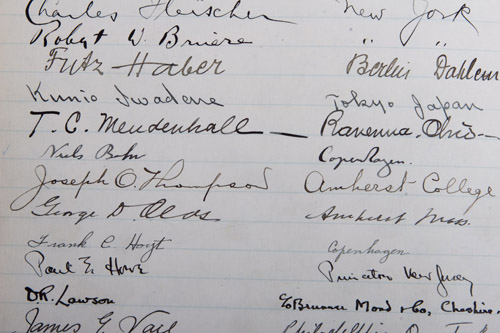
Kunihiko Iwadare began his career by working for Edison. When he returned to Japan, he founded Nippon Electric Co., known today as NEC Corporation. German chemist Fritz Haber found a way to fix ammonia and synthesize fertilizer. His discovery helped feed the world. Niels Bohr (sixth down) won the 1922 Nobel Prize in Physics. Frank C. Hoyt worked closely with Erwin Schroedinger on quantum theory. Image credit: GE Global Research
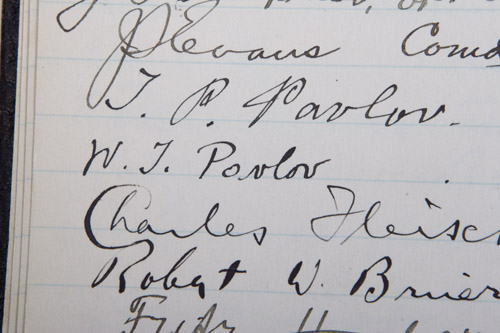
Pavlov, who traveled to Schenectady from Russia, won the 1904 Nobel Prize in Physiology. He is best known for discovering conditioned reflexes, which was a result of his famous experiments with dogs. But his research also contributed to medicine and physiology. Image credit: GE Global Research