Electrifying the Globe: 2014 and Beyond



Question: Where do you see electricity market going? Why is electrification the most visible system of modern day?
Varro: Electricity is taking over, and it’s growing much more rapidly than other energy sources. I’ve seen throughout my career that there’s a tendency to underestimate the electricity industry, so let me set the scene. There are no super major electricity companies (i.e. the equivalent of an Exxon Mobile) but if you add together the capacity of all, the industry is 1.5 times larger than the oil and gas industry. As long as there is a gradual evolution of political environment, the electricity industry will see $435 billion every year in investment over the next 25 years, a significant portion of the energy mix that we cannot ignore.
Electricity is growing at a higher rate than total energy systems for two reasons. The first is that it’s immensely more efficient than any other way of transporting energy from the point of generation, across the value chain of conversion from primary energy into electricity, and then to the end user. Because of electricity’s immense versatility, there are some applications only electricity can do.
The second is the sequencing of modernization in emerging market countries. Modernization starts with urban industrialization followed by a newly created middle class—many now reaching the point where electricity is crucial for economic prosperity. In these countries, there is a 20-year gap between the acceleration of electricity and acceleration of oil.
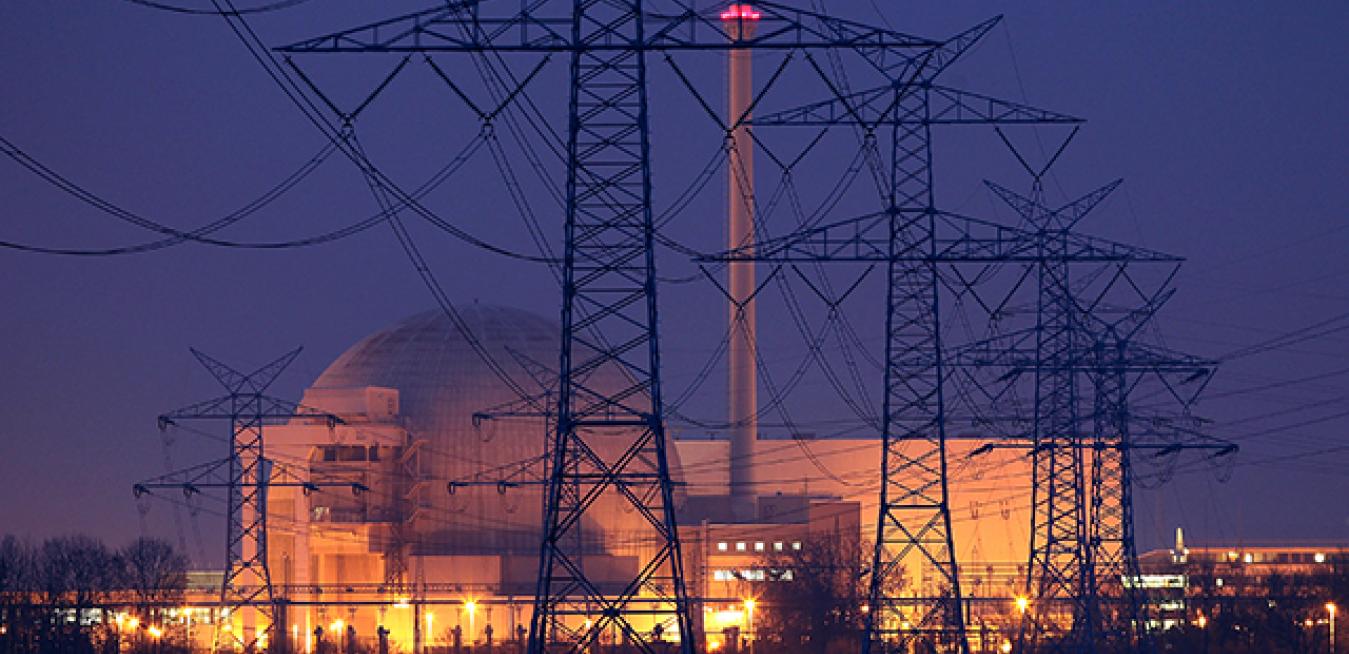
Electricity pylons stand in a row leading to the Unterweser nuclear power plant on March 21, 2011 near Stadland, Germany.
Photo: Sean Gallup/Getty Images
Question: What trends are we seeing globally? What part does it play in energy mix?
Varro: Electricity is growing globally around two percent per year. It is a huge focus for governments across the globe, as they hold responsibility to support a safe and reliable electrical infrastructure and sustain daily life for their constituents.
Climate considerations and de-carbonization are additional drivers for a diverse energy mix and sit the top of many governments’ agendas. For this reason, we’ll soon have a majority of energy transport in the form of electricity. As countries work to replace large-scale coal generation with hydro, nuclear, wind or solar, then the energy has to be transported in form of electricity.
Electricity production will be in increasingly close proximity to gas, nuclear, hydro, wind and solar sources, in which it is then carried more efficiently over transmission systems to both industry and consumers. Tied to the increased flexibility of power systems and need for multiple power sources, decarbonizing energy systems requires updated, modernized and stronger transmission systems. It’s similar to building transmission highways after having the country roads in place. As nuclear, hydro, wind and solar become increasingly important, transmission systems will need to ramp up.
Question: What advice do you have for utilities and energy companies that are trying to create short and long term plans?
Varro: It truly varies by region, and we can learn some interesting lessons from Asia at the moment. You cannot go wrong with building a strong electricity network that includes modern technology such as power quality equipment to ensure safety, reliability and efficiency. We’re seeing beautiful examples of this grid technology significantly expanding and improving current network infrastructure in Asia, especially in the case of China and their large hydro developments far from the major cities.
You can also be sure that as the global middle class expands, environmental concerns will continue to increase both on the consumer and political arenas.
Electricity is also getting more and more capital intensive as the importance of capital intensive technologies are increasing. To a larger and larger extent, capital is the single factor determining cost of electricity. The way electricity regulators function in any one country is very important to keep an eye on.
As magnified by the brownout in India, major grid disruptions are a real risk. India and many parts of the world have a generation shortage and needs new power plants, however, they are able to manage smaller shortages daily without the entire system collapsing.
But the solution to these shortages isn’t technology alone. Both the India brownout and Hurricane Sandy raise awareness of the interaction between federal and state level governments. In order to build a sufficient grid system, many countries face similar coordination issues between federal grid companies and local distributor agencies that manage states, typically around allocation and scheduling of electricity. Progress is typically slower under this model to modernize electrical systems, often resulting in underinvestment in grid resiliency and a lack of a holistic approach.
Question: Low carbon energies are gaining in popularity due to increased environmental concerns. A rising star among these is gas. What is the weight of gas that you see inside the future energy mix?
Varro: Gas alone will not address all environmental concerns.
If we stay within the current energy mix, namely both high and low carbon energy, we can burn the earth 4 times over in terms of CO2 emissions. If we use the same amount of fuel but only in the form of gas, it is still enough to burn the earth twice.
Therefore, we have to go beyond of what we do now to reduce impacts on the environment. We’ll need a mix that is more than just gas, and countries across the globe are embracing short and long term development plans that contain a very high percentage of low carbon energy.
Question: What is your view on shale gas in the future energy mix?
Varro: As we’re seeing now, the United States has abundant resource of shale gas, and new plays are still being developed. However, in countries like Japan and Korea, there is no single trace of shale gas. In India and Europe, there is some shale gas resources found but the political environment has made it extremely difficult to yield any meaningful production. In China, the development rate of shale gas is only 1/3 to the level of U.S.
There are significantly lower costs for these countries if they choose add low carbon resources to the mix. In the current Asian situation, some countries are less concerned about environmental impact and continue to use coal, while others are beginning to use hydro, nuclear, solar and wind. And gas is only consumed when absolutely needed.
In my view, shale gas will play an increasingly important role of energy supply in the US, where we see a huge domestic resource and a competitive, cost-efficient industry.
Question: We are seeing the gas boom and many countries outside the U.S. are starting to feel the impact of it. Do you see an increase in LNG tanker fleets in the future?
Varro: Absolutely. The world will need a much bigger LNG tanker fleet for emerging export and import countries. There is currently a shortage of LNG tankers. Major shipyards in Korea, Japan and China have booked out for the next 3 years. Traditionally, LNG tankers are dedicated to a single project but these days we see a third of tankers under construction are owned by financial investors. Certainly, the expansion of LNG transportation capacity will facilitate a more efficient gas trade.
Question: What is the state of gas in China?
Varro: In the case of shale gas, the Chinese government has only projected the development at a rate of one-third the U.S. So far we see northern America as the only main shale gas producer and exporter, while long-distance transportation has made the cost of gas much higher elsewhere in the world.
But China is moving on many other solutions for their energy needs. Choosing to consume other low carbon resources like hydro, wind and solar, China can still serve its consumers and improve environmental conditions. And this is exactly what China is doing. Like many Asian countries, gas is only consumed when absolutely needed in China.
China has yet not achieved a comprehensive and efficient level for gas regulation. They also have encountered problems in ramping up shale production. But indeed, all measures are ready to operate an efficient and functional gas market. They just need to do their ‘homework’ to get the elements assembled and operating smoothly for the benefit of the entire country.
Editor’s Note: This piece is part of Energy 2020, a special project page looking at the changing energy landscape with an emphasis on the impact natural gas is having on the global energy mix.
Electrifying the Globe: 2014 and Beyond was originally published on Ideas Lab