
Digital Power Solutions Could Help Indonesia Save US$1 Billion Annually


At the recent Powering Indonesia 2017 event, Chief Commercial Officer of GE, Maher Chebbo, shared key insights into how digital solutions can accelerate the achievement of these goals - when it comes to Digital Power opportunities in Indonesia he said the “sky really is the limit.”
1. The global energy landscape is changing
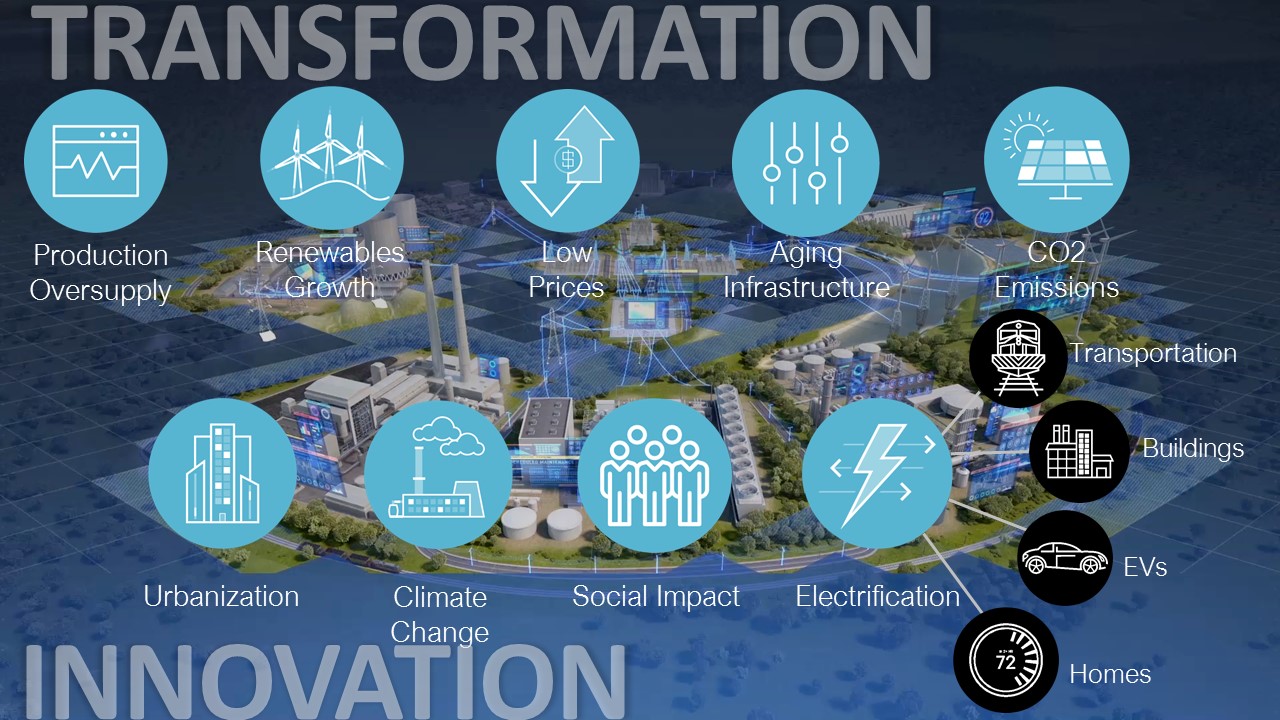
The energy value chain used to be a linear system - we produced power, we transported and distributed to customers. We only needed one way, and the customer got what was provided.
Now the picture has changed because needs have changed. We have a value chain where renewables are playing a part. We have objectives around energy efficiency which means we have to interact with customers. We must better understand demand, then match it with capacity.
On top of this, we need to collect all this data and be capable of predicting how we generate and from what location to provide the customers with the cheapest, closest, and cleanest energy to them.
2. Indonesia could save US$1 billion per year with digitisation
[embed]https://www.youtube.com/watch?v=G2Q-PLYOolM[/embed]
GE is working with PT Pembangkitan Jawa-Bali (PJB), the largest subsidiary of Indonesia’s national power utility PT PLN, to develop a Remote Engineering, Monitoring & Diagnostics Centre in Surabaya to connect 21 of their energy sites. Through our Asset Performance Management and Operations Optimization digital solutions, we aim to help PJB enhance their asset efficiencies to significantly reduce breakdown, and unplanned maintenance downtime, which will benefit Indonesia as a whole.
We’ve talked about the opportunity to reduce losses by 2%. That might even be conservative. We have the potential to reduce losses by up to 3%, reducing wider non-technical losses, and generating huge savings for the country.
Ultimately, we believe these savings represent a US$1 billion opportunity annually. Around two-thirds of that would be in the capacity of power generation, with the rest developing from infrastructures such as transmission and distribution.
3. Digitalisation doesn’t mean IT, it means unlocking opportunity
Digitalisation doesn’t mean IT. Many companies already have IT - digitalization is leveraging new capabilities and the ability to collect large amounts of data. We are leveraging the speed of communication of networks to open new opportunities.
Today we are already talking about 5G data, and already leveraging the development solutions that could be hosted. Digitalization is all of that, utilising predictive models, opening up this new opportunity to provide better services and performance for the market.
We’re not just doing this for customers. We did this first for GE, taking 250 million hours of data, collected from all our manufacturing and field equipment. From there we said how are we going to improve our performance? We made US$700 million of savings from our in-house efforts.
4. Indonesia is well positioned to embrace this opportunity
Today, GE digital technology manages 167 GW of installed power, which is more than 3 times the overall capacity of power produced in Indonesia. To date, we’ve converted about 20% of our customers in power to digital. That’s a good performance in such a short timeframe.
What we would like to do in Indonesia is a version of our centre in Atlanta. In Atlanta, we monitor and analyse 820 plants across the world. We cover about 5,000 assets that we monitor 24/7, and about 2,500 gas turbine generators and steam turbine generators.
So far, we have over 60,000 cases captured. That’s a lot of opportunity for learning. This all builds into us improving the performance. In the last year alone we’ve prevented potential failure situations to the value of $250 M.
5. Digital capabilities unlock valuable jobs
Machines make things simpler for human beings. We want to use those machines to provide new opportunities for people. Those capabilities will unlock more interesting jobs. We already see in countries that are quite automated, that have implemented significant IT modernisation, that they are still creating lots of jobs. Take the example of Germany, where 80% or 90% of the country has implemented advanced software for automation, yet they are still among the leaders of job creation in Europe.
So digital capabilities are transforming jobs and creating more intelligent jobs. What’s important is the knowledge management. We aim to devote resources to a competence centre where individuals can learn from alerts, learn from digitalization, from predictive maintenance, and from the overall predictive analytics process. This management and knowledge resource should be created in the interest of the country and expanded within the energy sector and beyond.
6. Digital Energy could add US$1.3 trillion to the global economy
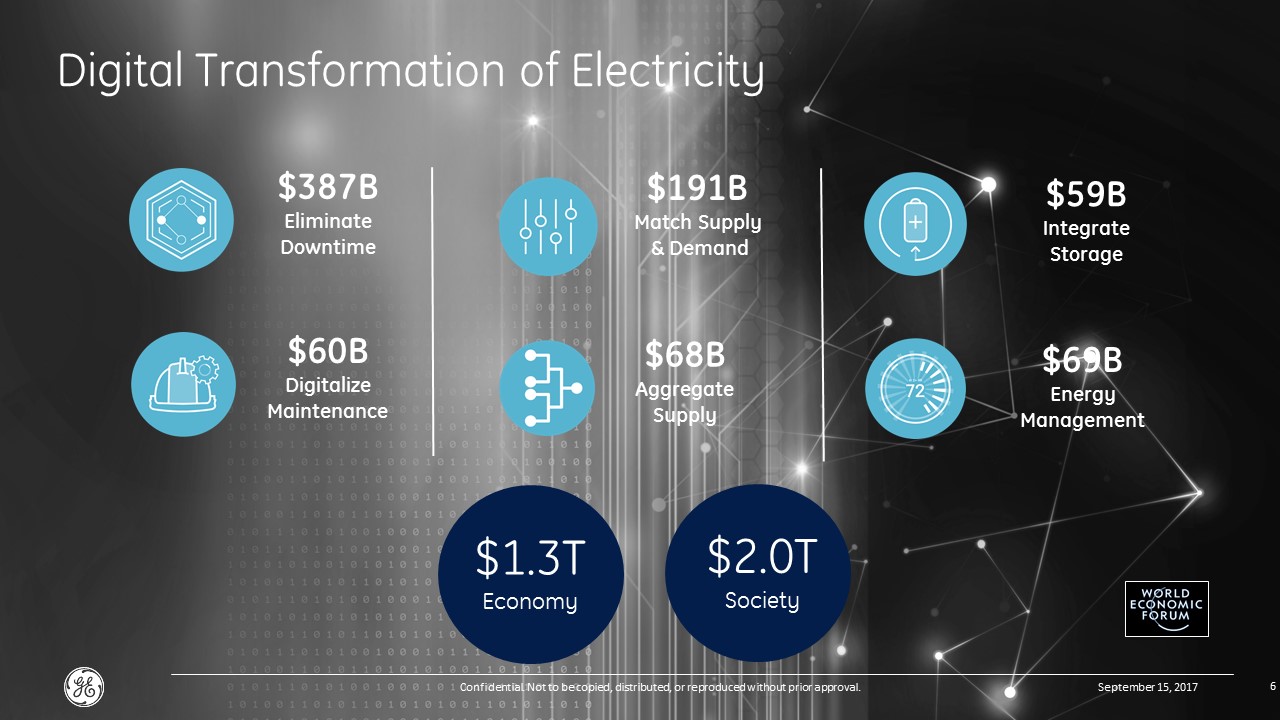
The potential for Indonesia represents just one part of a huge global opportunity. At GE, we believe digitalization could be worth as much as US$1.3 trillion for the global economy, and US$2 trillion to wider society.
At the end of the day, our focus isn’t simply on machines. Our focus is on helping make things smarter, putting complexity into machines and allowing them to learn and understand better ways to work. We want those machines to provide value for people, for users, for society.
To view the full keynote presentation from Chief Commercial Officer of GE, Maher Chebbo, click here.