Confronting the ‘Blood Money’ of Conflict Minerals


The war has killed an estimated 5 million people since the turn of the century and is characterized by the worst kinds of human rights abuses, rape as a weapon and the recruitment of child soldiers.
In an effort to thwart the hundreds of millions of dollars generated by mining efforts that fund the various rebel groups and government troops controlling these operations, Congress inserted a disclosure provision in the Dodd-Frank Act.
“The idea of Dodd-frank is to break the link between the products that are made from the minerals and the financing of that conflict,” said Sandy Merber, executive counsel for International Trade Regulation and Sourcing at GE a video interview with the Society of Corporate Secretaries and Governance Professionals. “And the way that that is intended to be done is through disclosure,” Merber said.
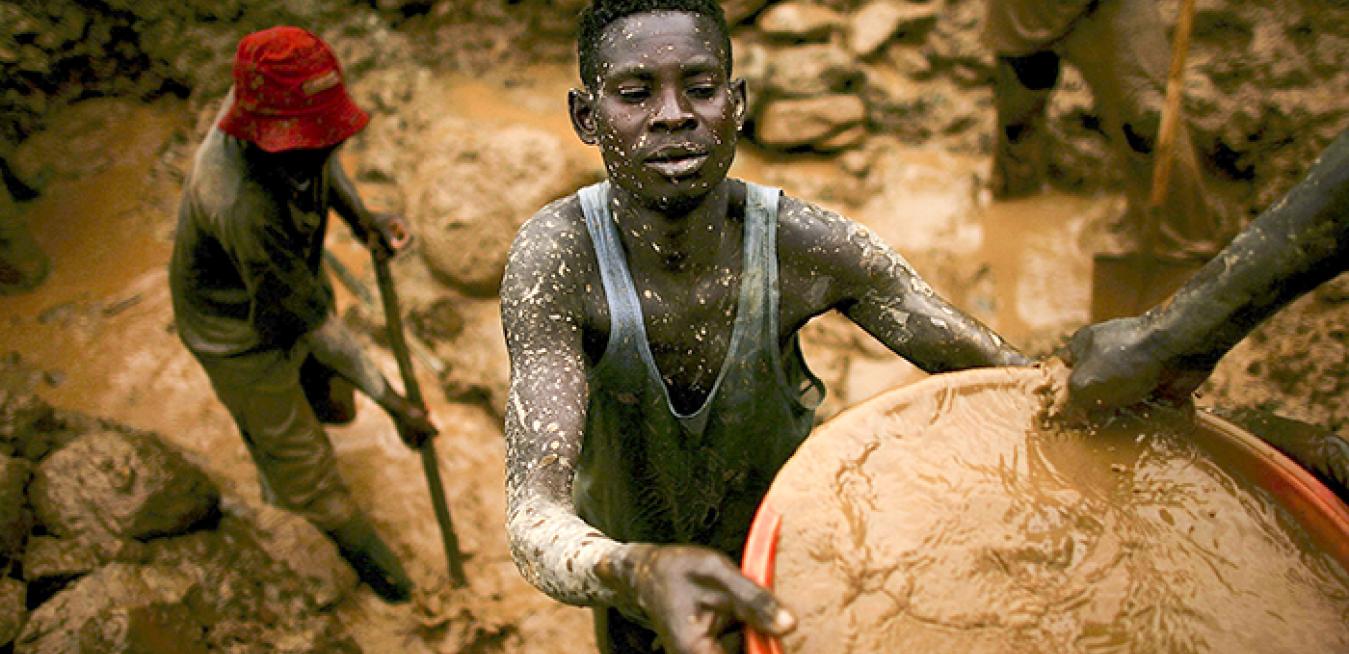
Men sift through buckets of dirt while looking for gold at an abandoned industrial mine in Mongbwalu, Congo. Thousands of Congolese scrape together meager livings from mining. Gold and other mineral deposits, which are numerous in the volatile north-east of the country, have become a catalyst to much of the conflict in Congo. Numerous militias and warlords have vied for control of the mineral rich eastern Congo for decades,
creating instability and continued bloodshed. Photo: Spencer Platt/Getty Images
There’s nothing in the law that prohibits companies from using those minerals—most of today’s electronics wouldn’t exist without using some combination of these metals.
“But the idea is to try to avoid the trafficking in those minerals by the rebel groups and supporting them through using those metals” Merber said. The law requires that companies disclose to the Securities and Exchange Commission on the progress made to clear their supply chains of these minerals.
However, it’s important that in trying to clear the supply chain of conflict-supporting minerals that companies don’t abandon the Congo altogether, a situation Merber said would only further impoverish the population.
The task of clearing a supply chain is difficult. GE’s “Action on Conflict Minerals” document gives an example of this complexity by tracing the “relatively simple” supply chain of a CT scanner:
Such a scanner has 1,500 purchased part numbers from a total of 119 suppliers. Among these parts are nine printed wiring assemblies provided by a GE supplier. One of the nine assemblies has 116 separate components—some of which our supplier may have purchased rather than manufacturing itself. Seventeen of those components contain tin and/or gold.
The ultimate success of Dodd-Frank won’t be known for years. “It’s hard to draw a straight line,” from Dodd-Frank to a reduction of military presence at the mining operations, Merber said, owing to the fact that there are numerous political forces at work to end the conflict as well.
“This is a process, it’s not a single act of disclosing and being done with it,” Merber said. “It’s a process of learning more and more every year about the supply chain where the minerals come from and putting that pressure down through the supply chain to try to get the smelters into the program,” he said.
For a more in-depth discussion of the conflict minerals issue and ways companies are dealing with problem, please see the Merber interview video below.
For a deeper dive into how GE is addressing this problem and working with other groups to create a sustainable environment in the DRC, please see this video.
Confronting the ‘Blood Money’ of Conflict Minerals was originally published on Ideas Lab