Brazil’s “Little Canaries” Fly Green on Their Way to the Top



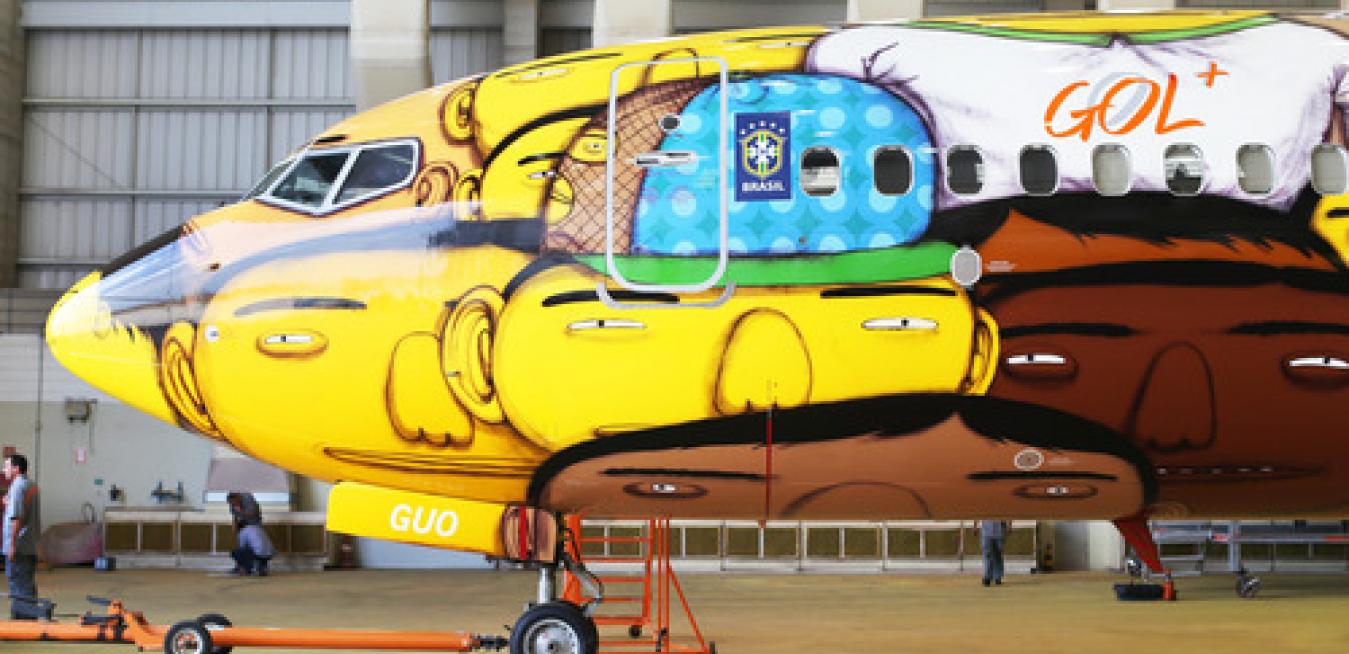
The team is riding a Boeing 737-800 special equipped with jet engines capable of ingesting biofuel. And the players are not alone. There will be some 200 commercial GOL flights powered by the fuel during the tournament.
These are no flights of fancy. “The adoption of eco-efficient technologies has a number of benefits,” says Gilberto Peralta, president and chief executive of GE in Brazil. “They allow airlines to boost productivity and reduce environmental impacts, losses and operational costs all at the same time.” GE is a partner in the joint-venture that made the jet engines.

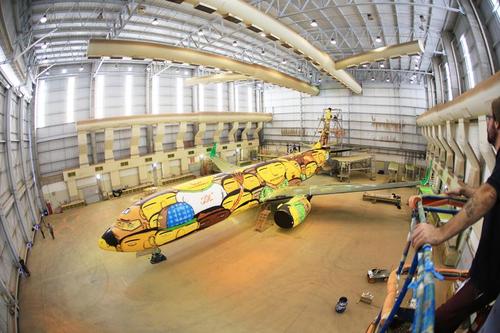
The Brazil’s team Boeing sports a giant mural created by artists Otavio and Gustavo Pandolfo. They are known as “Os Gemeos” and this picture shows the Pandolfo twins at work.
GOL, a sponsor of the Brazilian team, estimates that the biofuel flights will reduce carbon dioxide emissions into the atmosphere by approximately 218 tons. Sergio Quito, chief operating officer of GOL, says that the airline is committed to cleaning up Brazilian skies and making the civil aviation sector more sustainable.
GE has been testing and using biofuels in military and commercial jet engines since 2007. In 2008, Virgin Atlantic’s Boeing 747 with four GE engines using biodiesel flew from London to Amsterdam. On Earth Day 2010, a GE-powered Navy F/A-18 fighter jet called the Green Hornet broke the sound barrier with tanks filled with a mix of biofuel and kerosene.
Starting in 2016, GE plans to buy half a million gallons of biofuel for engine testing every year for the next decade. The company has an option to scale the order up to 10 million gallons per year as testing volumes start to peak due to a massive jet engine order backlog.
Says Mike Epstein, chief technologist leading the alternative fuels efforts at GE Aviation: “Developing alternative sources for jet fuel is fundamentally good for the aviation industry and the environment.”
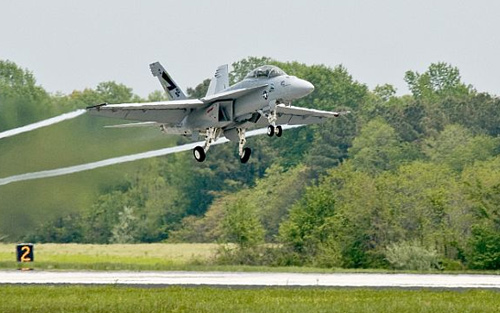
The Green Hornet broke the sound barrier with a biofuel mix in the tank.