Aussie “monsters” scoop international grant for knee-pain research



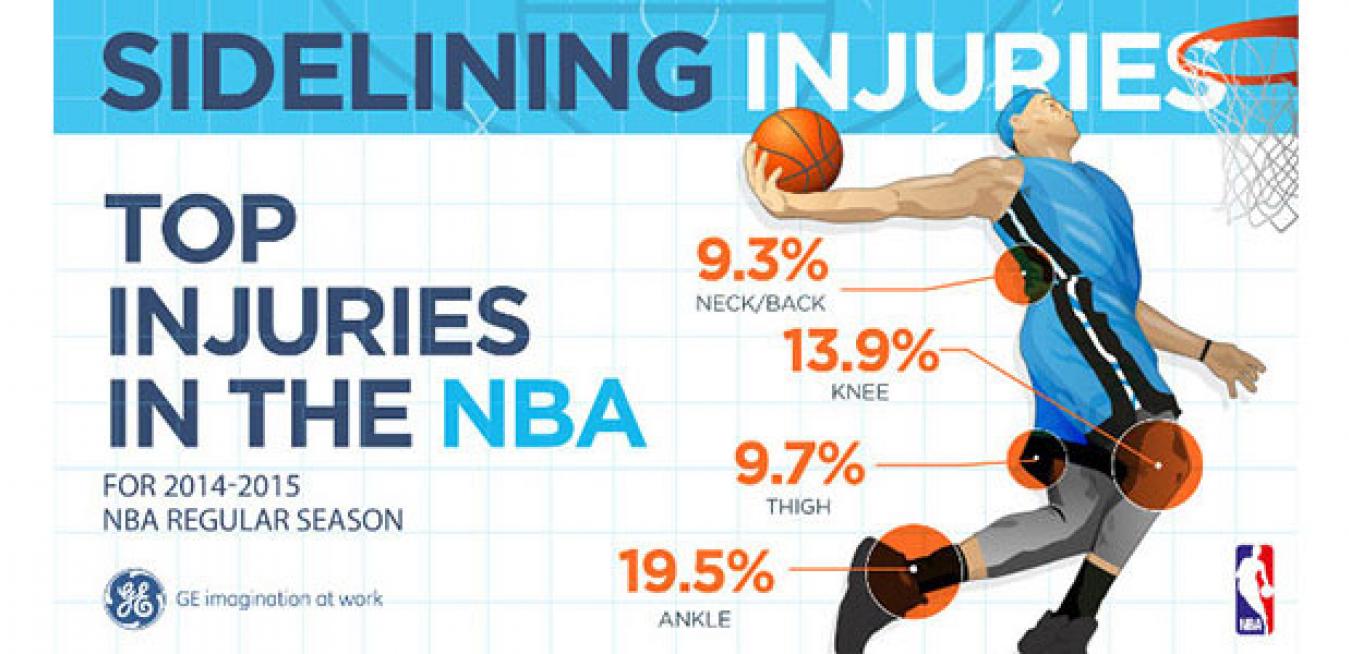
Last year, the US National Basketball Association in cahoots with GE set a challenge called Sidelining Injuries, and offered a US$1.5 million dollar grant pool to drive prevention and treatment of of the condition. Among the successful bids was that of a Melbourne-led alliance of Australian and US universities, which scored US$200,000 and will begin its three-year study in October.
GE and the NBA called for proposals in mid-2015 and attracted 70 international applications. As one of the Melbourne Tendon Research group known as the Monsters—as good a team name as any!—Professor Jill Cook from the La Trobe Sports and Exercise Medicine Research Centre caught the pass with both hands. She spent almost 10 weeks co-ordinating the submission of a four-university group, to use ultrasound to investigate the relationship between pain and changes in tendon structure.
The study will also evaluate how particular exercises can immediately impact pain, help players to avoid missed games, and make athletes’ tendons more load tolerant. Millions of people—basketballers, volleyballers, track-and-field participants and bystanders with sore knees—stand to benefit from the research-based application of such non-invasive intervention.
Cook estimates that around 20% of Australia’s more than a million basketball players, from junior league to masters, have tendon changes and some of these have knee pain severe enough for them to want to change their training regimen—pain that also further affects their quality of life. She says, “If people are dropping out of their sport because of knee pain or altering the activities they do because of knee pain, that’s not where we want to be. We must keep our population active, so anything we can do to reduce the burden of this condition and to keep people playing their game for as long as possible is beneficial.”
"Is there an intervention that allows us to improve pain while people continue to play and train?"
She says that La Trobe or any one of her university partners in this endeavour—the University of Newcastle, or the US Tulane University or University of North Carolina-Chapel Hill—might have attempted a much smaller study. The grant, however, will pay for the researchers needed to recruit, motivate and retain a much larger cohort of participants, from multiple ethnicities including African-American players, women and men.
“We’re looking to recruit elite and sub-elite teams and to collect data from 300 to 400 athletes over two years; we’re looking to offer an intervention that requires equipment—and all of that takes money. There’s no way our little research group has a chance of doing that without significant funding. But with a grant, we can collaborate to cover all the groups and come up with an outcome or answer that we think is robust.”
As part of the grant, GE will provide three LOGIQ E9 ultrasound machines to the participating universities. “Ultrasound is one of the best ways to measure tendon structure,” says Cook, “and depending on the way the data is interpreted from the ultrasound it gives us a whole range of different perspectives on the structure within the tendon.”
Cook says previous research seems to indicate that pain changes without evidence of accompanying structural change. “But we don’t have really good data on that. So by longitudinally imaging those tendons and longitudinally following their pain, we’ll be able to do a correlation between those two.”
"These people are really sore. They sometimes can’t do much for two days after a game."
In 2014, Basketball Australia estimated there were 390,000 players of the sport who were under 15, and numbers of young participants are rapidly increasing. “Part of our study is looking at how the tendon develops in junior athletes,” says Cook. She says the attachment of the tendon to the kneecap is formed during adolescence in particular, and that placing excessive load on knees at this stage may interrupt the process. In an article about the successful grant application, posted on La Trobe’s website, Cook explained “We will image the patellar tendon in pre- and early pubertal players every six months and correlate any changes in the structure of their tendons with their load and pubertal status … Preventing tendon pathology in young athletes has wide implications. We aim to provide guidelines for training in adolescents that can decrease the prevalence of the condition within five years.”
The LOGIQ E9s will be put through their paces from courtside to locker room. Cook appreciates the advances technology has made over recent decades. “Twenty years ago I used to drag a behemoth around as part of my PhD, and I used to have to hire a truck to do it. Now, I just pack up the machine and put her in the back of my car and off I go. The change in technology has been amazing and contributes substantially to our being able to do this research project,” she says.
Researching the pathology of injury and validating new approaches to treatment is a long-term game. Cook, whose specialty is musculoskeletal health, completed her PhD on patellar tendons in 2000 as a response to the glaring lack of available research that would help her treat tendinopathy in her physiotherapy practice. She has contributed to more than 90 medical publications and studies since 2011 alone. What motivates her?
“We only ever do research that’s going to improve the clinical management of this condition. That keeps us going. If we have research to show that this works better than that, then that’s going to help. Even though tendinopathy is very disabling and it affects everyone—not just elite athletes—our chance of getting funding through mainstream granting avenues is really limited. That’s why this is grant is so important,” says Cook.