A little Ecomagination goes a long way


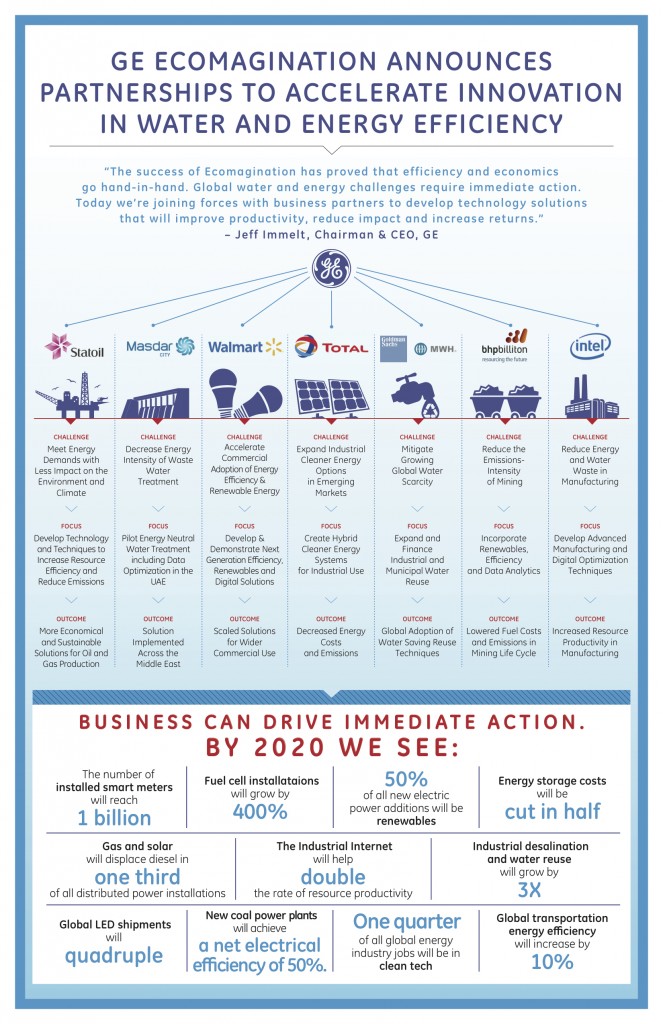
To accelerate innovation in sustainable water and energy technology and practices, GE has announced partnerships with eight significant others, under its Ecomagination strategy. You could call it an umbrella, but this isn’t about taking shelter, it’s about changing our climate for the better.
The scope of the partnerships is summarised in this infographic:
 Evolution heavy-hauling locomotives have saved customers around $98 million in fuel over the past 10 years.
The development of global resources—essential to facilitating prosperity for a growing population—has traditionally been an energy-intensive business. BHP Billiton, one of the world’s major producers of iron ore, coal, oil, gas, copper and uranium, has long sought to increase its energy efficiency and decrease greenhouse gas emissions: “BHP Billiton has a very active program in addressing climate change. Globally, we’re seeing advances in so many different areas—transportation, power supply, management of fugitive methane emissions,” says Winkelman. “The pace of technology change is only going to increase, and we need to be ready to innovate”
Winkelman sees great synergies in like-minded companies working together on big challenges that affect us all. “Engaging in relationships with peers with complementary but different skill sets can only benefit us. Working with a leading organisation like GE, which has a track record in being innovative and delivering solutions, we think, is a good mix of technical ability, and the ability to deliver solutions for the real world.”
GE’s Ecomagination Partnership with Walmart, the multinational retail corporation, centres around accelerating commercial adoption of energy efficiency and renewable energy. A particular focus of the collaboration will be to develop and demonstrate the next generation of LEDs. In Australia, GE’s biggest energy-saving lighting project to date—the transformation of City of Sydney municipal and street lights to LED—has already delivered a 47% decrease in energy used, which translates to roughly $370,000 annual savings on power bills and a reduction in carbon dioxide emissions of almost 3,000 tonnes a year. GE estimates that global shipments of LEDs will quadruple by 2020, as other government and commercial organisations make the switch, increasingly with the added networked capabilities of LED infrastructure.
The reduction of energy and water wastage in manufacturing are at the core of GE’s Ecomagination Partnership with technology company Intel. Advanced manufacturing techniques and digital optimisation of processes have been tipped as the accelerators to push in this instance.
Ultimately, GE and its partners in Ecomagination envisage sharing best-practice findings and outcomes with relevant industry sectors, to improve sector-wide economic and environmental performance. Says Warden at BHP Billiton, “We’d like to be a leader in terms of technology development, and we’ll get the early leader advantage, but we also see the value in sharing learnings because we think that if the industry as a whole moves forward then we’ll all actually accelerate much faster than if we’re overly protectionist around intellectual property.”
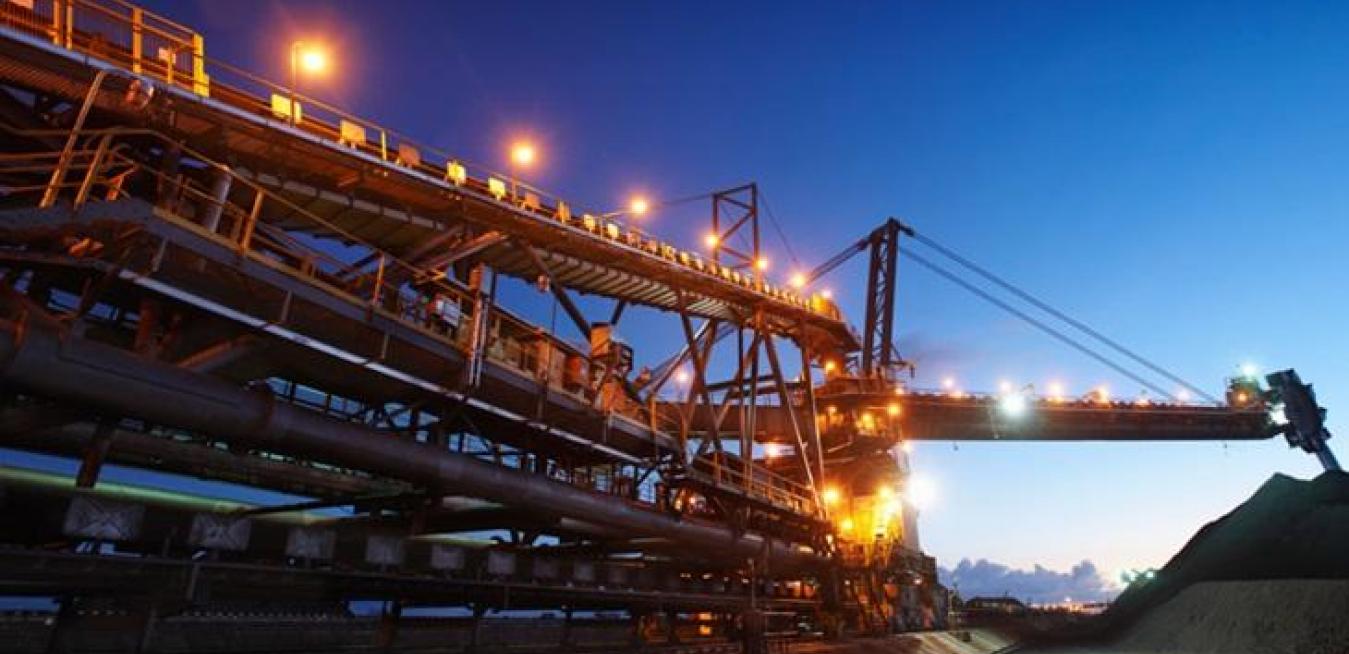
Top image: BHP Billiton Mitsubishi Alliance (BMA) coal operations in the Bowen Basin, Queensland.
Home page image: BHP Billiton’s Olympic Dam in South Australia yields uranium oxide, copper, gold and silver. All images courtesy BHP Billiton.