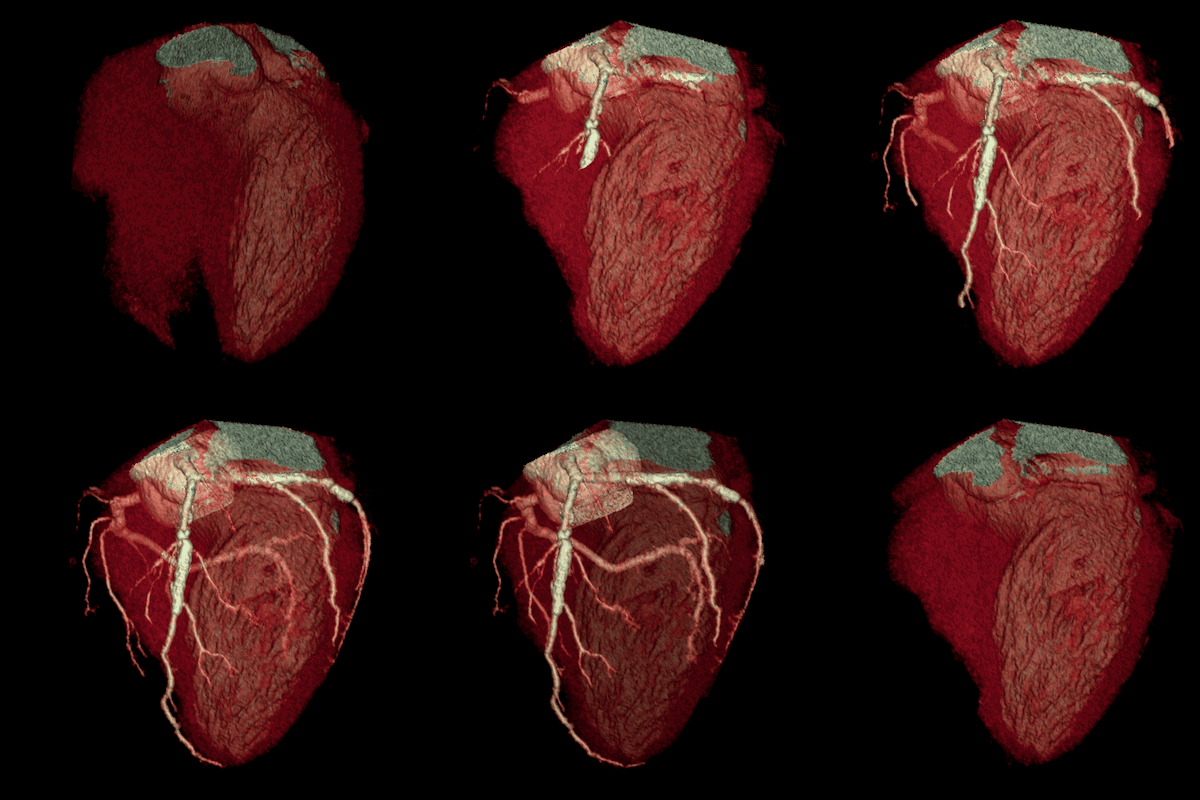
Heart attack or indigestion? Fast-tracking finding out



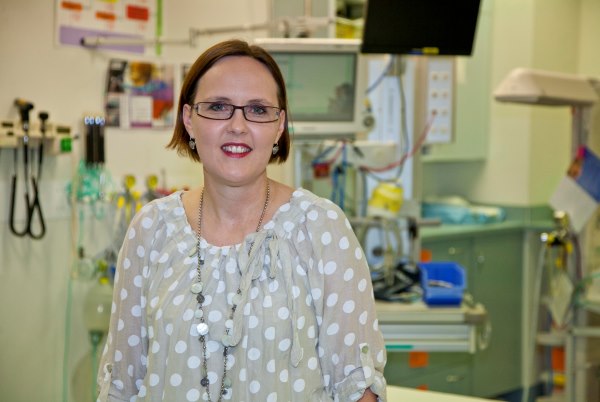
About 500,000 Australians check into hospital EDs each year with chest pain, making up some 8% of all emergency visits. “Only about 15% of them will have a heart-disease cause for their chest pain,” explains emergency physician Louise Cullen of the Royal Brisbane and Women’s Hospital. That’s good news. But in the meantime, across an average of 25 hours, each emergency case will have been attended by specialist doctors, nurses and radiographers, taking up a valuable bed in the ED, and they will have been subjected to a series of inpatient tests, at an average diagnosis cost of $1,600 per chest-pain patient (based on Queensland public-hospital figures).
“Due to the similarity of symptoms of heart disease with other non-life threatening conditions doctors find it difficult to identify who does and who doesn’t have heart disease, and that’s why we’ve had these lengthy assessment processes,” explains Cullen. “We want to continue the safety of these processes, but do it in a timeframe that’s more reasonable.”
About 500,000 Australians check into hospital EDs each year with chest pain, making up some 8% of all emergency visits.
Cullen decided that the long-held cardiac diagnosis protocols could do with some interrogating: she and her collaborators wanted to look at the costs, risks and benefits around chest-pain diagnosis in emergency departments, and discover if there was a way to make the whole process faster, without compromising care.
In 2008, armed with $1 million of funding from the Queensland Emergency Medicine Research Foundation, her research team began investigating different strategies. The first thing was to work out a faster way to confidently identify those low-risk patients. One early successful study, the ADAPT study found that one in five patients could be safely managed as outpatients.
Then, with the knowledge that there are safe alternatives, a team of clinicians successfully bid for nearly $1 million from the Health Innovation Fund of Queensland Health, allowing the roll out of this strategy across Queensland as the ACRE (Accelerated Chest Pain Risk Evaluation) project, which began in 2012.
(She was the perfect person to challenge accepted emergency clinical practice: Introducing her at 2014’s Australasian College of Emergency Medicine annual scientific meeting, Monash University’s Dr Diana Egerton-Warburton likened Cullen to a “gentle mix of Roald Dahl’s Matilda, in terms of her ingenuity, insight and her ability to solve problems ... and [fictional detective] Phryne Fisher for her investigative powers.”)
Cullen’s objective to quickly sort cardiac-related chest pain from non-serious chest pain doesn’t mean she is at all dismissive of the symptom. “I don’t want to discourage anyone from coming to the hospital, or to get them to try to triage themselves at home,” she says. “Chest pain is one of the most anxiety-provoking symptoms for adults. I always feel for patients who say, ‘I’m wasting your time, it’s probably nothing.’ Heart disease is still the leading killer in Australia, and if it takes us a long time to work out if a patient does or doesn’t have heart disease, there’s no way a patient could or should be making that assessment based on Dr Google. They’re not wasting our time.”
Cullen wanted to discover whether the existing emergency-department protocols around chest-pain diagnosis could be safely streamlined, while being aware that there are 75,000 heart attacks every year in Australia. So while, in up to 85% of cases, the chest pain is being caused by such eminently treatable conditions as over-indulging in your mother-in-law’s meatballs, in around 205 cases a day throughout Australia, the pain source is the much more serious type: a heart attack.
The ADAPT study “showed that of all people who present with chest pains to the ED, one in five of them are a low enough risk for us to observe them over a short period of time and send them home, so they can be managed as an outpatient,” says Cullen.
“There’s a risk score called the TIMI score, the thrombolysis in myocardial infarction score,” explains Cullen. “It’s a seven-point score to identify your level of risk, and while it wasn’t designed to assess risk in emergency-department patients, we’ve discovered that it works well when combined with two troponin blood tests and two ECGs. The current National Heart Foundation guidelines are to do that blood test over six hours using a sensitive test: one when they first arrive, and the second six to eight hours afterwards. At those same two time points we do an ECG, because you can have an abnormal ECG and a normal troponin and have a heart attack and, likewise, you can have an abnormal troponin and a normal ECG and still have a heart attack. We need to use both those tests.”
Shrinking the time between the two blood tests to two hours rather than six or eight was Cullen’s master investigative stroke. “Around the world, no one had ever looked at them at the earlier time points,” she says. “Everyone was assuming that these tests weren’t good enough to use at zero and two hours, that we had to wait six to eight hours. We did a large observational trial to see whether or not we got any additional information at six hours.” The result: for the vast majority there was no extra information to be gleaned from waiting the extra time to do the second blood test.
“If your blood tests and ECGs are negative, and you’re low-risk according to that TIMI score, then you are so low-risk that we can safely do our next stage of assessment as an outpatient,” explains Cullen.
A second realisation put even more pressure on narrowing the blood-test time. “Looking at 10 different hospitals across Queensland, the vast majority of patients who are assessed for possible cardiac chest pain come to the emergency department Monday to Friday, 9 to 5, with the peak of the presentations between about 10 and 2,” says Cullen. “That means if you go and add on a six- to eight-hour blood test, that second blood test result comes back after-hours, way beyond when you can get a stress test or CT scan done.”
 GE Healthcare