Loco love: Sensing innovation coming down the tracks



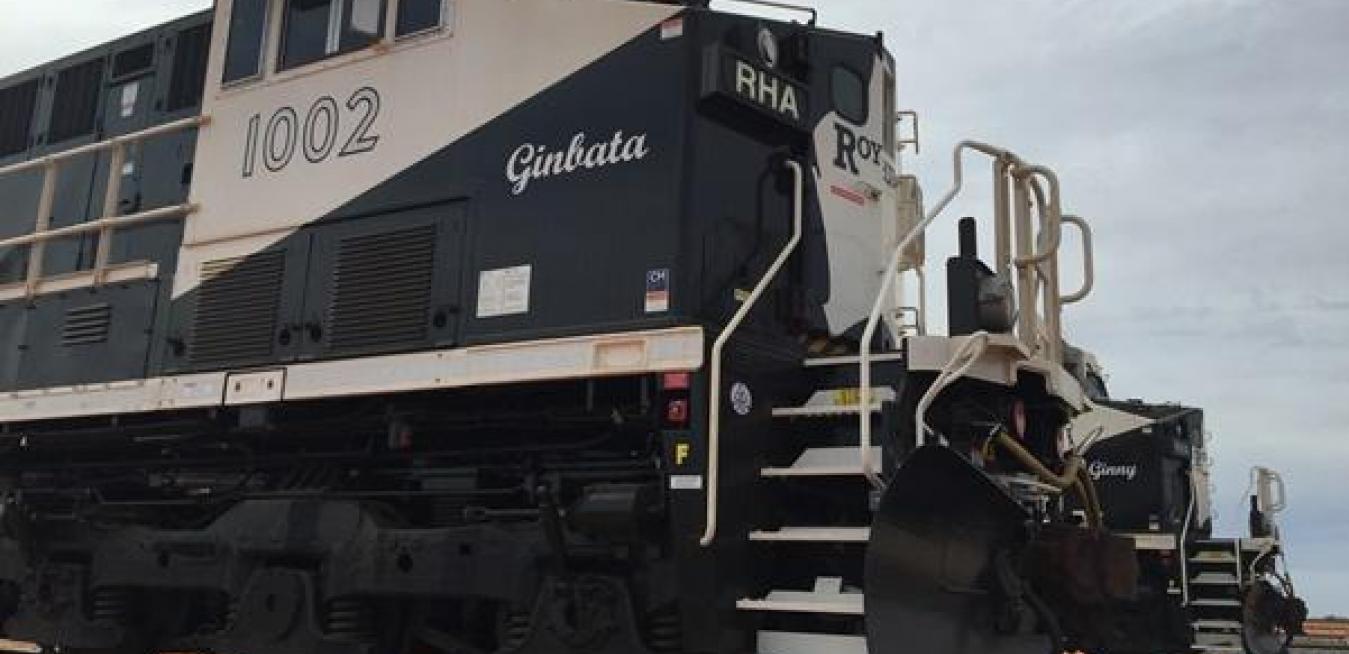
Roy Hill’s Shane Thomas lists the possible victims: “Cattle, pigs, sheep, horses, roos…”. As a driver with decades of experience in these parts, he has a collection of graphic tales of beasts he’s unavoidably struck. These days, Thomas is superintendent of rail operations at the new Roy Hill iron ore mine and his team of drivers are travelling the tracks in brand new GE Evolution Series ES44ACi locomotives. The locos all arrived for desert duty with their standard kit of snowploughs fixed to the front of each machine, and Thomas surmises that the sturdy plates will find their Pilbara purpose should an unfortunate creature wander across the tracks at the wrong time.
But beast strike is one of the few random issues drivers have to worry about on this railway. The latest technology is deployed throughout Roy Hill’s mine operations, and its locomotives boast a suite of technological innovation to assist both drivers and those charged with maintaining the trains and tracks.
Via a system of 256 sensors on each loco, and nine WiMax super wifi hotspots along the 344 kilometres of tracks they travel, each locomotive will self-report on the details of their individual welfare
For starters, these locomotives report when they need maintenance, and how urgently they require it. Via a system of 256 sensors on each loco, and nine WiMax super wifi hotspots along the 344 kilometres of tracks they travel at Roy Hill, each locomotive will self-report on thousands of details of their individual welfare. “When the locomotive computer senses an unhealthy trend,” explains Bruce Brymer, the mine’s rolling-stock maintenance manager, “It’ll start taking that data and put it into a packet of information and transmit it back to Erie in the United States.”
There, at the Expert on Alert (EOA) centre in Pennsylvania, the data will be analysed and diagnosed in an operation that is a neat illustration of GE’s development of the Industrial Internet across many industries and technologies.
“The computers will do the analysis and identify what is most likely to be the problem,” says Brymer. “A GE technician will verify that it is a good advice, and then that will come back via an email to Roy Hill. We’ll make a decision about when the locomotive can be brought in, and we’ll have a list of actions that we need to take to be able to attend to that locomotive straight away, as soon as it arrives back at the workshop.”
Brymer is one of five science and technology leaders featured in the documentary interactive Innovation Never Sleeps, a collaboration between GE and the Guardian.
EOA effectively bids farewell to the days when a driver reported a weird clunk that couldn’t be replicated in the workshop, or even back on the track (sound familiar, car drivers?). No more crawling over an engine to find which oil pump is playing up.
The EOA monitoring and diagnostics system can deliver more than 900 Repair Recommendations, which GE shorthands to Rx, from a technician it gives the title of GE Power Doctor. Yes, they’re writing a prescription for your sick loco. “The target time, once it goes through all the computer programs back at Erie, is to have that Rx transmission back to us in 20 minutes,” says Brymer. “So it’s really live, happening right there and then.”
The Rx recommendations will also classify the defects into severity: red (failed or will fail soon), yellow (may fail within seven days), white (defect can wait until next regular maintenance) and blue (general remote monitoring and diagnostic equipment report). Repair times are also estimated, with advice on whether the fix can be done on the train, on the track or the loco needs to be brought into the workshop. Detailed final feedback on the result of the diagnostics and subsequent repairs will ensure EOA becomes a continuous learning system for both GE and Roy Hill.
The real-time data from the locos is also available for Brymer and his crew to access on the internet, even when nothing is amiss. The locos will let their masters know precisely where they are on the track, their speed, the weather — and more. Roy Hill’s locomotives can also easily be upgraded for future releases of the Expert on Alert remote flying loco doctor service, as even more detailed, specialist prognostics are developed.
An automobile owner watching their mysteriously grinding car going back up on the hoist for another expensive exploratory session with the mechanic can only dream of the day when this kind of smart self-diagnosis will be available for their machine.