
×

GE.com has been updated to serve our three go-forward companies.

Please visit these standalone sites for more information

GE Aerospace | GE Vernova | GE HealthCare 

header-image

The People’s Power

September 22, 2014
Electricity is at the centre of modern life; its reliability is as essential to getting dinner on the table as it is to keeping the economy bubbling. And on all sides of increasingly automated lives, optimisation has become synonymous with power.
On the user side, huge technological advances are now everyday: your battery-powered charged-up phone is your sound system, is your camera and your organiser. Your souped-up laptop is your worldwide research library, your portable office, your PO Box. Household appliances do better jobs on less juice. Offices are smarter – turning the lights off when nobody’s there.

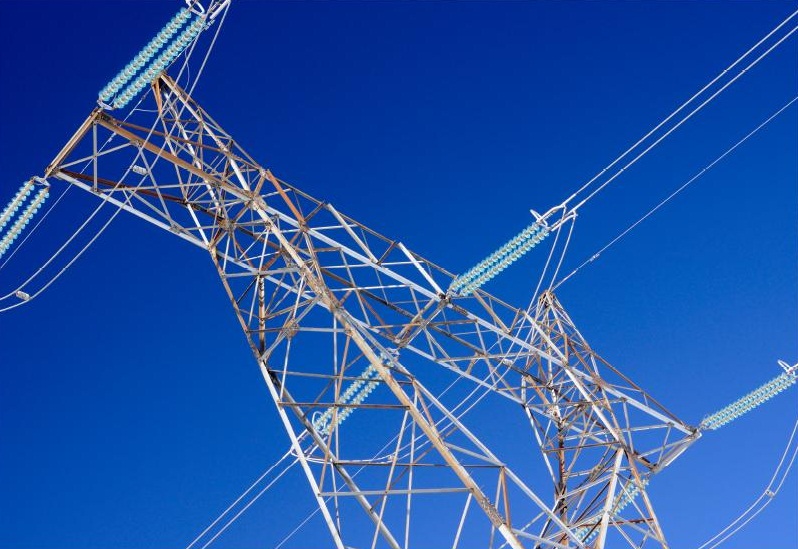
On the supply side, optimisation over the years has been minimal. Coal releases energy, which volts up via a transformer, which buzzes the electricity through transmission lines, and another transformer calms the voltage again to send it wriggling along distribution lines to the consumer. The coal, poles and wires have done their job.
 /><br />
<br />
Enter global warming, air conditioners and rooftop solar panels, and the need to optimise current electricity supply system has become urgent. As the recent Climate Council report, Australia’s Electricity Sector: Ageing, Inefficient and Unprepared, warned: “The electricity sector accounts for 33% of Australia’s greenhouse gas emissions – the single biggest source of emissions.”<br />
<br />
Such battery systems will allow consumers, small and large, to disconnect from the grid and will leave the costs of maintaining the grid itself to be distributed among fewer and fewer users.<br />
<blockquote>This raises numerous, urgent questions as to the future of the energy network. One critical issue is how society can manage what exists more efficiently to fulfil current demand, without laying down more expensive infrastructure that potentially no one will be prepared to pay for.</blockquote><br />
Batteries used strategically to help manage load at different parts of the grid could be part of the solution. Distributing the load so that electricity feeds in from different points on the line to meet demand locally means that any point is not required to carry the full load at any time. The line will last longer and is less likely to need upgrading even if electricity demand increases.<br />
<br />
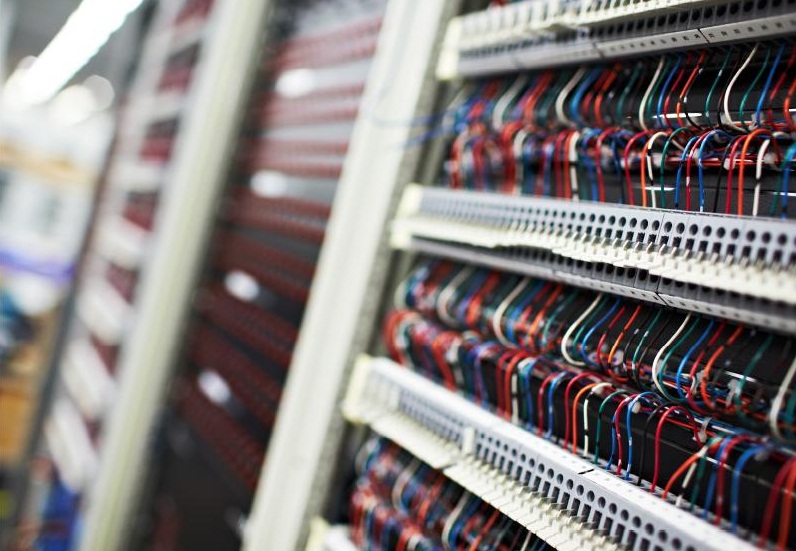
Specialised software systems that manage energy distribution are another optimising solution.<br />
<br />
Matt McKenzie, digital energy region leader for General Electric in the Asia Pacific, says utilities such as SP AusNet, City Power, Power Corp and Energex have already installed GE’s distribution management system (DMS).
And like an iPhone, the DMS can include various specific optimising apps. Take the obviously named Fault Detection Isolation In A Storm app. Explains McKenzie: “It pinpoints where faults are occurring and the system then automatically calculates the best way to route power around the fault so that the minimum number of customers are offline for the minimum amount of time. That’s all done through sophisticated algorithms. Very, very different to where we were a few years ago, where people in control rooms had to make decisions about what to do.”

Calculating, self-regulating, fast decision-making software could also play a pivotal role in helping consumers to change their behaviour in a way that lowers peak demand. Says McKenzie, “If people were given a financial incentive to say, ‘Let’s have the air conditioner two degrees warmer than I’ve presently got’ … If that was all it took to avoid having to spend millions of dollars on a particular substation, people may very well take part in it.”

A surprising fact from Lucy Carter: “Air conditioners in Australia have to be capable of being remotely switched on and off. We’re not using this now, but it’s a built-in capability.”
 /><br />
<br />
“There are a lot of technology choices for industry stakeholders to make,” he says. “Without these sorts of technologies, you’d have to keep building the grid and managing the peak. Optimising the network and optimising the investment we make is the key to effectively powering growth in cities.”<br />
<br />
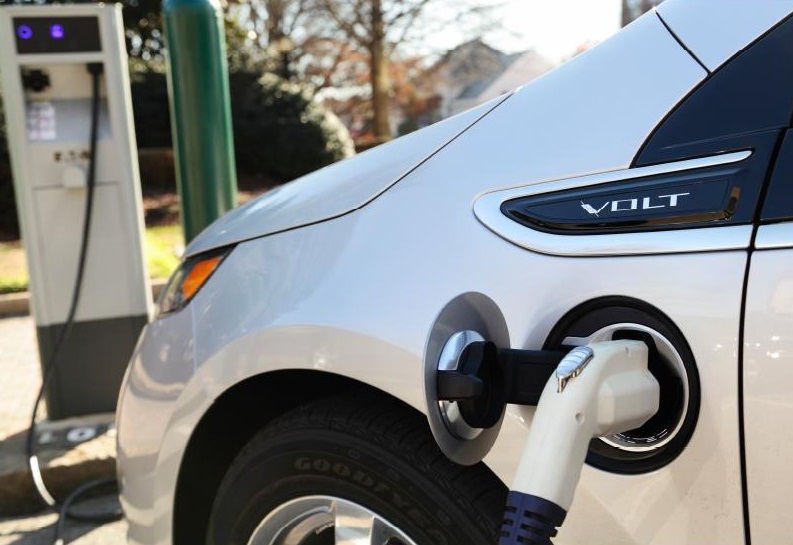
To return briefly to batteries: Carter says the cost and size of viable batteries is also one of the factors stalling uptake of electric cars. Strategic placement of car-battery charging stations could be one way of managing electricity load and balancing the books – by bringing demand and payment for electricity a little closer to covering the cost of infrastructure.<br />
<br />
“Electric vehicles are a big one here,” Carter explained in the Shock to the System seminar.
 /><br />
<br />
Optimising the use of the grid may hold the fort until the electric-car cavalry arrives, or perhaps technology will take society galloping energetically in another, as yet unforeseen, direction.<br />
<br />
<em>This was reposted from <a href=theguardian.com