
United we stand, connected we boom: the age of the Industrial Internet


Existing technologies will converge to create new applications with new behaviours and new benefits.
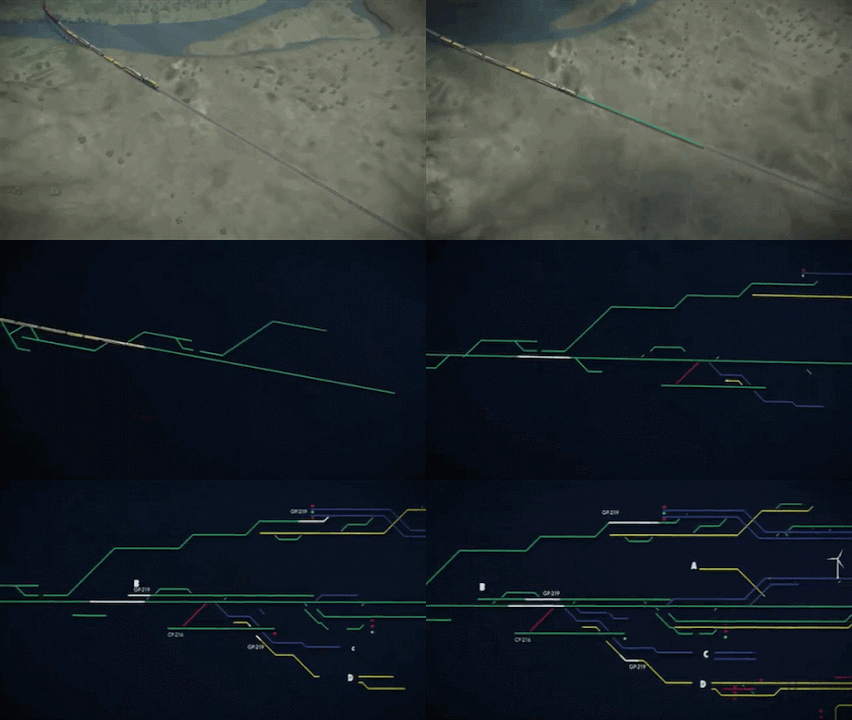
Businesses will realise that there is value in sharing industrial data, rather than keeping it locked away. We will start to see ‘Data Lakes’ emerge that pool information from machines of multiple companies which share a common industry. This ‘ecosystem’ of metadata will allow companies to ask more questions than before. The aviation industry is already using this to better analyse performance anomalies. For example, when a jet engine reports a temperature that’s higher than usual, the system seeks insights and looks for similar events in the past, based on the type of engine, its age, service history and many other factors. Work is becoming less about the machine and more about the data.
Personalised manufacturing will emerge.
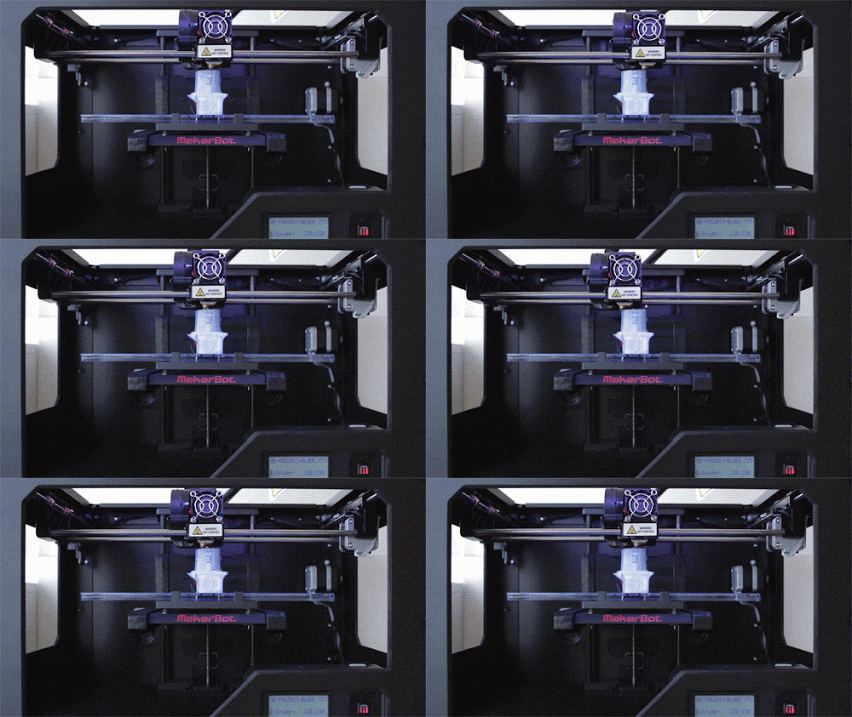
We will start to see a trend away from mass production, and the beginning of individually customised products produced at speed via 3D printing. Over-stock or over-supply becomes a thing of the past, and customers order and receive a product exactly tailored to their needs. This applies both industrial manufacturing and synthetic biology, where a personalised flu medication can be produced based on a person’s unique genetic makeup.
Robots, already commonplace in manufacturing, will start to appear in our lives.
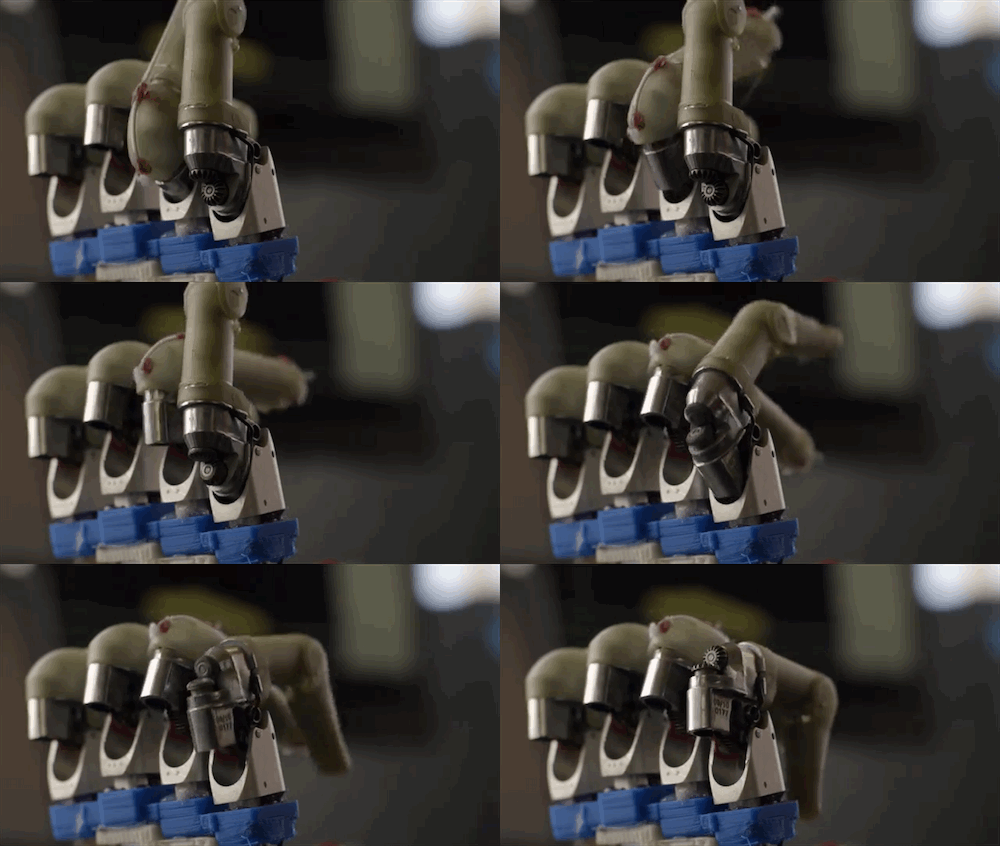
Robots already aid the elderly in Japan with walking, cleaning, bathing, health monitoring, emergency attention and more. More autonomous robotic systems are going to appear in places we haven’t seen them before: in workplaces, homes, aged care facilities and industry. They will collect data, monitor people and machinery, build things and make repairs in ways that can’t be done today.
Wearable technology will become commonplace for both consumers and industry.
Smart glasses, smart watches and other wearable technology will move from novelty to practical application. Google Glass is already being tested for use in the field where it is difficult for an engineer with hands deep inside an engine to stop and look something up on a laptop. At the same time, wearable health monitoring technology is advancing to the point where your watch will tell you when you need to eat more salt, for example, or alert emergency services when you have a heart attack or fall. We will start to see wearable technology infiltrate all areas of industry and new applications emerge.
Networks will be the new battleground for security.

Connected machines and the Industrial Internet will create a new set of threats to manage. Whereas malicious attacks on the traditional Internet might access data, attacks on the Industrial Internet could have physical impacts by accessing machinery, or even entire systems and networks. Security will need to address connected machines and devices, as well as protect company data.
Engineers will become prophets and machines will become brilliant.
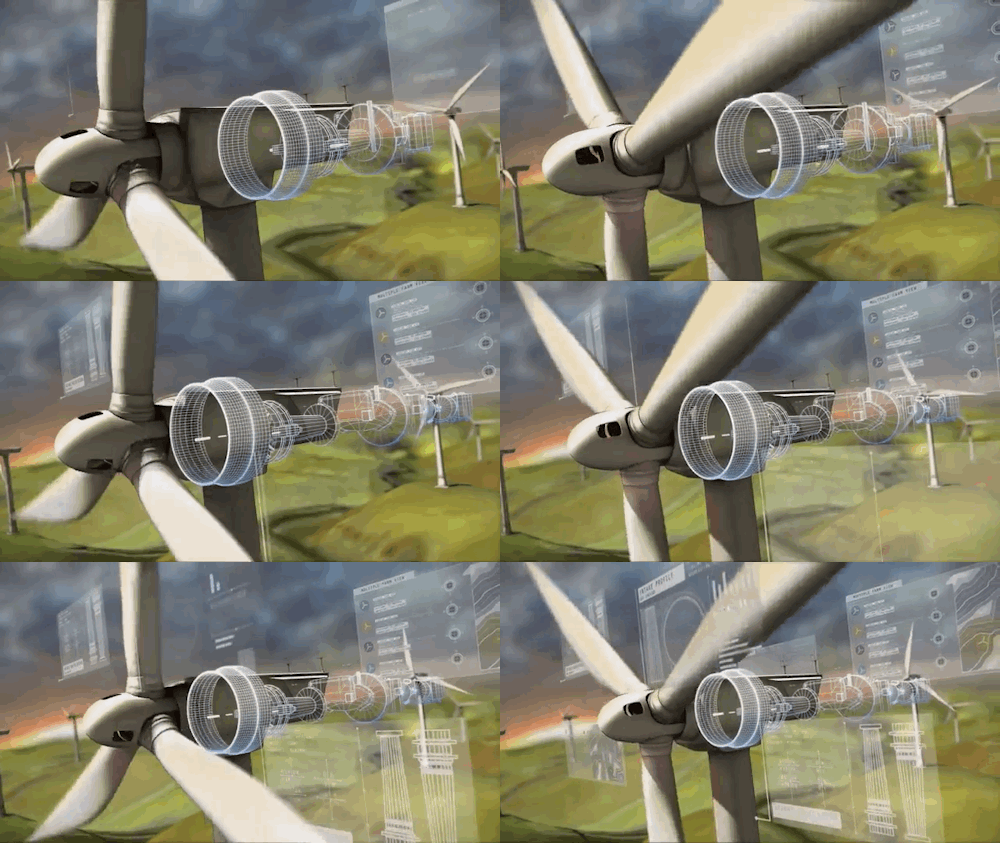
It is now cost-efficient to equip machinery with hundreds of networked sensors that generate thousands of data points every second. This explosion in data has created advanced analytics that allow engineers and even the machines themselves to predict when a part is going to fail, and schedule a replacement before it does. We are entering an age of ‘brilliant machines’, where faults become predictable and surprise downtime is rare.
Workspaces will become virtual and global.
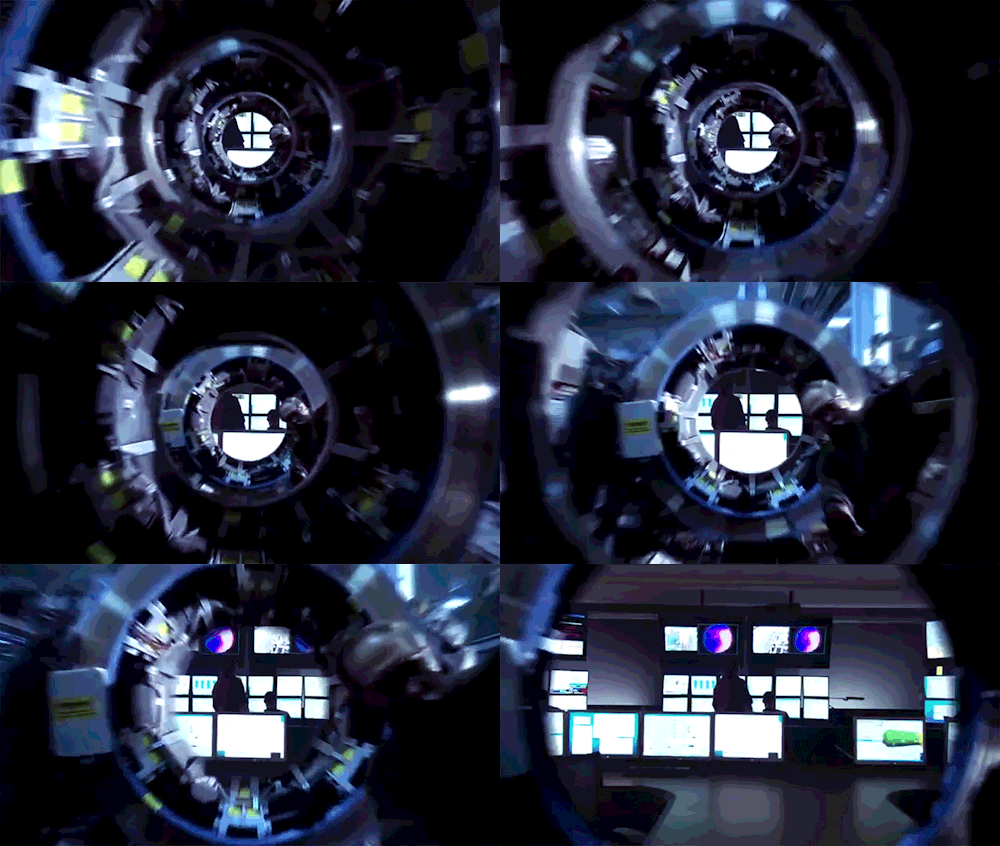
As digitisation continues to collapse time and distance, workplaces will become increasingly virtual and mobile. At the same time, advances in technology will mean that an engineer, for example, can monitor equipment a kilometre under the sea from anywhere in the world. Work will be more about something you deliver, rather than a place you go to.
Tomorrow’s candidates will need to both wield a welding gun and write code.
Technology is influencing the type of skills needed to be successful in the future. As technology and automation continue to infiltrate every aspect of work, an increasing level of technological literacy will be an essential skill for almost any role. Equally, operations and IT will converge as data and systems become not just intertwined but essential to the functioning of all areas. If you’re not already married to your IT department, you will be.
Connectedness will change the way companies innovate and collaborate.
GE ANZ CIO Mark Sheppard talks about the rise of the Industrial Internet and how it is revolutionising the way we work, invent—and live.
As parts of the world continue to gain access to high-quality internet connections, the opportunity to access intelligence from all over the globe will be greater than ever. Ideas will no longer need to come from within your four walls – ideas can come from anywhere. At GE, we crowd sourced the redesign of a jet-engine part, and got the best design from an engineer in Central Java, Indonesia. Connectedness will also change the way companies collaborate to co-create with their customers and stakeholders.