
Making Middle Earth water fit for humans



The original plant was built in 2007, using membranes from a GE competitor. The upgrade employs ZeeWeed membranes, with two trains each carrying seven ZW1000-R1 racks. The modular ZW1000s can fit into an existing tank design with minimal modifications. The Oamaru upgrade is also ready for extra capacity when needed.
With mayor Gary Kircher set to officiate at a grand re-opening of the WTP on April 18, council contracts engineer for water facilities Michael Goldingham spoke to GEreports as the installation was nearing completion.
This upgrade started for me around January 2015. We were going through a hot summer and our demands were getting pretty high and that’s when we found out that we were sailing pretty close to the wind, with our existing membranes being at the end of their life.
The tender process concluded with GE and ZeeWeed selected for the upgrade.
Physical works started in September 2015 and installing the first treatment train took approximately two weeks to complete. We only started the second treatment train in the first week of April, and we’re finishing it for the April 18 re-opening. I inadvertently shortened the timeframe for GE for the second stage! But they’re working well, not too stressy at the moment … so it’s all good.
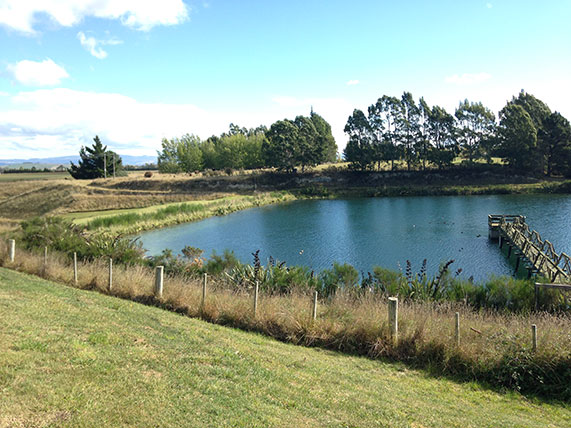 ZeeWeed membranes have a job ahead to make this water fit to drink.
In water-treatment terms, it is good quality water, but it has its issues. Glacial flour is one issue, and that’s a little bit different from most water sources. It’s a very fine glacial silt. The lakes drop most of it out, but some of comes through. It floats around in the water and it’s very harsh on pumps. The river is prone to flooding and spills, and it comes through dairy areas. So while it’s not high nitrogen, there’s a chance that it could have high nitrogen later on. The main thing is that it’s quite high on organics, so the taste and odour is quite a thing, especially during summer. The water flow is higher then, so that’s when it gathers the silt and the dust. The water temperature goes up as high as 22 degrees Celsius, and the organic loading increases. The algaes start blooming, and that load starts coming on.
Another important aspect is how low the temperature gets. Our water goes down to about 2 degrees, not just the river water but our dam froze over last winter, not completely, but it had ice on it. So the water temperature can get pretty cold, as well. That variability is the challenge for the membranes.
The previous trains, from a GE competitor, were installed in 2007 with a life of seven years. Goldingham and his team wanted the new membranes last longer, and the upgrade project also revealed other areas where the WTP could be improved.
Through good luck and good management, we extended the old trains to eight-and-a-half years, and GE has given us a base life of 10 years for the ZeeWeed.
The whole process has increased our knowledge of the water-treatment plant. We’ve found some things with our existing plant that possibly weren’t right from day dot, so now we’ll fix those things up. We learned those things about the control of the water-treatment plant as we put those new membranes in, and the PLC [programmable logic controller]. This process has helped us identify a few things.
With only two treatment trains, when one’s offline we’re down to half the capacity, so we had to be very careful what time of year that we did this project. That’s where GE helped us out. The first stage was a bit late, but it was still at the right time that we didn’t run out of water. Then we had to wait until after summer to do this second stage. If we’d tried to do this second train after summer, we would have run the town out of water. We couldn’t risk that happening, so we left it until now.
We have been nursing those dying treatment train, in between the two stages of the membrane replacement. For this second and final stage we have to manage the plant and our storage, as we are down to half capacity in the treatment plant, while the second half of the membranes are being replaced. That has a real risk of not being able to supply enough water for the area. We put some water restrictions on in the town, as a risk mitigation … asking people not to water their garden and not to wash their cars. We’ll be more than happy that those restrictions will be lifted on Monday. If this second stage had not gone well, we would have had to continue those restrictions for another week.
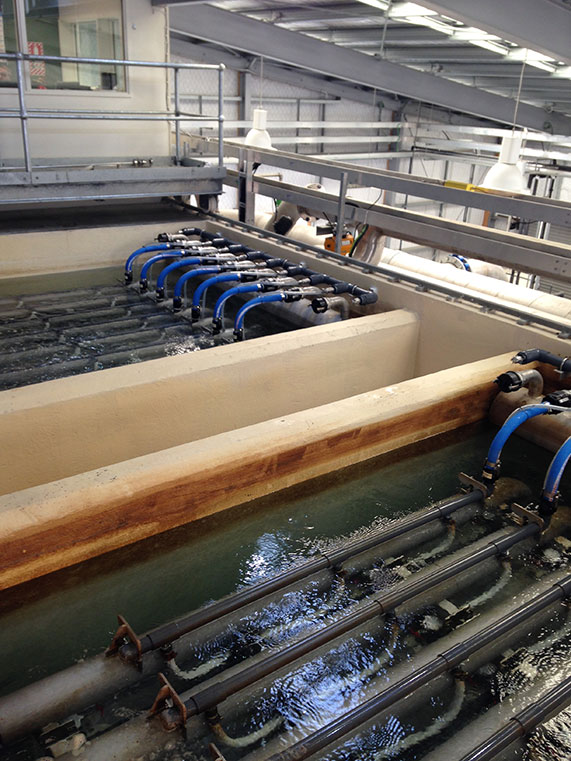 InSight* Pro Process Consulting Service to the WTP which automatically collects data on water process and quality from the new membrane system and converts it into graphical reports. A GE process specialist is assigned to work with Oamaru to monitor the data and assist the operators with interpreting the results.