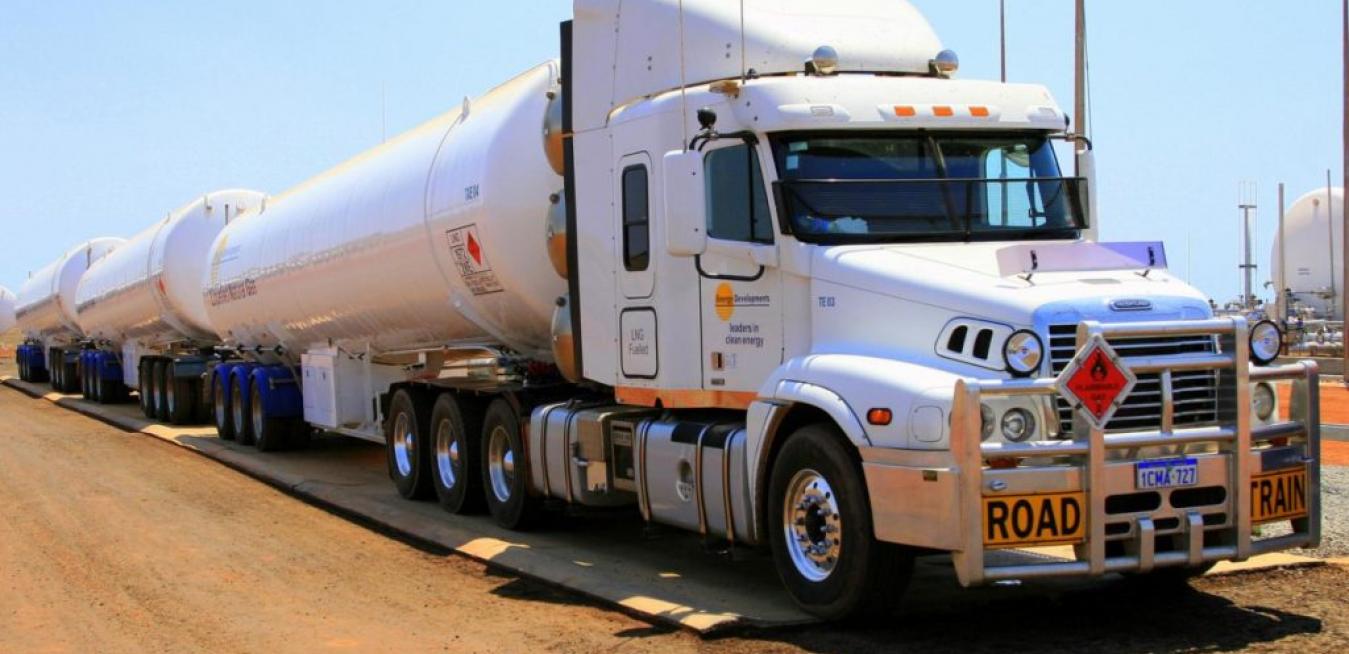
Virtual Pipelines, Piping Hot!



Until recently, diesel has been the main source of power generation in remote Australia. It’s been relatively cheap, is easily stored and diesel generators also represent relatively inexpensive and reliable power infrastructure that can quickly be deployed. Nobody would have thought of natural gas as an alternative fuel for remote regions because the cost of building pipelines over long distances to reach them is prohibitive.
A map of Australia’s existing gas pipelines shows them running seemingly haphazardly: from and along the coast, sometimes coming in from coastal waters, sometimes connecting one section of coast to another. The main branches are fed or feed outward via twigs, but ultimately the pipelines sputter to leave vast swaths of the country without nearby access to the “Living Flame”.
Stephen Cake, head of corporate strategy/mergers and acquisitions at Energy Developments Limited (EDL), an Australian based global company that specialises in delivering clean and remote energy solutions for its customers, says, “Putting in pipelines is a very expensive exercise. Reference the current discussions around linking the Northern Territory with the east coast pipeline network — the capital costs are between a billion to one-and-a-half billion dollars to link those up.” Remote mine sites and small towns don’t justify such infrastructure spend, and mining operations in particular need a more swiftly delivered, more flexible solution. Diesel has been good in this regard; gas delivered by virtual pipeline can now be better.
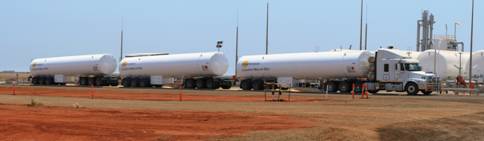
Energy Developments Limited transporting natural gas by road.
The volatile cost of diesel is one of a combination of factors contributing to, “what could be a wave of virtual pipeline investment”, says Cake.
The price of diesel is currently at a low, but, says Cake,
“It’s likely that the cost of diesel will increase in the future, and that increase will start to feed back through into the prices that miners and the providers of power to remote towns and communities have to pay for that fuel.”
Just such a situation in the early 2000s led to EDL implementing its first virtual pipeline in Australia. In 2005, Horizon Power (then Western Power) in Western Australia invited the market to come up with a more economical electricity-generating solution than diesel for the West Kimberley region, encompassing the towns of Broome, Derby, Fitzroy Crossing and Halls Creek.
“They were after cheaper power than their business-as-usual diesel stations, and they left it open as to the solution,” says Jason Dickfos, EDL’s business development manager for remote energy. “We offered the LNG [liquefied natural gas] virtual pipeline solution and signed a long term power purchase agreement with Horizon Power for 61MW of generation. We built the LNG plant at Karratha and an LNG-fuelled power station in each of the four main towns.” The towns now receive daily deliveries by road train of the LNG that keeps 27,000 customers computing, cooling and cooking with gas.
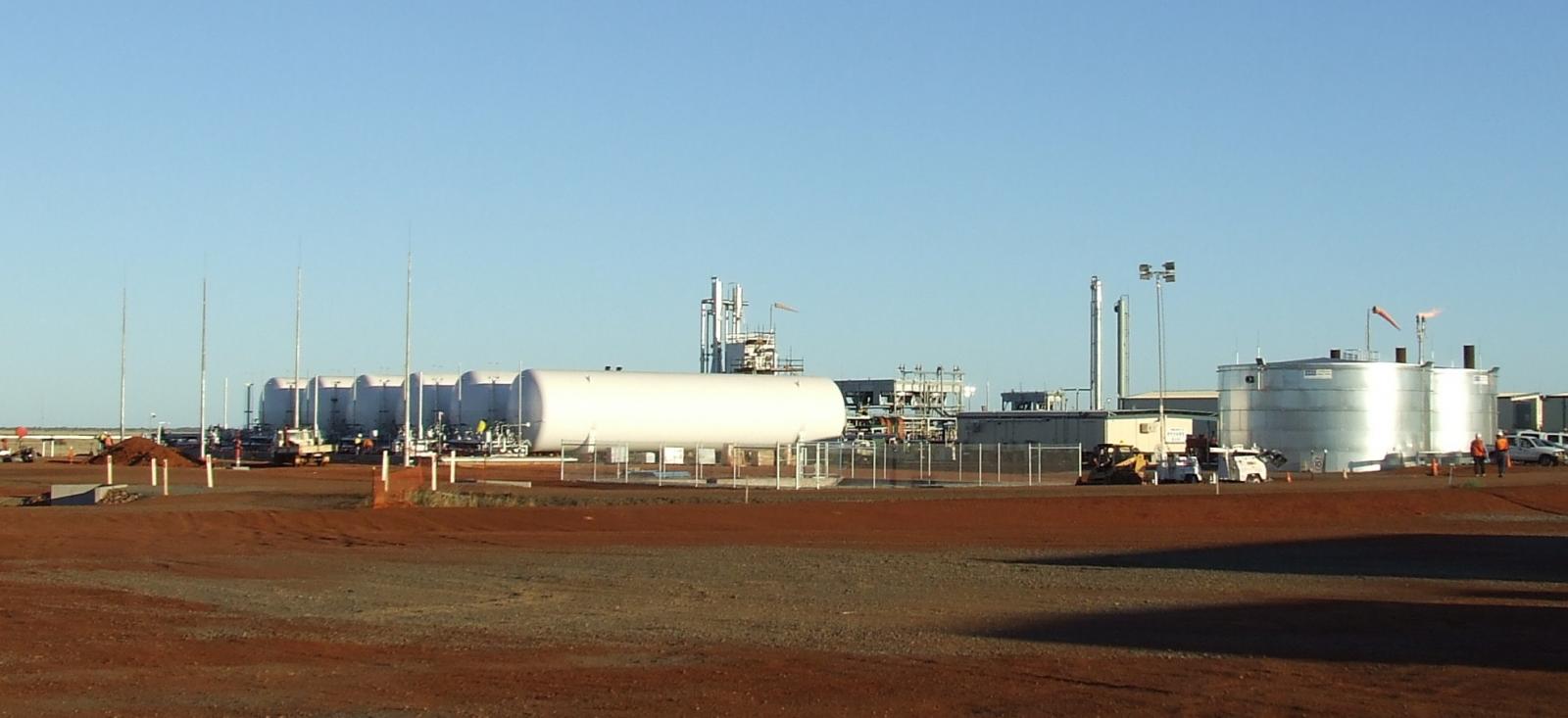
The LNG fuelled power plant at Karratha that supplys 27,000 customers in surrounding suburbs with power.
Known as the West Kimberley Power Project (WKPP), the solution was three years in development, has 61 Megawatts of capacity and has so far clocked up six years of safe, reliable functioning. The gas is transported via nearly 1,500 km of road (to the farthest town of Halls Creek) from the Karratha processing plant, which draws from the Dampier-Bunbury gas pipeline.
Even with processing and transportation, the switch to gas in the West Kimberley significantly reduced the region’s power-generation costs. “For remote locations, a virtual pipeline can be the enabler for a more cost-effective and efficient distributed-generation solution. For some projects, savings can be in the range of 20-30 per cent compared to their current energy costs,” says Cake.
“On top of this,” he adds, “gas-fuelled generation can see a potential 20 per cent reduction in carbon emissions compared to a similar diesel-fuelled station. The cost of carbon emissions, or savings arising from reducing carbon emissions, is driving further interest in diesel displacement as miners consider the potential subsidies under the Government’s current Direct Action policy or for potential future carbon-pricing mechanisms.”
Another EDL virtual pipeline, running compressed natural gas (CNG) from Alice Springs to Yulara resort and community at Uluru in Central Australia, required more innovation than just hitting the highway. Yulara receives a daily delivery of around 1 terrajoule of gas to fuel its 4 Megawatt power station. “The innovation was around the trailers being able to store an optimal quantity of gas,” says Dickfos. “When we started that project [also around 2005] purpose-built CNG trailers didn’t exist. We had to design them.” CNG works on a swap-and-go system, where the loaded trailers are left on site and the empty trailers are taken away each day.
Although three-trailer tanker trucks are widely used in Australia’s virtual pipelines, they aren’t the only link available to the off-line gas supply chains; train lines and shipping routes, and combinations of truck, train or ship, can also form a pipeline, or part of a pipeline, provided the handling involved in transferring the tanks makes economic sense.
In remote Australia, EDL aims to deliver a gas power supply at least 20 per cent cheaper than diesel, to make it worthwhile for communities and miners to switch fuels. To achieve this saving, EDL must strictly control its costs, and getting maximum volumes of gas safely into each road-train delivery is critical to success. GE’s part in the logistical chain is to provide equipment that enables efficient processing and compression of the gas.
“We’re working with GE to develop new project opportunities in virtual pipelines utilising GE technology,” says Cake. But future projects that are too distant from the Karratha processing plant to make trucking in gas competitive, will also have to generate enough demand for gas, either singly or collectively, to justify the cost of building additional plants at strategic points on the existing pipeline network. “The capital required for an LNG plant is high, so to make a project work, you need a long-term offtake agreement and a competitive input gas price, to ensure that you can offer a product that is cheaper than the next best alternative — that’s diesel,” says Dickfos.
Even with the expected slowing in the growth of mining projects over the next few decades, the prospects for virtual pipelines to effectively compete with diesel are looking good. In his keynote address to the Remote Area Supply Conference in 2014, Ivor Frischknecht, CEO of the Australian Renewable Energy Agency (ARENA) said, “Off-grid demand is growing, in stark contrast to the National Energy Market and South West Interconnected System, both of which have had shrinking demand over a number of years and are forecast to continue to do so in the near-term foreseeable future. The West Australian Chamber of Minerals and Energy has forecast that self-generation in mine sites and communities will grow by 6 per cent each year between 2013 and 2017.” This represents an opportunity for both renewables and natural gas to replace diesel. Prices of the commodities themselves will play a part in how the virtual worm turns across the map.
On other continents, virtual pipelines have recently surged to the fore in power problem solving, facilitating access to natural gas where it wasn’t previously available.
In the United States’ Appalachian Basin an existing pipeline can’t cope with demand and would form a bottleneck but for virtual pipeline operators. In South America physical pipeline infrastructure can’t be developed quickly and cost-effectively enough to deliver power to towns and industry, and virtual pipeline companies that have been widely used in Argentina, are now assisting economic development in Brazil. In Russia, as in Australia, it’s not cost-effective to build pipelines to service outlying communities in a country so vast.
In Australia, says Cake, “Network providers (particularly state-owned electricity networks), are also facing capital constraints in providing additional network infrastructure investment. This has led to an emerging trend, consistent with the global trend, of distributed generation being used as network support to manage power delivery to fringes of the electricity network. Virtual pipelines facilitate the provision of distributed generation so that an economic and low-carbon fuel supply can be provided to a distributed generation site without the need for pipeline investment.”
To watch an animation showing how virtual pipelines can help power remote communities and industries, click here.
All images are credited to Energy Developments Limited.