CSG to LNG: a (very) cool compress



When is a train not a train? When it’s a process. On Curtis Island, off the Queensland coast, the first of six GE natural-gas-processing trains has begun converting gas from the state’s coal-seam-gas (CSG) wells into liquefied natural gas (LNG) for export to Asia. QGC, a BG Group business, has developed the world’s first LNG plant to be supplied by natural gas from coal seams, and in December last year its first shipment of LNG left on schedule for Singapore. The cheers of the construction workforce still echo around the facility’s massive metal piping and storage tanks. For them it represented a milestone after years of living onsite and working to exacting deadlines.
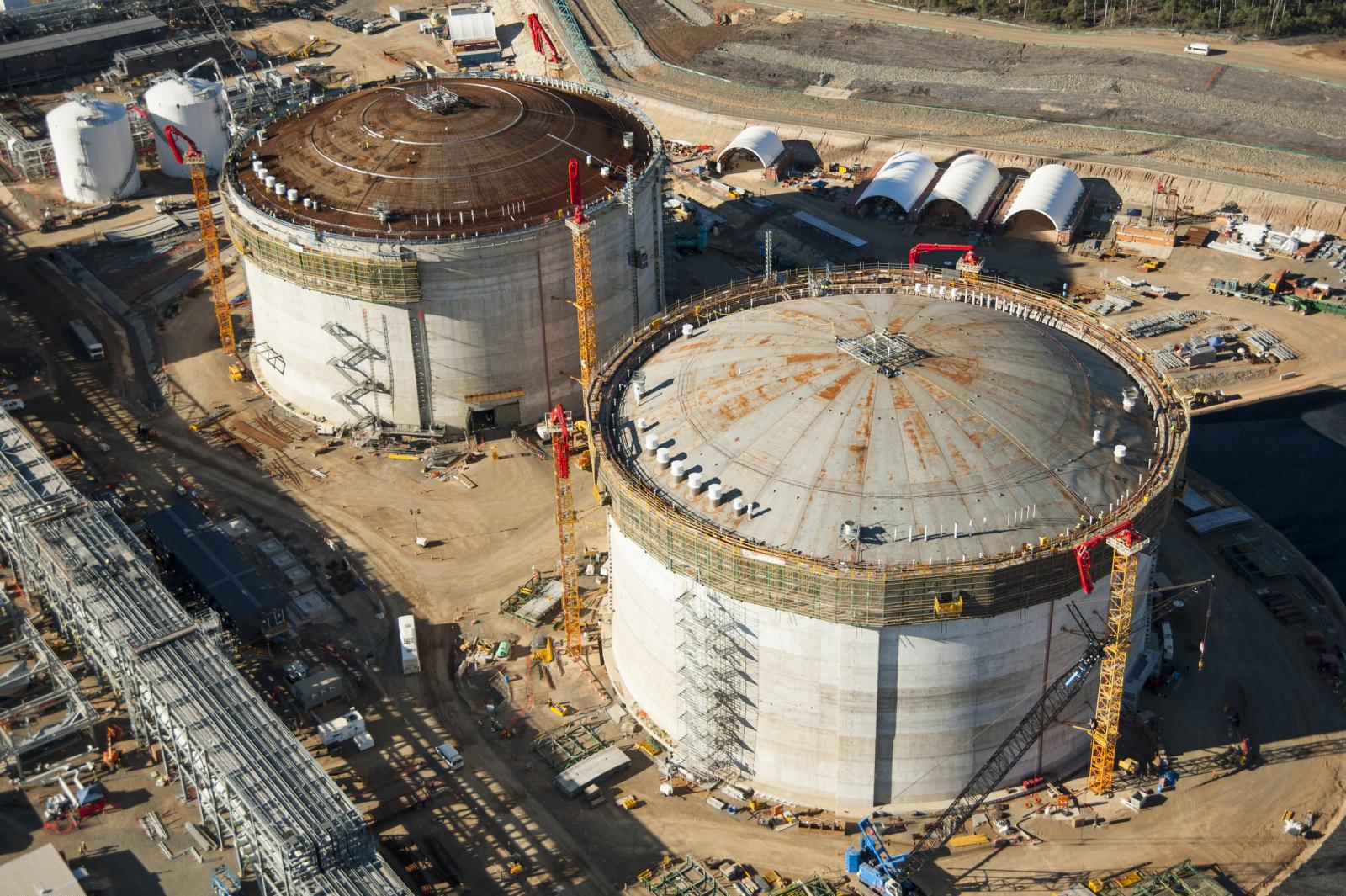
In June 2013 the roof was raised on QCLNG Tank A (foreground) to mirror the first engineering feat of this kind performed in Queensland when the roof of Tank B was raised.
The company’s neighbours on Curtis Island, Australia Pacific LNG, and Santos Gladstone LNG—both consortia of energy companies—have each installed the final components of their pairs of GE trains and also expect to start production and shipping this year.
Forecasts from the Bureau of Resources and Energy Economics (BREE) show the export flow of LNG from Eastern Australia increasing from 22 billion cubic metres in 2013-14, to 57.7 billion cubic metres in 2018-19, and confirm that the majority of this increase will come from Curtis Island.
QGC established its pole position in shipping LNG with a gas infrastructure that traverses Queensland from the wells of the Surat Basin to Gladstone and across The Narrows to Curtis Island. It took seven years to develop and includes some 540 kilometres of steel pipeline one metre in diameter. The company estimates it now takes a molecule of gas around 32 hours to travel from a well in the south of the state to Curtis Island, where it can, where it must, just chill…
To efficiently store and ship gas in large quantities, it has to be cooled. Chilling gas under pressure forces it into a liquid state, allowing exporters to get 600 times more gas into specially designed shipping tankers than is possible when it’s in a gaseous state.
Today the first train at QGC’s LNG plant uses six large refrigerant compression units with built-in chillers to cool the gas to minus 162 degrees Celsius, and remove impurities before pumping the LNG to one of two storage tanks, each capable of storing 140,000 cubic metres of liquid gas — about the same capacity as one of the specially insulated ships used to transport it. The size of each tank is also equivalent to the volume of 56 Olympic swimming pools. Doing laps not recommended.

Inside the QCLNG Tank.
GE’s compression trains on Curtis Island bring together cutting edge technology from other GE businesses. The lightness and efficiency of jet engine technology coupled with the power of its Oil & Gas power turbines means these compression trains “combine the best of both worlds”, explains Fabien Cochet, turbomachinery QCLNG senior project engineer.
Tailor-made engineering solutions, such as the fuel flexibility control system, were developed for the Curtis Island project. Says Cochet, “It took two years of joint effort with the Bechtel technology team to engineer and validate specific control algorithms that enable the gas turbines to handle fast changes in the fuel-gas properties that might occur in this environment.” (Bechtel Oil & Gas is the main contractor for engineering, procurement and construction at the plant.)
The project team in Australia managed the installation, commissioning and successful start of operation of the first QCLNG compression train and its integration with other processes in the facility. “We would not have achieved such a milestone safely and so fast without the passion, great commitment and collaboration of everybody, from engineering, to quality, project and installation management, to the site team”, says Giovanni Prontera, turbomachinery operations leader for GE Oil & Gas in Australia and South East Asia.
Prontera adds that a mutually trusting relationship with Bechtel Oil & Gas, was critical to keeping the trains on track: “In a project of such scale and complexity, new challenges come up every day and it’s vital to focus on finding solutions together. The strong relationship we built with the EPC and the end user, British Gas, facilitated such an approach.”
After the safe execution of mechanical runs to test the train in November, it was shut down to await completion of other parts of the plant. Nerve-wracking then, says Prontera, to know that when the train was restarted in mid-December, “the team had only a few days to fine-tune the units and start full production”.
But there was jubilation on December 29: “It was a great feeling watching the first LNG ship docked at the jetty while LNG was being loaded from the tank to the ship,” says Prontera.
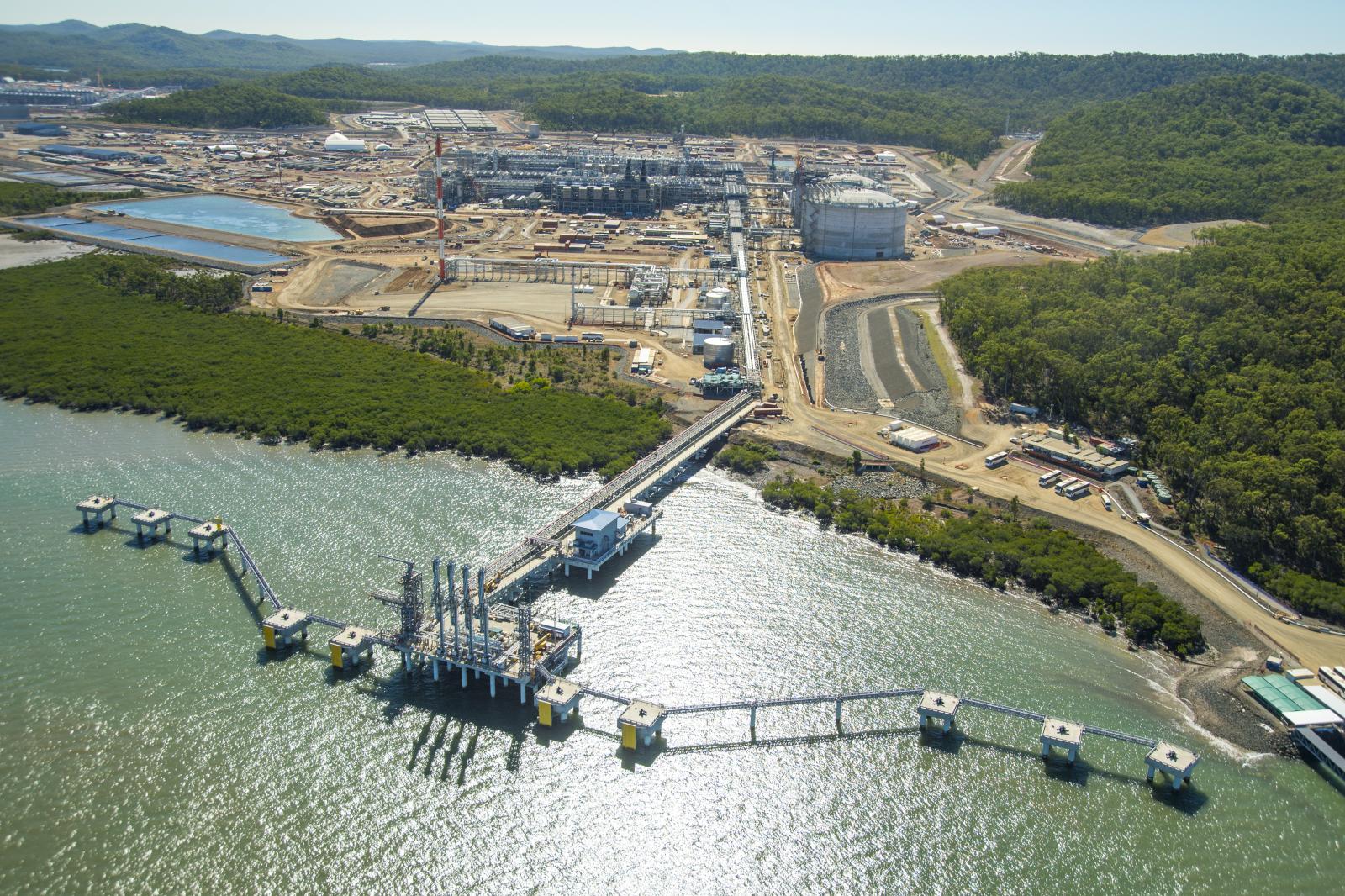
Ships arrive here to convert the gas from the state’s coal-seam-gas (CSG) wells into liquefied natural gas (LNG).
One of the many complexities of the QCLNG train is that parts of the process, such as refrigeration, are powered by gas processed by the train itself. Using power generated onsite helps reduce operating costs and boosts efficiencies. GE’s 22-year contract to maintain the compression trains on Curtis Island also applies automatic, sensor-reported condition monitoring and predictive maintenance to the goal of no unplanned downtime—critical to efficient 24-hour operations.
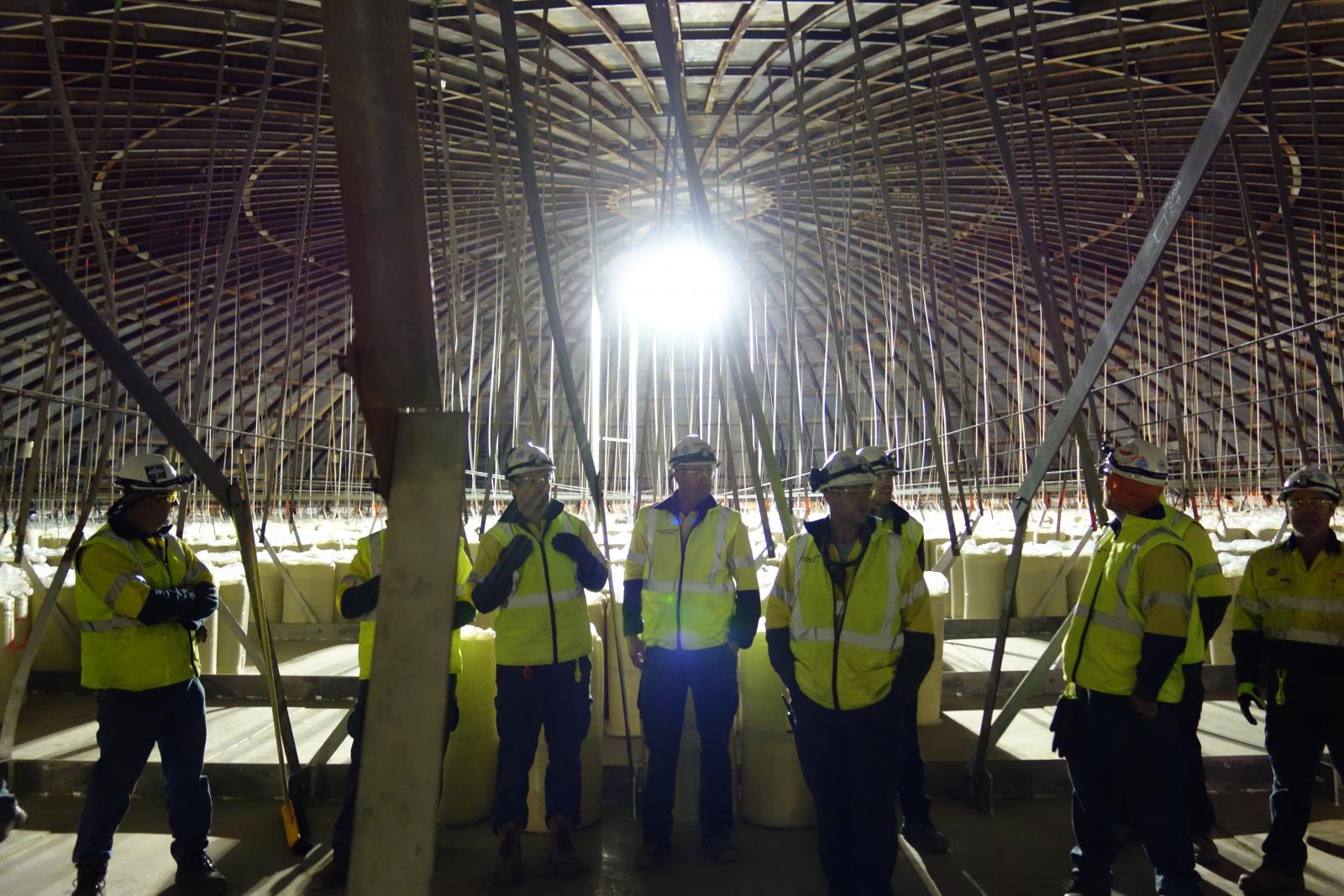
Workers inside QCLNG Tank A following the roof being raised.
In total, the six GE trains on Curtis Island have the capacity to produce 25.3 million tonnes of LNG per annum. It’s expected that, when full production is reached in 2018, Gladstone will every day farewell an LNG cargo ship leaving for destinations such as Japan, China, Singapore and South Korea. “It’s a whole new export industry starting up,” says John Rolfe, Professor of Regional Economic Development at Central Queensland University, who says LNG will become the second biggest export for Queensland within a few years, ahead of agriculture, but behind the dominant export, coal. “There’s no other obvious way of growing the state’s economy so quickly in such a short time,” he says. LNG will generate not only export dollars, but a “huge new royalty stream for the government”.
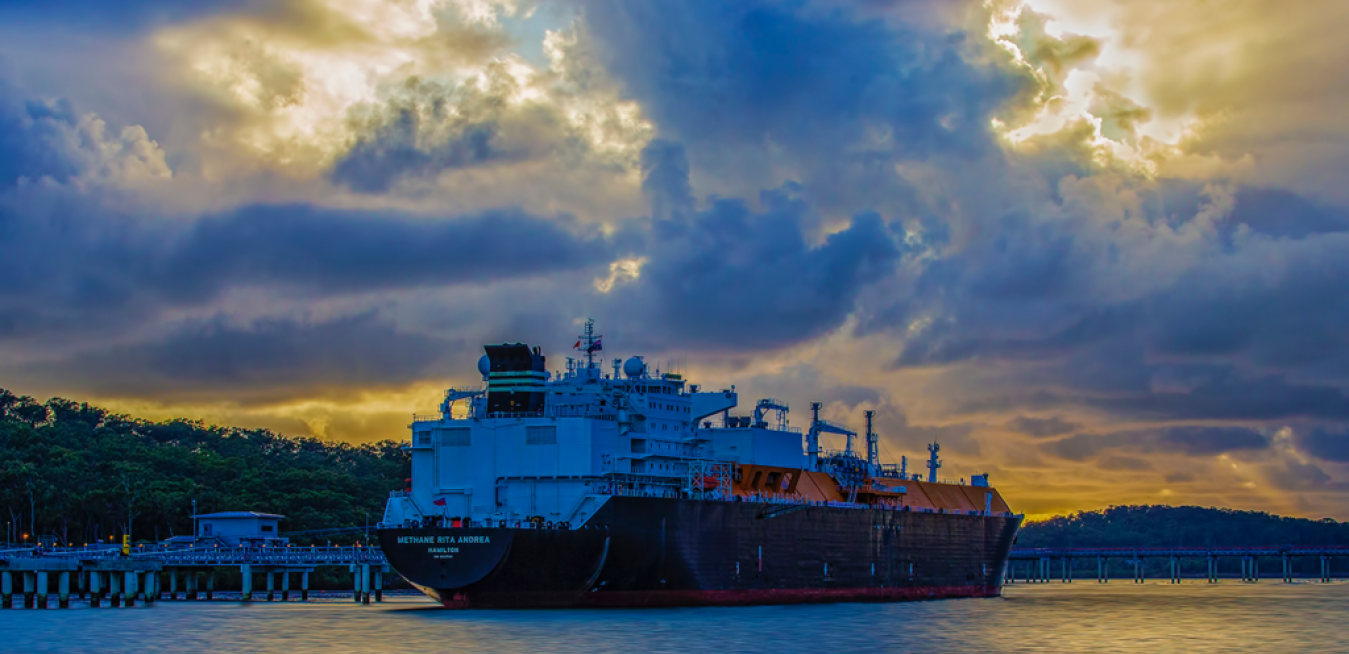
Queensland Resources Council (QRC) chief executive Michael Roche described the shipping of the first Queensland LNG cargo on the Methane Rita Andrea as marking “the start of decades of prosperity for Queensland regions while providing a $600 million annual boost to the state’s royalty revenues”.
Rolfe agrees that one of the great benefits of the LNG export industry is that production is spread across regional Queensland, from the upstream wells in the Surat and Bowen Basins, along the pipeline to Gladstone. “That’s a bit of good news for diversification and decentralisation in the state because one of the issues has been that the growth in south-eastern Queensland has been faster than in the rest of the state, so we were seeing Queensland increasingly becoming concentrated both economically and population wise [in the south east].”
As LNG supports more equitable economic growth in Queensland, so the release of Australia’s gas reserves—not only from Queensland, but from projects such as Ichthys off the north coast of Australia, and Gorgon and Wheatstone and Prelude in the west—it will tip the balance of world gas production to make Australia the largest exporter of liquid natural gas by 2020.
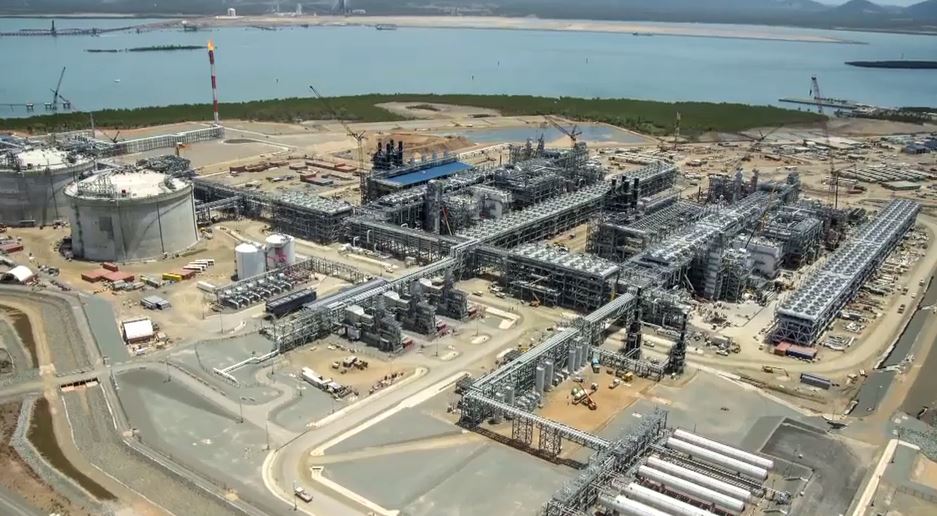
The construction workforce around the facility’s storage tanks.
In its third quarterly energy report last year, BREE attributed the steady increase in global demand for gas-fired energy to a variety of factors: Japan has sought an alternative to nuclear energy in the wake of 2011’s Fukushima incident, and although it is now restarting its nuclear capacity, gas is forecast to remain a significant source of electricity at around 89 million imported tonnes a year; China is seeking a cleaner alternative to coal, to improve the air quality of its major cities, and is investing in gas-import infrastructure, with its consumption projected to grow from 18 million tonnes to around 55 million tonnes by 2019; and South Korea sought to compensate for the shutdown of a nuclear power plant, but its gas consumption, now at around 39 million tonnes, is forecast to remain steady at that level.
This LNG train has definitely left the station.
All images are credited to QGC