
2015 Predictions: Blue-Skying The New Year



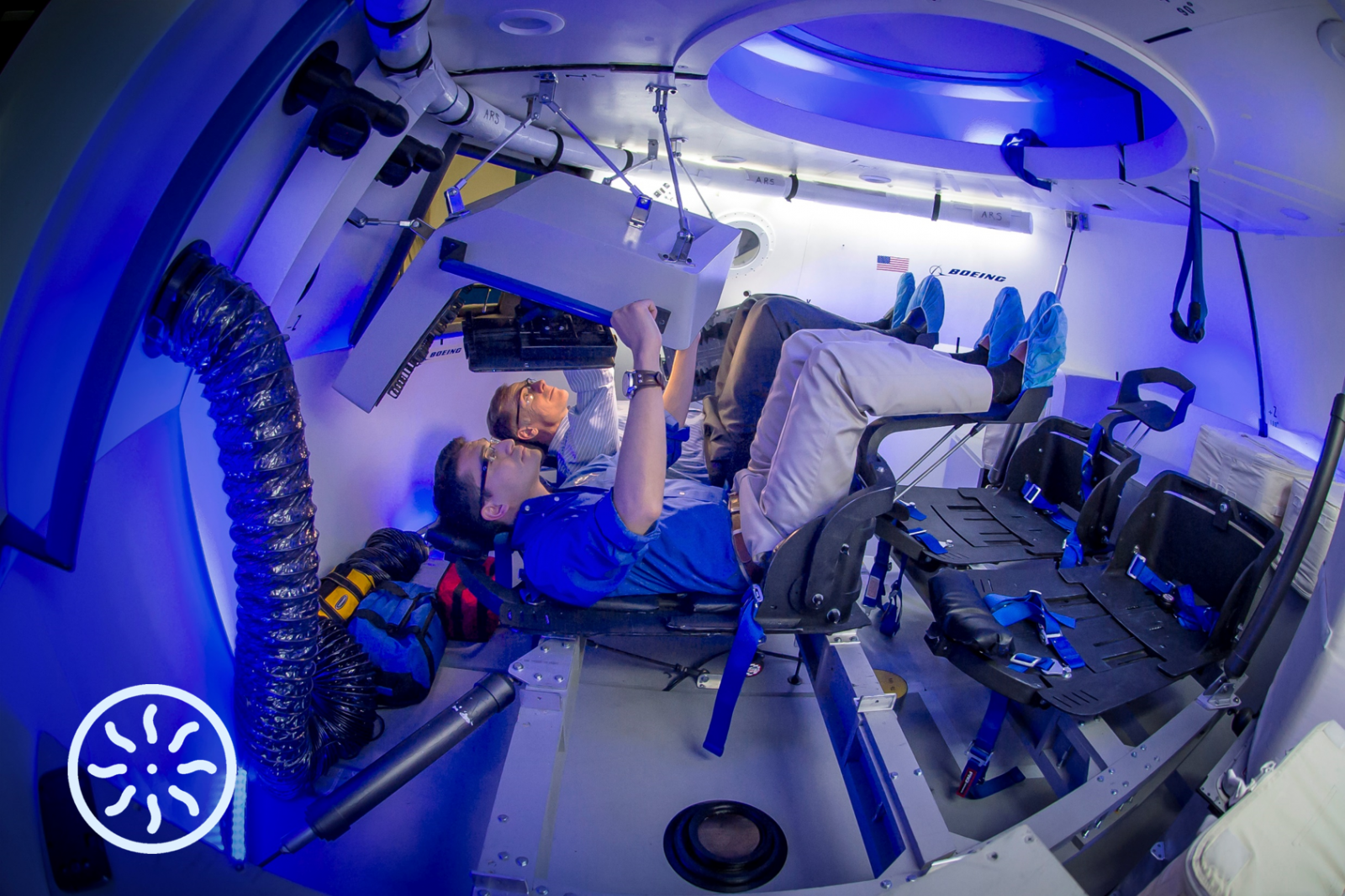
Maureen Dougherty, President, Boeing Australia and South Pacific.
With a masters in engineering and a background with Boeing in developing missile, fighter, bomber and military commercial derivative aircraft, Dougherty is set to take Boeing’s Australian operations and research into a new era of cutting-edge materials and accelerated productivity.
GEreports: What’s the biggest opportunity for either your industry or the Asia-Pacific region in 2015?
Maureen: Demand for commercial aeroplanes keeps growing in line with global economic growth. Worldwide we predict demand for 36,770 airplanes over the next 20 years, and 13,460 of these will be required in the Asia-Pacific region. The numbers are astonishing and point to the need for more efficient aircraft to replace older types, as well as growth of the airlines in this part of the world. This means more work for our manufacturing businesses, but as airlines expand their fleets, it also means increased demand for pilots and pilot training at Boeing Flight Services Australia, increased demand for spare parts from Aviall Australia, and greater need for engineers, air-traffic-management systems and a host of other things that we need to factor into our forward plans and be ready for as an industry.
GEreports: What technology or idea is set to disrupt your industry in 2015?
Maureen: To be honest, it is difficult to predict something that will disrupt the aviation and aerospace world within the space of a mere 12 months. The technologies and ideas we are working on generally have much longer lead times. To give you some examples, the 737-MAX single-aisle aeroplane is going to be a real game-changer. With substantial fuel efficiencies and lower operating costs for the airlines, it will really change their businesses, but this won’t start to happen until 2017.
Also, there is interesting work being done by BR&T Australia, working with [Boeing subsidiary] Insitu Pacific and Australian universities and government, around unmanned aerial systems research, exploring future technologies that enable the safe and efficient utilisation of airspace by both manned and, in the future, unmanned aircraft. If we can overcome this challenge, imagine how the world could change. Not only could proposed deliveries via drones become a reality, but [so could] deliveries of medical supplies to remote areas, fast speed courier services and a range of other possibilities.
Enrico Coiera, Professor in Medical Informatics and Director of the Centre for Health Informatics at Macquarie University.
His book Guide to Health Informatics is used as the basis for many courses in health informatics around the world—the third edition, considerably expanded and updated, will be released in February 2015. Coiera’s research focuses on developing technologies that help us to interact, engage and make informed health decisions, supported by the best available evidence and analysis.

GEreports: What’s the biggest opportunity for either your industry or the Asia-Pacific region in 2015?
Enrico: The past 10 years have been exciting years for IT, but we also have very many examples of large-scale failure, very often, with big implementations in large healthcare organisations or national systems. Rather than being something that should trouble us, this has been a learning opportunity for us. We’ve now realised that really the task doesn’t stop when you design great software. It’s only the beginning of the journey. We now talk about implementation science as understanding why there’s so much variation in impact when you take the same product to different organisations. For those of us who are scientists, it’s a really important question that we can now address and there are lots of ways of looking at it. But I think if you are in industry, it makes you realise that the big value-add you can offer is not great software, although you’ve got to start there, but it’s what you do in terms of bringing technology to a customer and then staying with them as they slowly embed it into their systems over what are probably many years. And that changes the whole task and business opportunity.
GEreports: What technology or idea is set to disrupt your industry in 2015?
Enrico: The biggest disruptor in healthcare is going to be us: the rise of the engaged digital consumer who will demand to be better informed and better served by a health system which is not designed around them at the moment. We get treated like first-class customers in so many other industries, but we still live in a model of healthcare which too often, sadly, treats us as the object, rather than the customer. So we are seeing, through the rise of mobile smartphones, apps, more educated people demanding to know why, and what their options are, and being able to go and compare online services that normally would have been hidden from them. We’ve got no choice but to reconsider dramatically what we mean by the healthcare system and how we engage with ourselves as consumers and patients.
Roger Price, CEO and Chairman of Windlab Limited.
Windlab is a wind-energy prospector using world-leading atmospheric modeling and wind-energy assessment technology, originally developed by the CSIRO, to identify and develop quality wind farm sites. Having played a foundation role in the Australian wind industry, in recent years Windlab has applied Australian know-how to efficiently deploying wind energy in the southern African and North American markets.

GEreports: What’s the biggest opportunity for either your industry or the Asia-Pacific region in 2015?
Roger: It’s got to be the resolution of the Renewable Energy Target [RET] in Australia. The challenge for us is that while we’ve grown the business successfully over the last four or five years in Africa and North America, the Australian business has been in rapid decline. We’ve been unable to generate significant revenue in Australia in the last two or three years because the industry has largely been in stasis, waiting for the uncertainty at a political level to resolve itself. So I think in the short term, in 2015, the best thing that could happen for us and the overall Australian renewable industry, is for the Renewable Energy Target to again gain bipartisan support, and for the original intention and legislation of the RET to be left untouched at 41 terawatt hours.
GEreports: What technology or idea is set to disrupt your industry in 2015?
Roger: What’s coming over the horizon that’s very exciting is grid storage. I’m very excited about that technology for developing markets like Africa because I think it will support the development of electricity grids in a totally new and innovative way. I think you’ll see the development of microgrids, which will be much more cost effective and rapidly deployed, and then as those microgrids develop you’ll see them interconnected. That storage technology will also have a significant impact on the business models of established markets like Australia and the United States, and to be honest, I’m not sure exactly what that impact will be, but I know that it will significantly disrupt the traditional business models.
Su McCluskey, Chief Executive, Regional Australia Institute (RAI).
The research of RAI aims to bridge the gap between community opportunities and policy making. Regional Australia is home to 32 per cent of Australia’s population, and generates 67 per cent of our national exports—RAI connects the dots between data, development and a thriving, sustainable future for all Australians.

GEreports: What’s the biggest opportunity for either your industry or the Asia-Pacific region in 2015?
Su: For regions to take ownership of their future. So rather than have their future determined by central government, whether that be at the federal level or the state level, the opportunity is for the regions to be able to have a say in shaping and also implementing policies at a local level.
What it will mean is, it will empower people far more at the local level; and it will actually mean that you’re getting solutions at that local level that fit with what the region is. Every region is different, and our data clearly shows that, but we still tend to have nationally rolled out policies, or even at the state level, rolled-out policies that may work in some places but may not work in another.
GEreports: What technology or idea is set to disrupt your industry in 2015?
Su: A new initiative we’re looking to develop is something we’ll call InPower. It will look at harvesting real-time information that will allow people to respond much more quickly. At the moment, the way we respond to data and information has a time lag. The data we have might be ABS data, and that can be five years out of date, so by the time you put in place a mechanism to respond to it, things could have changed and moved on.
We get information all the time, through social media, in the news, people have different meetings, they have different fora, there is information and data being collected at the local level, but there’s no way to capture that as it happens. We’re looking at building a tool or mechanism that can harvest that — almost like live feeds with news… and put what’s happening in a region now together with the data that does have a bit of a time lag. That could really help to then say what people need to do in a region to help it go ahead, or how they need to respond to changes.
A clear example is what’s happening now in regional Queensland with mining moving from construction phase into production phase. There is a very disruptive environment for people, because the skills that you need for the construction phase are quite different to the skills that you need for the production phase, but you end up with that lag. We’re looking at a project in the Toowoomba and Surat Basin to say how do we help you respond to that change?. What do you need to be thinking about now to help you prepare for that? Something like InPower will help us.
Jennifer Conley, Executive Director, Australian Advanced Manufacturing Council.
The council is a private-sector initiative, bringing together leading CEOs of advanced-manufacturing companies to drive innovation in food technology, information and communications technology, mining technology and equipment , medical devices and biotechnology; and in the advanced textiles and materials, automotive, defence and aerospace sectors.
GEreports: What’s the biggest opportunity for either your industry or the Asia-Pacific region in 2015?
Jennifer: Our biggest opportunity is building collaboration between government, industry and the research community… we’re working with government on the industry growth centres and helping to link those three legs of the innovation tripod. In the past, Australia has had a lot of success in this area, where CSIRO and other research institutes around the country have worked with industry to bring new products and solutions to market.
With the retreat of the mining boom, we need to put the focus on our knowledge capabilities, and strengthen those higher value industries that are based on science and technology. We have successful companies that are globally oriented and building meaningful jobs for the future—we can make more of those. Collaboration is key: it’s getting those three sectors together to make these things happen.
GEreports: What technology or idea is set to disrupt your industry in 2015?
Jennifer: It’s an idea, actually. And it has the potential to bridge the so-called divide between research and commercialisation: Design Thinking. It’s been around for years, but it’s being more applied in the area of science and technology than ever before, with Stanford University and others teaching it. Professor Sam Bucolo, at UTS in Sydney, is a great proponent of design-led innovation. Essentially it helps to get the thinking of designers and architects and people like that into science.
Scientists tend to analyse data and perhaps not look at the user end. They’re analysing something from within rather than without. It’s a process and it starts with empathy—and allows you to go through a variety of solutions or iterations—to loop back once you have a prototype and re-define what you produce or even the issue that you’re trying to solve. In the case of advanced manufacturing, people might say, ‘What is it that this society is looking to do, what do we want?’ Perhaps we want lighter-weight materials, or more sustainable materials, or energy efficiencies. Then you go in and define what you need to produce and explore a variety of solutions. So it’s a more collaborative activity.
I wanted to share another thought from a member [of the Australian Advanced Manufacturing Council]: While loath to jump on what he says is the faddism around so-called "big data", he argues that in fact it is huge. Analysing huge volumes of speech data has made speech recognition far more accurate than before, and huge volumes of linguistic data have enabled a huge leap forward in machine translation. There are enormous opportunities for business generally in better understanding its potential. It encompasses machine learning and the Industrial Internet … and it’s a fascinating new area.
Luc Hennekens, Chief Information Officer, Qantas.
In 2014 Hennekens, who is responsible for all IT at the airline, pursued four major initiatives, one is to use cloud computing and the open market for processing power, to speed data processing at the airline. For example, route-optimisation calculations that might previously have taken four weeks on in-house hardware are now done in under an hour using the cloud.

GEreports: What’s the biggest opportunity for either your industry or the Asia-Pacific region in 2015?
Luc: The biggest opportunity now is to make every customer feel unique, and create the best possible customer experience when they’re flying with Qantas. A lot of that is going to happen through digital enablement.
An example is something we’ve done in airports, with QView. This is a system that pushes out real-time boarding notifications to customer devices, and to big screens around the airport and in lounges. We’re trying to give individuals personalised flying info, up-to-the-minute boarding times, walking times to the gate, weather at their destination, and anything else that will make travel easier for them.
In the air, we’ve got a mobile customer-relationship-management system, it’s an iPad application that allows our onboard managers to access real-time information on our passengers, so they can understand the customer’s preferences, where they’ve travelled from, where they’re travelling to, whether they’ve had any issues or any delays in their journey prior to being on that plane, that enables them to create service requests in the system. There’s a lot more investment going to go into that area, into empowering our ground staff and our flying staff with the right information about our customers that helps them create that customised customer experience.
GEreports: What technology or idea is set to disrupt your industry in 2015?
The scale at which you can do things in computing now is just incredible. The scale of databases, for instance, and the speed at which you can run very very complex queries, which means you can do analysis very quickly and deliver results in real time. One of the things that’s going to be important for us in improving our customer experience, is all that data that we have about our operations and our customers can be used in real time to give the right snippet of information for the particular customer in the particular situation exactly when they need it. That requires tremendous processing power, it requires completely new technologies that have only been developed over the last few years.
We spoke to another six thought-leaders about what will drive disruption and new opportunities in their industry. Here's part 2 of what will change the game in the new year.