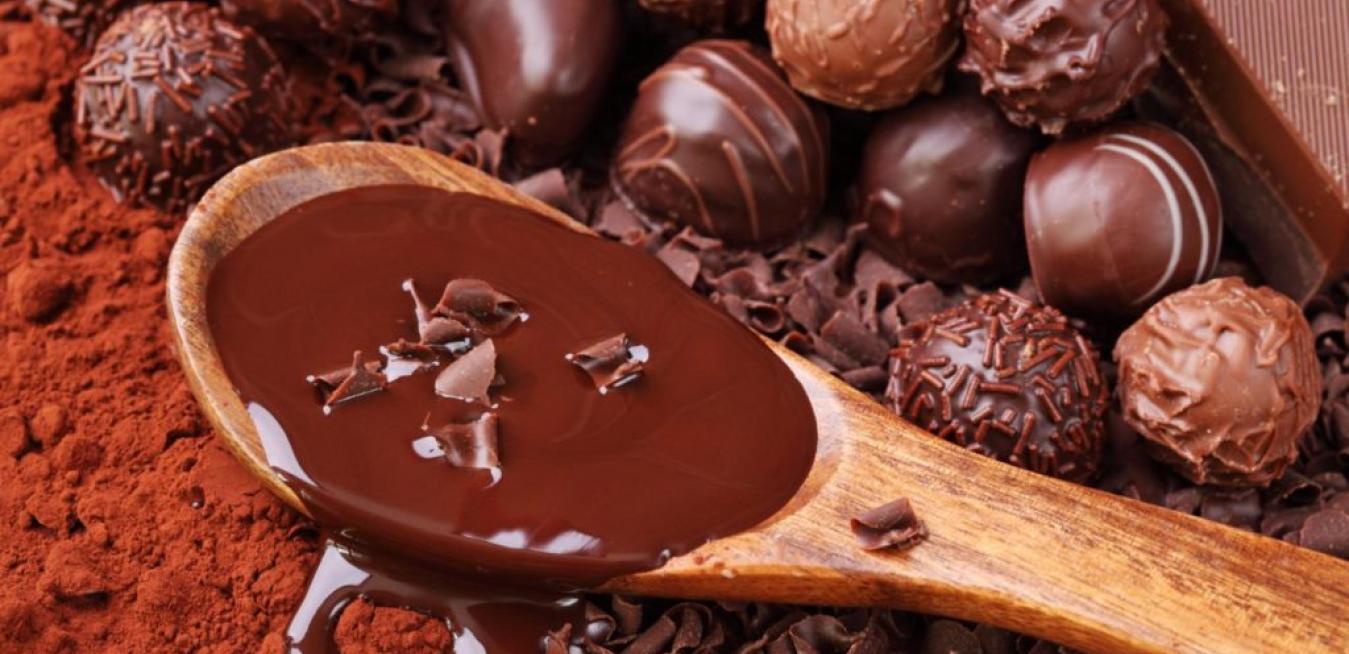
The secret life of chocolate



The basic recipe for chocolate is deceptively simple: cocoa, sugar and cocoa butter, with perhaps a touch of vanilla for good measure.
Underlying these ingredients however are more than 600 identifiable flavour compounds, and biologically active molecules that give chocolate its unique flavour, aroma, texture and effect on the body.
Carpenter knows this well. Every day he turns a 50 kilo vat of warmed chocolate into a vast array of moulded, flavoured, textured and cream filled treats.
Cocoa butter, the key ingredient of real chocolate, is polymorphic. It consists of tiny crystals measuring between 0.01 and 0.1 mm in diameter which combine to form different shapes or structures. As it is heated and cooled these molecules arrange themselves in up to six different crystalline forms. These arrangements determine the chocolate’s properties like melting point, strength, glossiness, and texture.
By moving the mixture constantly as it cools Carpenter is encouraging the molecules to form long chains, which will give the resulting chocolate a glossy exterior, a strong foundation and a satisfying ‘snap’ as it breaks.
Cocoa first came to Europe from Mexico, where it was mixed with chilli and other spices into a drink which Spanish conquistador Hernan Cortes described as “a cup full of daggers”.
The tree on which the cocoa bean grows has a very limited range, and only flourishes when hidden under the canopy of other trees in a warm, humid environment, usually 10 to 20 degrees north or south of the Equator. Cocoa trees have a very shallow root system, and the cocoa beans grow from the trunk of the tree on weak tendrils. This means both the crop and the trees themselves are highly susceptible to strong wind and heavy rain.
It was Dutch chemist Coenraad van Houten who first developed the technique for separating the cocoa fats from the bean in 1828. The resulting chocolate powder and cocoa butter are then recombined and mixed with sugar, vanilla, and milk solids, to form different types of chocolate.
This deceptively simple combination brings together more than 600 compounds and at least five neurotransmitters which are associated with pleasure including caffeine, theobromide, tryptophan, phenylethylamine and anandamide.
Although these chemicals are often thought to cause the positive feelings associated with chocolate, many scientists argue that this effect is more likely to be produced by the fat and sugar contained in chocolate. This is because the compounds are present in such small amounts that the average person would have to eat about a third of their body weight in chocolate to ingest enough for these chemicals to have noticeable effect.
Cocoa butter is highly prized by a number of different industries, and is commonly used to make cosmetics as well as confectionary. Fats derived from dairy products and other sources are often used to make compound chocolate, which is less expensive and far more common than chocolate made from cocoa butter.
“That’s why there is such a price difference between good quality chocolate and commercial chocolate,” says Carpenter. “The difference is not the amount of cocoa, but the amount of cocoa butter used.”