Future-Proofing Mining



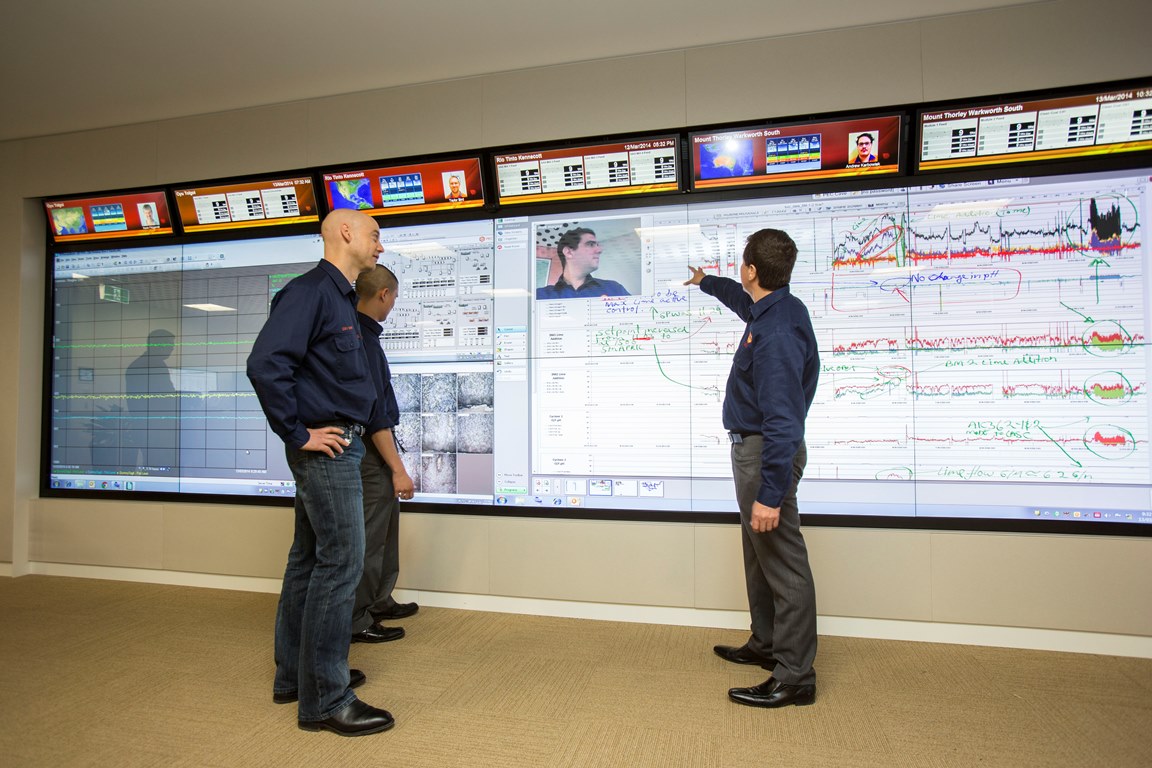
Enter the data mine and beware of falling touchscreens—the size of a long wall, these lodes of information could knock you out!
Anglo-Australian mining company Rio Tinto first peered into the big-data tunnel on a visit to GE’s massive Transport facility in Erie, Pennsylvania. Back in the 1990s, the operation of some 6,000 heavy-haul locomotives across the US rail system were being monitored from the Erie control room. John McGagh, former head of innovation at Rio Tinto, says, “That was a big aha moment for me. We were wiring our world together on the procurement side, but man, GE had wired its world together across this whole thing—a network of locomotives! That’s the story I think that gets us to where we are today.”
For Rio Tinto today that means a brand new Analytics Excellence Centre at Pune, India. It’s the latest of several high-tech facilities around the globe, each assessing massive volumes of data captured by the array of sensors attached to the company’s fixed and mobile equipment, along with thousands of research and productivity data sets, and each building on the knowledge of the network. “The Centre will help us predict the future through the use of advanced data-analytic techniques, to pinpoint with incredible accuracy the operating performance of our equipment,” said Greg Lilleyman, Rio’s chief executive of technology and innovation, when the Pune facility came online on March 3. Data scientists at the centre will use predictive mathematics to analyse volumes of data with the aim of predicting and preventing unplanned machine downtime, and improving the safety, and of course productivity, of its procedures.
Pushbutton control, Perth switches on the Pilbara
In Australia, Rio’s adventures with remote monitoring, remote control and what it calls the Mine of the FutureTM, began in the west at its now vast Pilbara operations.
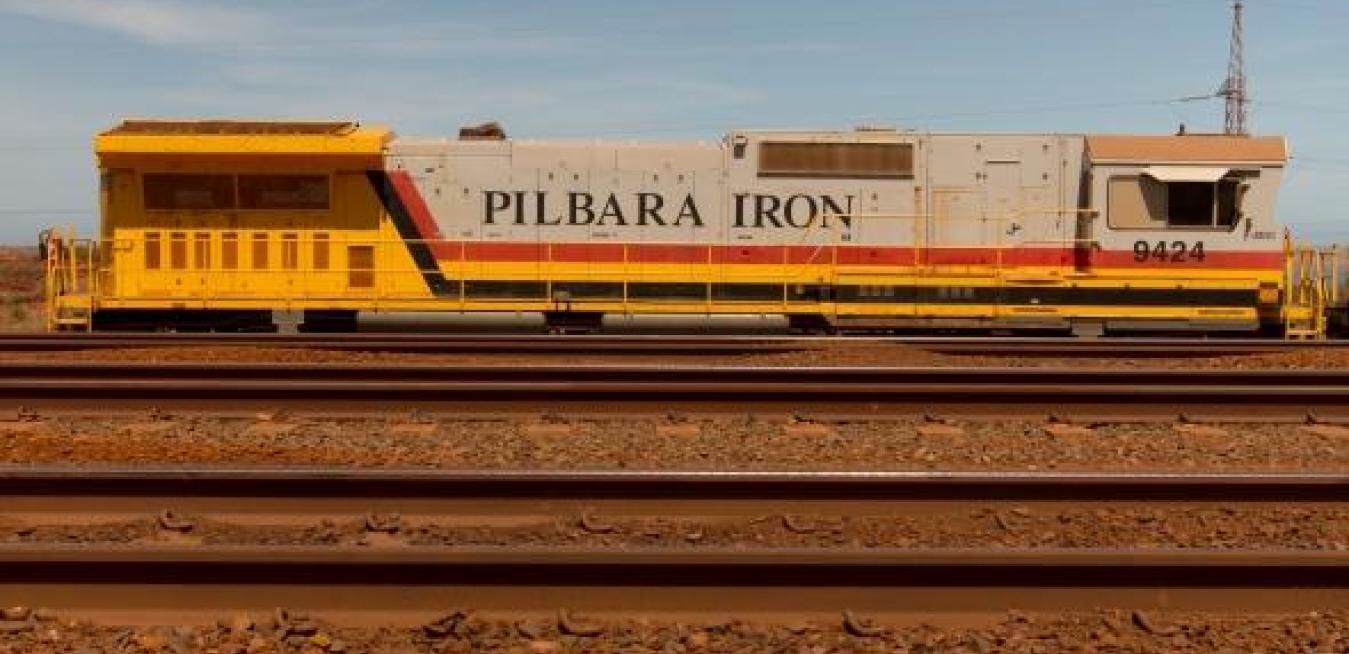
The Pilbara, says McGagh, “it’s bigger than Wales. There are 15 mines in a network, each one with its own geology. Rio runs GE trains up and down that system. It’s among the heaviest haul-train axle load in the world. Fifteen mines, three ports, heavy-haul rail systems, 300 trucks. You have to get the ore to the port, through the drill, blast, load cycle and down the rail and it’s got to be the quality that you’re looking for. It’s one of the world’s greatest challenges, and [Rio] now controls it from a room 1,500 kilometres away.”
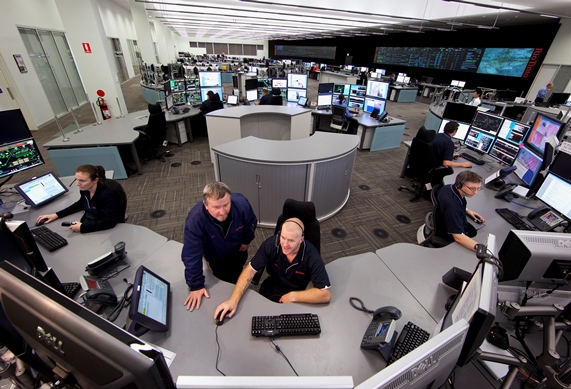
Opened in 2010, Rio’s Operations Centre in Perth has developed such innovations as the autonomous drill rig, which allows more efficient and reliable drilling than cab-driven rigs and can be operated from safe sites either at the mine or outside the Pilbara—from Perth, or anywhere in the world, really.
 Mine Performance, which drills deep down into the data available from any mine, to extract information that leads to greater efficiencies. It’s a two-part solution that encompasses both asset and operations optimisation. “It provides our customers with actionable notifications in regards to equipment failure and/or process variations and inefficiencies,” explains Duarte whose team works to analyse data for clients in South Africa, Australia and South America. “One side of the solution looks at process health. Once your process is running well, you can optimise that process to increase your throughput, to achieve lower energy consumption, better grade in your product and so on.
Mine Performance increased the availability of one fleet of haul trucks from 70% to 85%.
“The other side of the solution looks at equipment health. How well your machines, such as pumps, mills, dryers, haul trucks are running.” The software sifts and compares historical data on machinery with current data, for anomalies that indicate minute changes in performance. “When the real data starts to deviate from what is predicted that machine at that condition should be doing, then we start digging, do the diagnosis, identify the root cause and tell our customers, for example, that they should check truck number 112 where there is an injector failure in the engine. It is very specific,” says Duarte.
In this way, the solution allows for fast, planned repairs, only when needed, rather than a mine constantly having to do emergency repairs, or routinely taking equipment offline for servicing when service may not be necessary. Mine Performance increased the availability of one customer’s fleet of haul trucks from 70% to 85%.
The software’s process-health solution also relies on machine data. There can be many processes in any one mine—from concentrators of ore or of slag, to cleansing of gas byproducts of smelting—and poor performance of machines, varying grades of raw material, chemical imbalances and so on, may hamper optimal flow through a particular process. At Lonmin platinum mine in South Africa, for example, the process of drying the concentrate wasn’t working fast enough to meet demand from the furnaces. Mine Performance increased throughput in the drying section by more than 10%. It also enabled 1.5% greater recovery of platinum from recycling of slag from the plant, saving millions of dollars in metal that would otherwise have been lost.