
All I want for 2015...



Roger Price, CEO and Chairman of Windlab Limited
GEreports: What’s your wish?
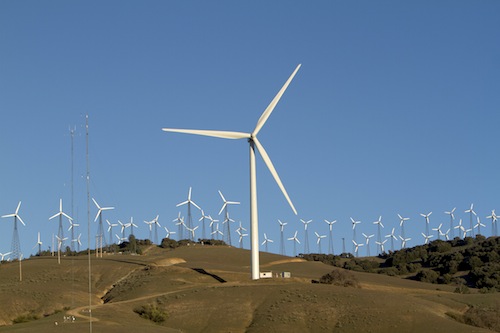
Roger: A level playing field. I’m constantly frustrated by the arguments from both sides of politics that talk about renewable energy being too greatly subsidised. What people seem to neglect or forget is that the fossil fuel industry is enormously subsidised as well. In Australia, the diesel rebate alone costs $6 billion a year. I’d like to see the reduction or elimination of fossil fuel subsidies and I’d like to see a price on carbon. If you could do those things, then industry can get on with delivering the energy networks of the future.
Professor Attila Brungs, Vice-Chancellor, University of Technology Sydney (UTS)

GEreports: What’s your wish?
Attila: That government and the policy makers would think very carefully through all the changes they are about to make [to our education system]. Australia is a very fortunate country. We have one of the best education systems in the world. Unfortunately the government is in constrained financial times, and it’s now coming through with one of the biggest changes in government policy for education, ever—which is thinking about deregulation and cutting the sector by 30 per cent. There are some advantages of deregulation, but there are a lot of downsides as well. The rushed legislation could cause huge untold damage to education in Australia. The cuts will certainly impact the quality of our education. Australia is built on the fact that education is merit-based. Essentially, with our HECs system, anybody who wants to go to university can go to university. With the changes, there is a very great risk that that will cease and universities will become less affordable. So my wish is that the government thinks very carefully through, and listens to all the arguments in terms of what legislative changes they’re trying to make.
Warwick Holmes, space avionics engineer, who worked with the European Space Agency (ESA) on the team that built the remarkable Rosetta spacecraft
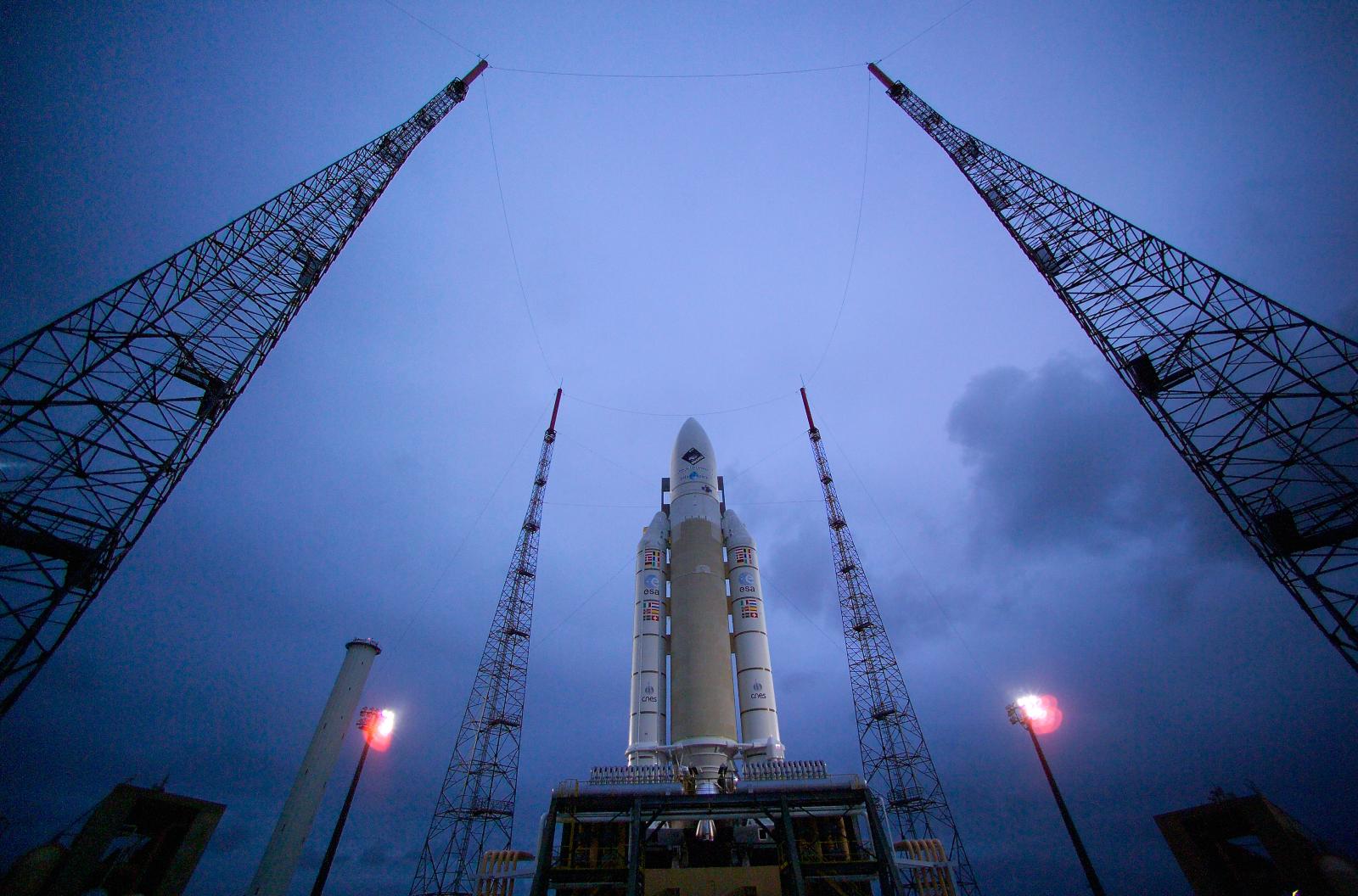
The Rosetta robotic space probe on its mobile launch platform in February 2004, days before its successful launch to begin its ground-breaking exploration of deep space. Image courtesy of ESA.
GEreports: What’s your wish?
Warwick: For Australia to become an associate member of the European Space Agency. ESA is a consortium of 20 countries. It’s like a very well-established club, and just by paying a small component of your GDP, you become a member of a space organisation that’s got 50 years of experience and is doing these incredibly complex and successful missions. Australia is the only country in the history of ESA that has ever been invited to join. But we keep saying no. ESA has a ground station in New Norcia, 150 km north of Perth, and all Australia contributed is a concrete slab. The dish itself was made by a Canadian company, and the reason the Canadian company got the contract is because they are an associate member of ESA. Fifteen or 20 years ago, when Canada was considering becoming a member of ESA, three independent Canadian universities did an assessment of whether it was worth being an associate member. From memory, it was shown that something like three to four dollars are returned for every dollar invested in ESA.
Su McCluskey, Chief Executive, Regional Australia Institute (RAI)
GEreports: What’s your wish?
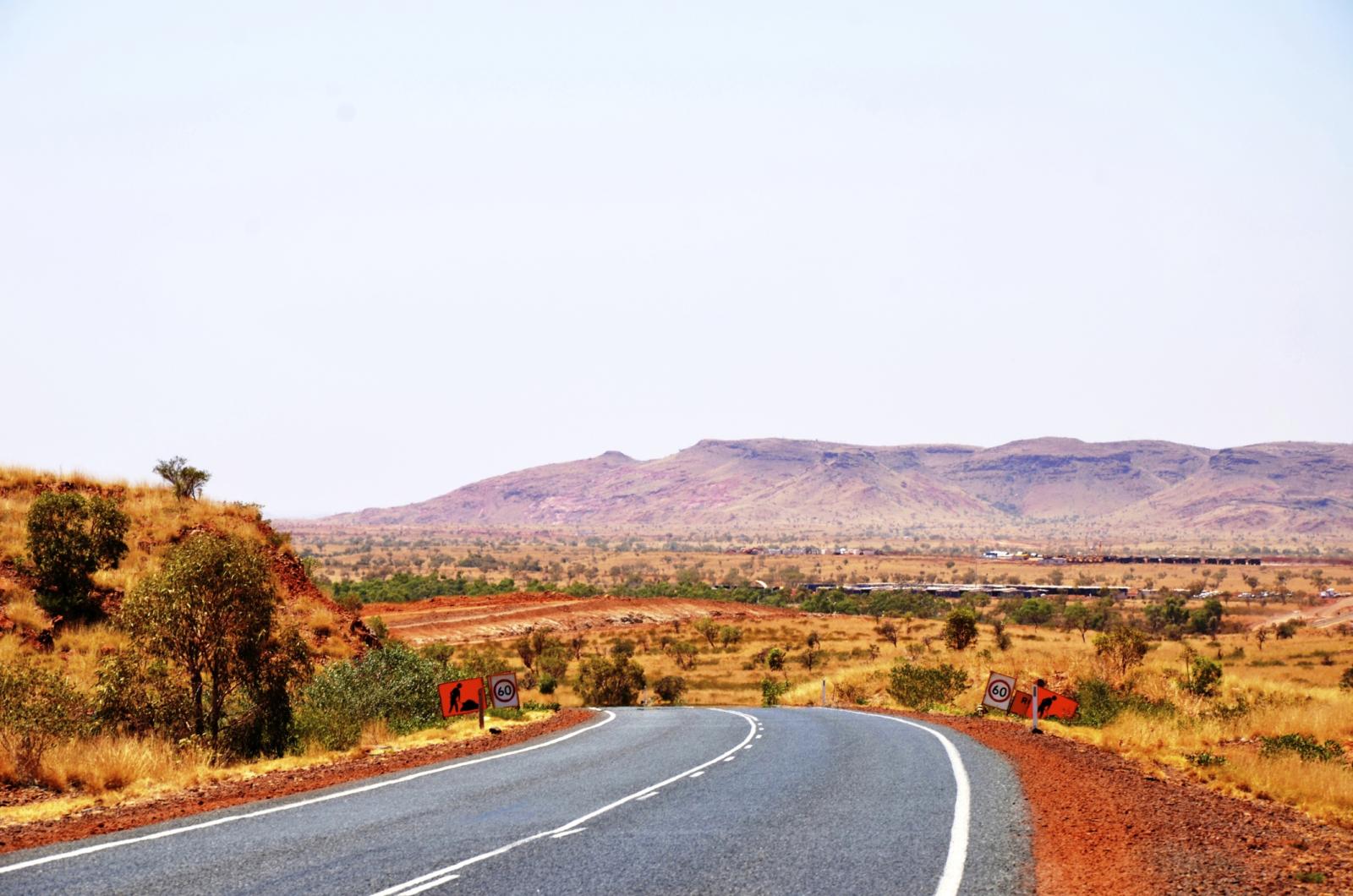
Su: Certainty. A whole lot of really good ideas get overtaken by politics. It would be great if we could have a process of getting good policy through. Unfortunately, when it comes to regional policy, it ends up being a clear loser because politics takes over and then you end up with pork barreling, rather than having sound policy for sustainable regions. And connectivity. Connectivity is a key driver of competitiveness, but if we’ve still got a whole lot of the country that isn’t connected—it’s not just broadband, it can be mobile phone as well—that really is a handbrake on competitiveness. In a world where so much is dependent on technology, on the phone and on the internet, where you can’t have that connection it becomes severely hampering.
David Bradley, Managing Director, Gas Transport Solutions
GEreports: What’s your wish?
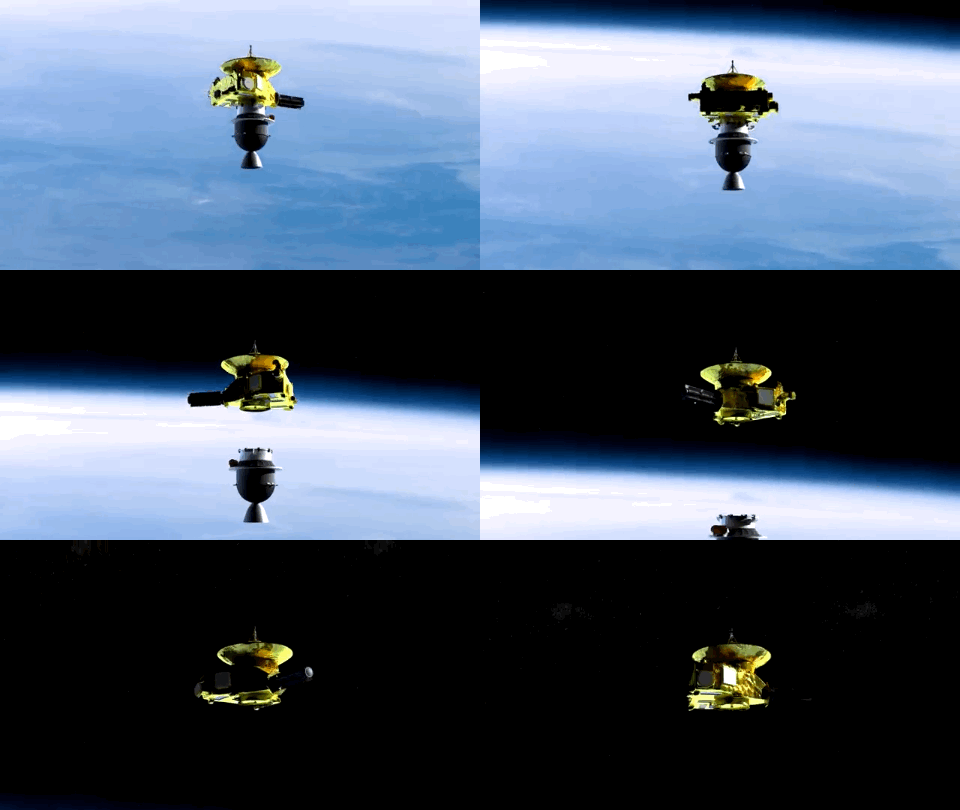
David: The ability to transmit power wirelessly, enabling space-to-ground power transmission of scale. See George Friedman’s The Next 100 Years. The idea is to put massive solar arrays in space and beam the power to the ground. Friedman believed the military would crack this first for their purposes, but that by 2030-2040 the technology would be shared across humanity spawning a golden age of clean and abundant energy.
Marita Cheng, founder and CEO of 2Mar Robotics

GEreports: What’s your wish?
Marita: I want the government to accept ACARA’s recommendations [Australian Curriculum, Assessment and Reporting Authority] that technology and computing be taught from the early years of primary school until Grade 9. That way, everyone learns from the beginning, at an age-appropriate rate. And that way, kids in Australia will be able to speak and work and create in software, in code, in computing thinking, from the beginning. And we’ll create a generation that can create, much the same that we have generations that can communicate by writing, or do their groceries and understand how much money they need to be within their weekly budget. We can have a whole generation that knows how to create the fundamental building blocks of the future, which is code, websites, technology.
Maureen Dougherty, President, Boeing Australia and South Pacific
GEreports: What’s your wish?
Maureen: I’d love to see more students choosing to study engineering and sciences. Working with our Boeing Research & Technology teams in Australia, I never fail to be impressed with the breadth and depth of research programs on which they are working. It’s truly exciting work and I really want to encourage young Australians at our high schools and universities to consider these subjects and know more about the opportunities they present. I know from personal experience that engineering has been tremendously useful in my career, it really grounds my thinking and my approach to problem solving—plus, we work on really cool stuff!
Jennifer Conley, Executive Director, Australian Advanced Manufacturing Council
GEreports: What’s your wish?
Jennifer: My biggest wish is for greater and more meaningful collaboration between our research community and industry: more PhDs working in manufacturing, more appreciation of the value of the “D”, the "Development", in R & D, resulting in original Australian technological advances, new products and new exports. Changes to the university funding metrics being considered could provide momentum for this. We’d be interested in policies that rewarded universities, say, for revenue created in the commercial sector from ideas that did not exist five years ago; or for meaningful commercial interactions such as products created, products exported—not just picking up contract R & D work. These would then be long-term projects that build our advanced manufacturing SMEs and Australia’s value in global supply chains.
David Hansen, CEO of the Australian E-Health Research Centre, CSIRO Digital Productivity Flagship

GEreports: What’s your wish?
David: De-identified access to all the health data that’s out there. Then Australia could really lead the world in health and medical research and health-services research. For instance, if there were a way of getting all the brain images that have ever been taken in Australia into the one place, and the statistics that go with them (age, gender, state of health and so on), we could get a better picture of exactly what a normal brain looks like for various combinations of age and wellness.
The data could also be used to understand better how we might design our health services to be more efficient and productive. For example, with the ageing population we need to better design the services that are available for people with dementia, and how people might access them. Understanding how brain health changes as we move into old age — that is, dementia patients versus normal controls versus memory complainers — would let us know when people will need different services and we can then design our services to meet their needs.
Ivor Frischknecht, CEO of the Australian Renewable Energy Agency (ARENA)
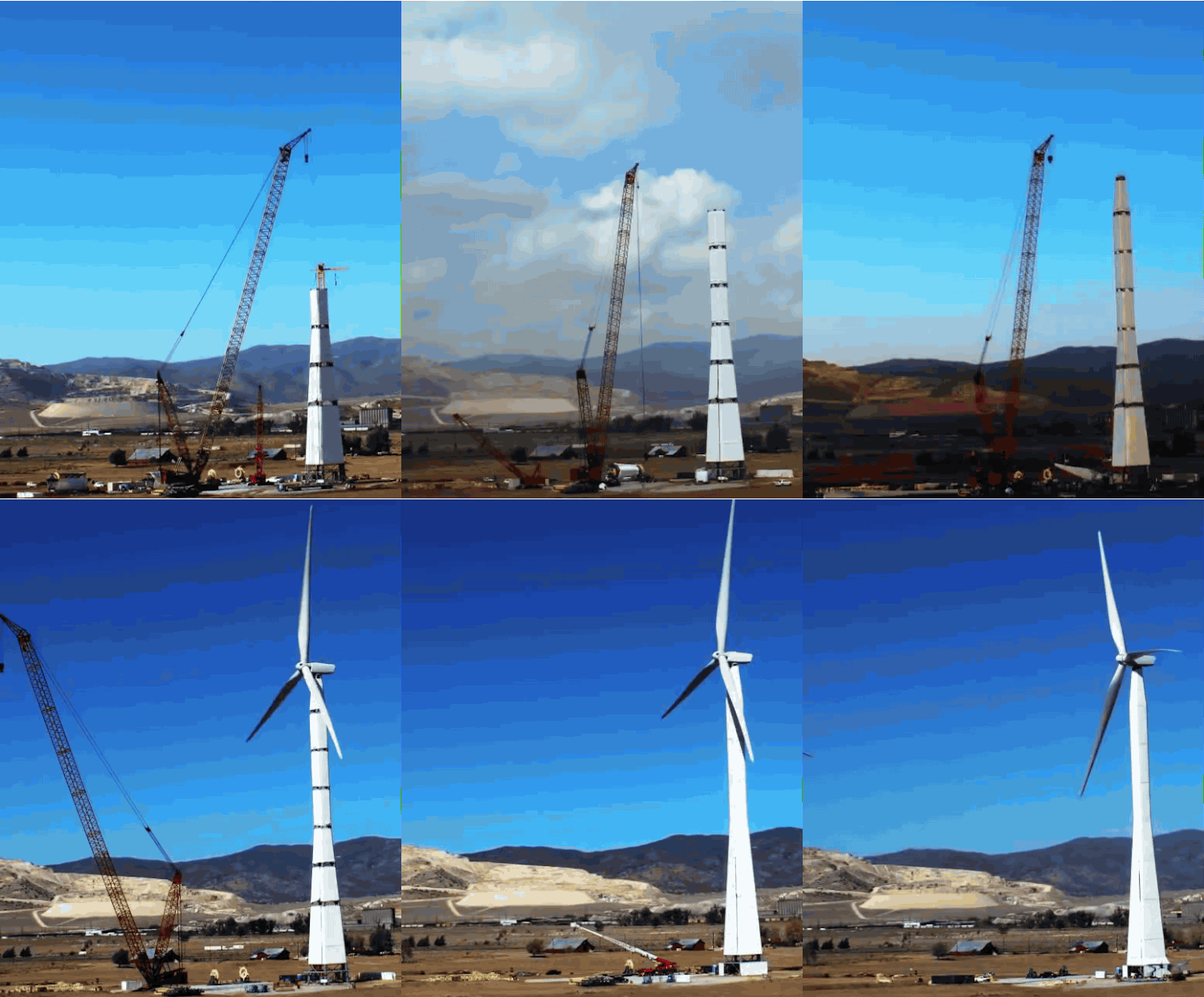
A time lapse of a prototype of a GE Space Frame Tower installation at a testing site in California. The tower supports a rotor that's as big as the London Eye, and a huge new 2.75 megawatt turbine.
GEreports: What’s your wish?
Ivor: We’d like more applications coming in. Despite the uncertainty around the Renewable Energy Target, and uncertainty around ARENA’s own future, we’re very much in business. I would like to see more developers coming to us, saying ‘Hey, I have a fantastic project for you.’ We can come to a funding decision and we can award the grants now. So I’d love to see a pickup in activity.
Enrico Coiera, Professor in Medical Informatics and Director of the Centre for Health Informatics at Macquarie University
Enrico Coiera talks about his research at GE At Work 2014.
GEreports: What’s your wish?
Enrico: I would like governments that move to evidence-based policy making, rather than policy-based evidence making.
Read the fascinating predictions for opportunities and disruptions from these 11 thought-leaders in Blue-Skying The New Year, Part One and Part Two.