What the GEek??!



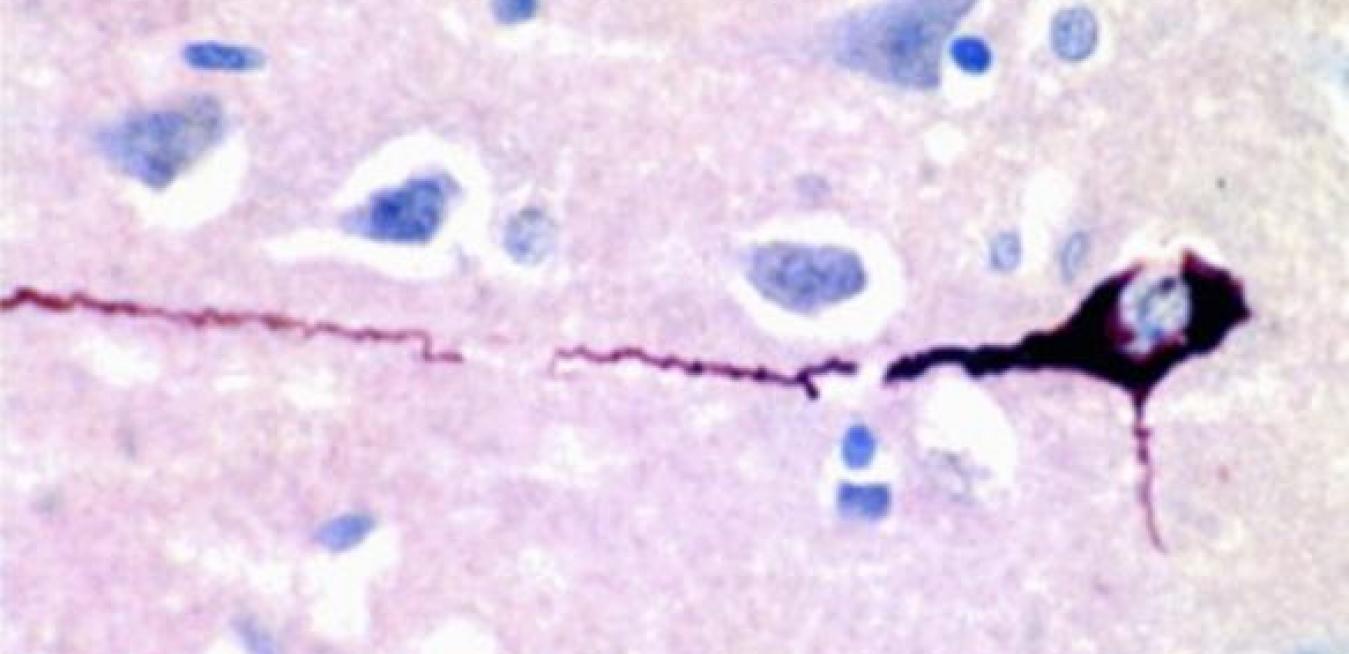
This fortnight’s What the GEek is a microscopy of neurofibrillary tangles in the hippocampus, a marker of CTE. Neurofibrillary tangles are twisted strands of hyperphosphorylated tau protein, or blockages in the cell scaffold and transport system. A healthy cell scaffold and transport system is made up of long strands, like tiny roads that connect and support different organs (organelles) within a cell. Nutrients, messages and other essential supplies can move around the cell on this scaffold system. Normally, tau protein helps to keep roads straight, but when tau collapses into tangles the roads crisscross into clumps, rendering the structure and transport system unable to deliver its goods or signals. Without its connections, the cell eventually dies.
CTE was originally thought to be specific to boxers, however it has recently been discovered in retired professional NFL football players and other athletes whose sport entails repetitive brain trauma. The disease causes progressive degeneration of the brain tissue, an effect which can occur decades after the last brain trauma or end of active athletic involvement. CTE is associated with memory disturbances, behavioural and personality changes, Parkinsonism, speech and gait abnormalities, and eventually progressive dementia.
Alzheimer’s patients also display tau neurofibrillary tangles, however these occur alongside plaques of a second protein known as beta-amyloid, while tau tangles alone are a specific marker of CTE patients.
Previously, CTE could only be diagnosed through autopsy. Now, Dr. Gandy’s research has led to an experimental PET scan that can detect the tangles in living patients. When paired with a specific scan for Alzheimer’s disease, and a known history of brain trauma, a CTE diagnosis can be made. There is no known treatment for CTE as yet, however diagnosis of the disease is an important step in the right direction.
Image: Professor Sam Gandy, GE AT Work 2014