×

GE.com has been updated to serve our three go-forward companies.

Please visit these standalone sites for more information

GE Aerospace | GE Vernova | GE HealthCare 

header-image

Behind the scenes at the B20: the next wave of global investment

November 12, 2014
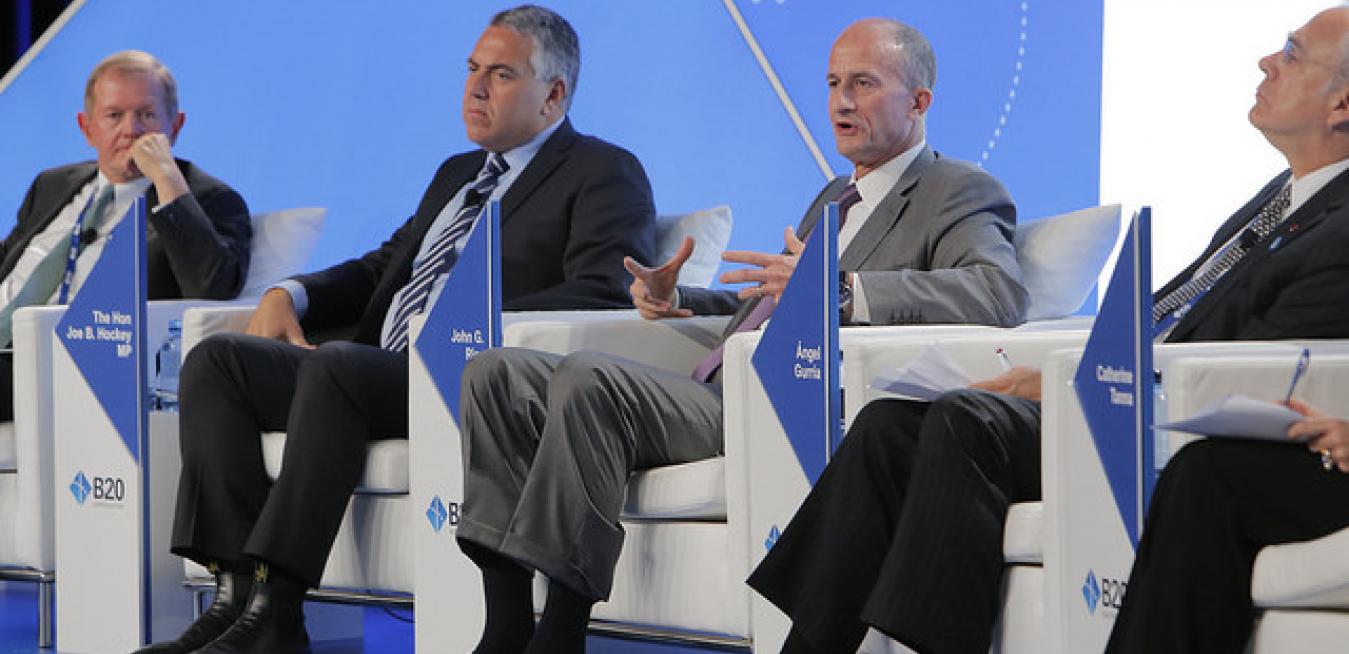
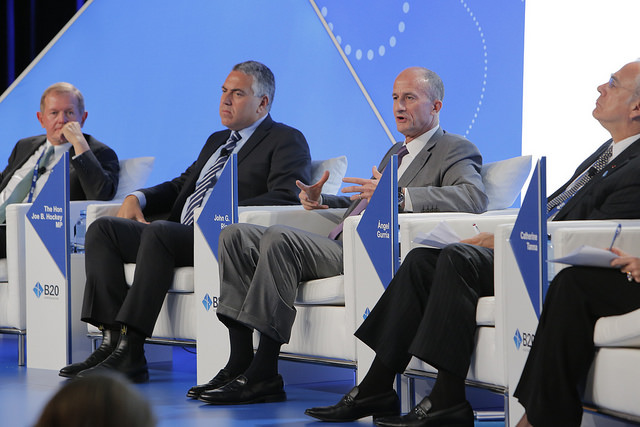
This week, leaders from the G20 nations will meet in Brisbane. The priority theme is The Growth Challenge. During the G20 the Business 20 (B20) will outline a series of policy recommendations made by business leaders from across G20 member countries. Earlier this year, GE Vice Chairman John Rice joined a B20 panel discussion on the next wave of global investment. Read his view ahead of this week’s meeting.
GEreports: You’re based in in Hong Kong - what does that say about what GE thinks about the future of global economic growth? 

John: It says a couple of things. You know, first of all when you reposition senior people, whether it’s me or anybody else that’s senior in the company, you send a signal to the rest of the organisation about what’s important. So the fact that I’m in Hong Kong isn’t as important as the fact that I’m not in the United States.

We chose Hong Kong for a number of reasons and we’re quite happy that we did, but it’s less about Hong Kong than it is about what happens in all the markets we serve around the world including Australia and New Zealand.

GEreports: What’s interesting about doing business in Asia? 

John: Well, the diversity. When people talk about Asia, especially people who aren’t familiar with it and don’t get the chance to travel here, they treat it like it’s one homogeneous region and it couldn’t be more diverse if you start in Japan and end up in India, where I was a few weeks ago. They’re all different; and I think that the differences reinforce for us what we have to do on a global scale. It’s important to really “dig in”, in every country. To understand the politics, understand the macro economy, understand what our specific customers need and try not to develop solutions with a one size fits all mentality.

GEreports: It sounds like you’re a student of those cultures? 

John: Yes, and I know you can’t fly in with a US or a Western Europe perspective. You have to learn how to change your lens and adjust to the location that you’re operating in and curb your biases.

Knowing when you’re at risk of making a biased judgement because you’re following some stereotype, and being able to adjust to that, is important for any good global leader.

GEreports: It sounds like it must be quite a fun challenge for you. 

John: It is a fun challenge, especially in today’s world, there’s a lot going on. And it’s an election in Indonesia a few weeks ago, then a budget was released in India, it’s the challenges in the Middle East and what’s going on in Iraq, the political situation in Russia and Ukraine… There’s very little that you read about in the newspaper or see on TV in this world that doesn’t have implications for us. We have to filter those and figure out what’s important and what isn’t important – and it is a challenge.
 /><br />
<br />
<strong>GEreports:</strong> <em>What would you say are the biggest issues that are on your mind when it comes to doing business in Australia?</em><br />
<br />
<strong>John: </strong>Well I would say the cost of doing business here has been increasing and I think that you see some of that in the context of mining and oil and gas projects; and that’s a concern, you know? It’s not that people shouldn’t get paid more, but you’ve got to have the productivity that goes with that. And I think it’s very important for Australia to strike the right balance. Things like a price on carbon and environmental challenges need to be met with consistent policy, consistent regulations. Starting and stopping is never a healthy thing or a good thing because investors don’t know where to go. And governments have a difficult thing here because you tend to operate in budget cycles… That’s not conducive to long term investing. It’s always better if you can create a long term vision. China has a five-year plan. Companies like ours can see that five year plan, have a pretty high level of confidence that the government’s going to do what it says it’s going to do.<br />
<br />
<strong>GEreports:</strong> <em>So the subtext would be that if there was more clarity around Australia’s long-term vision and goals, potentially large organisations like GE and others would invest more. </em><br />
<br />
<strong>John:</strong> Right, because the things we’re investing in are long life assets, and so we are thinking about the next 10 or 20 or 30 years in addition to the next year. We think about both. We think about the short term, we think about the long term. When we make investments in long life assets we want some level of confidence that we’re not going to be sorry about that five years from now, right? It’s a natural thing.<br />
<br />
<strong>GEreports:</strong> <em>Can you tell me from your perspective, why is the B20 so important? </em><br />
<br />
<strong>John: </strong>The B20 got people together to focus on how you can have an economy that grows and creates a better standard of living. But increasingly it’s not just about growth, it’s now about sustainable, inclusive growth. So what does sustainable mean? Sustainable means it has to be growth that is hinged on value-added activities, things that create economic value. And inclusive means that you can’t have growth where just the top 10 per cent win, everybody has to participate. You’re seeing lots of examples around the world of what happens when people don’t feel like they’re participating; the Arab Spring or Occupy Wall Street. It manifests itself in a number of different ways, but it’s about people feeling like they’re not participating in the wealth creation that’s taking place, and it’s all going some place else. Sustainable and inclusive growth is the outcome everybody’s looking for. You need jobs.<br />
<blockquote>If you want to create jobs you’ve got to have human and financial capital. If you don’t have human capital you’re not going to have many jobs, because people aren’t going to want to create jobs in countries that don’t have good human capital.</blockquote><br />
So that’s education, it’s training, it’s that kind of stuff. And then the financial capital goes where the people are. Investors stay away from places where they can’t get good people.<br />
<br />
<strong>GEreports:</strong> <em>So your role is about having a bigger vision and a willingness to participate in an economic growth story and helping societies perhaps more broadly? </em><br />
<br />
<strong>John:</strong> It’s a requirement in today’s world. 25 years ago you could fly into a market anywhere in the world, including Australia, sell your jet engine or your gas turbine, leave, and then when you ship your stuff in and get paid, you export the profits to shareholders in some other place and everybody lives happily ever after, right? That doesn’t work.Governments can’t solve the problems by themselves, that’s something they’ve recognised. They are increasingly looking at a combination of public and private efforts to get things done and they’re calling on the B20, and the companies that participate in the B20, to show up and contribute. And that contribution is not philanthropic, that contribution is capacity building.<br />
<br />
<strong>GEreports:</strong> <em>You spoke on a panel at the B20 about the next wave of global investment. What is the next wave of global investment? </em><br />
<br />
<strong>John: </strong>What we focus on is infrastructure and McKinsey and other companies have estimated that the world needs something in the order of $4 trillion dollars of infrastructure investment a year and it’s getting about $3 trillion, so there’s a trillion dollar shortfall roughly.<br />
<br />
If you don’t have electricity, you don’t have healthcare, you don’t have clean water, you don’t have food, you will not have any of that other stuff we were talking about. So the foundation for everything that follows, the financial capital, human capital, job creation, sustainable and inclusive growth, is electricity. That’s where we have to start, by making sure people have basic services.<br />
<br />
<strong>GEreports:</strong> <em>Are you impatient to see the change? </em><br />
<br />
<strong>John:</strong> Populations aren’t going to wait for stuff to get better. One of the things that social media has done for all of us is create the ability to exchange information and learn about what’s happening in the world and compare your situation to the situation of others, and if you don’t like that comparison you do something about it. And so the luxury that governments might have had 20 or 30 years ago, especially in the developing countries, you know, that have a satisfied population even if they didn’t have that much in terms of infrastructure, that luxury’s gone. People expect things to go forward, expect improvements to be made, and when they don’t see them things change.