×

GE.com has been updated to serve our three go-forward companies.

Please visit these standalone sites for more information

GE Aerospace | GE Vernova | GE HealthCare 

header-image

What are you working on? How Australian and Kiwi organisations are working to harness new opportunities.

June 11, 2014
Every few months we ask thought leaders and industry experts in Australia and New Zealand for their views on the biggest trends and opportunities facing their industry.
If you have a viewpoint on what opportunities are emerging in your industry, please share your thoughts in our comments section below.

Ian Dover


Director of Business Development and Commercialisation, Minerals Down Under Flagship, CSIRO
 /></strong><br />
<br />
The key change has been the economic downturn in mining- both a difficulty and an opportunity. The greatest opportunity is to help industry make its mining assets more productive and profitable while continuing to increase employee safety and community endorsement.<br />
<br />
In CSIRO, we continue to help industry raise its exploration successes and improve the performance of its unit operations, but we are also see the emerging opportunity of a value chain view of mining to integrate these unit operations via digital technologies and change management in ways that will deliver returns rivalling those of the transformational technologies.<br />
<h3><strong>Nicholas Gray</strong></h3><br />
<strong>CEO, <a href=The Australian

 /><br />
<br />
The two biggest challenges for The Australian this year are continued media fragmentation (driven by growth in the consumption of digital) and volatile consumer and business confidence.<br />
<br />
To address the former, we are investing in high growth channels (particularly tablet and smartphone) whilst not losing sight of, or investment in, our traditional newspaper product, which still drives the majority of <em>The Australian’s</em> engagement and value.<br />
<br />
To address the latter, we are closely listening to our advertising customers and ensuring that we deliver even greater value through excellent customer service, seamless cross platform campaigns, an expanded digital product suite, better use of data and a host of other digital innovations.<br />
<h3><strong>Mark Capps</strong></h3><br />
<strong>CEO and Co-Founder, <a href=Sneaking Duck

 /><br />
<br />
I predict that 3D printing will become a consumer reality this year. It’s been talked about for a while, but there are few commercial applications. When we decided to create customised, <a href=3D printed glasses we discovered why – the technology and materials of a production quality have been expensive and 3D design people are in short supply. It’s been possible to produce simple things like figurines or gimmicks. But that’s changed, printing prices have come down so consumer products are now commercially viable. Expertise is becoming available. This year we’re going to see increasing numbers of genuine 3D printed products that are individually manufactured and fully customised.

Stephen Jones


Chief Strategy, Networks and Alliances Officer, Air New Zealand

 /></strong><br />
<br />
The two big things that are changing our industry landscape are the shifting economic powers and the emergence of massive data.  To capitalise on the eastwards shift in economic gravity, Air New Zealand is re-shaping its long-haul network to focus on the Asia Pacific region.  Specifically we are orienting toward those markets that are fast growing and able to be served with direct flights from New Zealand.<br />
<br />
To capitalise on the emergence of cloud computing and big data we have established a sophisticated data analytics capability to allow us to know our customers as individuals and to customise our products and our sales offerings to their specific value settings.  This is a big shift from the previous world which was based on bulk products, individual transactions and passenger reference numbers.<br />
<h3><strong>Jan Owen</strong></h3><br />
<strong>CEO, <a href=Foundation for Young Australians

 /></strong><br />
<br />
Australian employers are zooming in on youth unemployment and the mismatch between employers’ needs and young people’s skills.<br />
<br />
There’s an opportunity here and now to design a curriculum aligned with industry needs while remaining committed to the development of the enterprise skills that promote long-term job success.<br />
<br />
To address this, the Foundation for Young Australians, the Beacon Foundation and Social Ventures Australia have developed a model of careers learning called Beyond the Classroom, which starts early, brings together educators, employers, parents and students, and will break down the siloes that prevent the education and employment sectors from forming the seamless journey that they should.<br />
<h3><strong>Blair French</strong></h3><br />
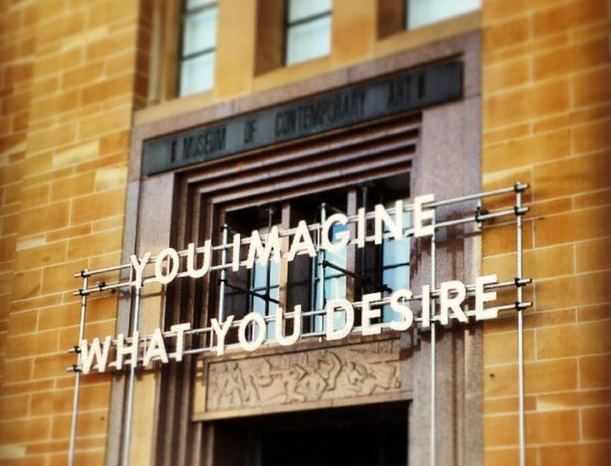
<strong>Assistant Director, Curatorial and Digital, <a href=Museum of Contemporary Art

 /><br />
<br />
We’re increasingly aware of a growing shift from the linear broadcast model of completed creative work to its audience, to one where there is dynamic interplay between producers and participant audiences.<br />
<br />
Our challenge is to respect the unique creativity of artists and their critical processes whilst acknowledging our audiences desire for a diversity of active experience and a role in generating their own knowledge about and through contemporary art.<br />
<br />
For the MCA this creates opportunities for how we work with contemporary art at the heart of all of life learning programs and pioneer the use of digital platforms to connect wider audiences with the work of artists in new ways.