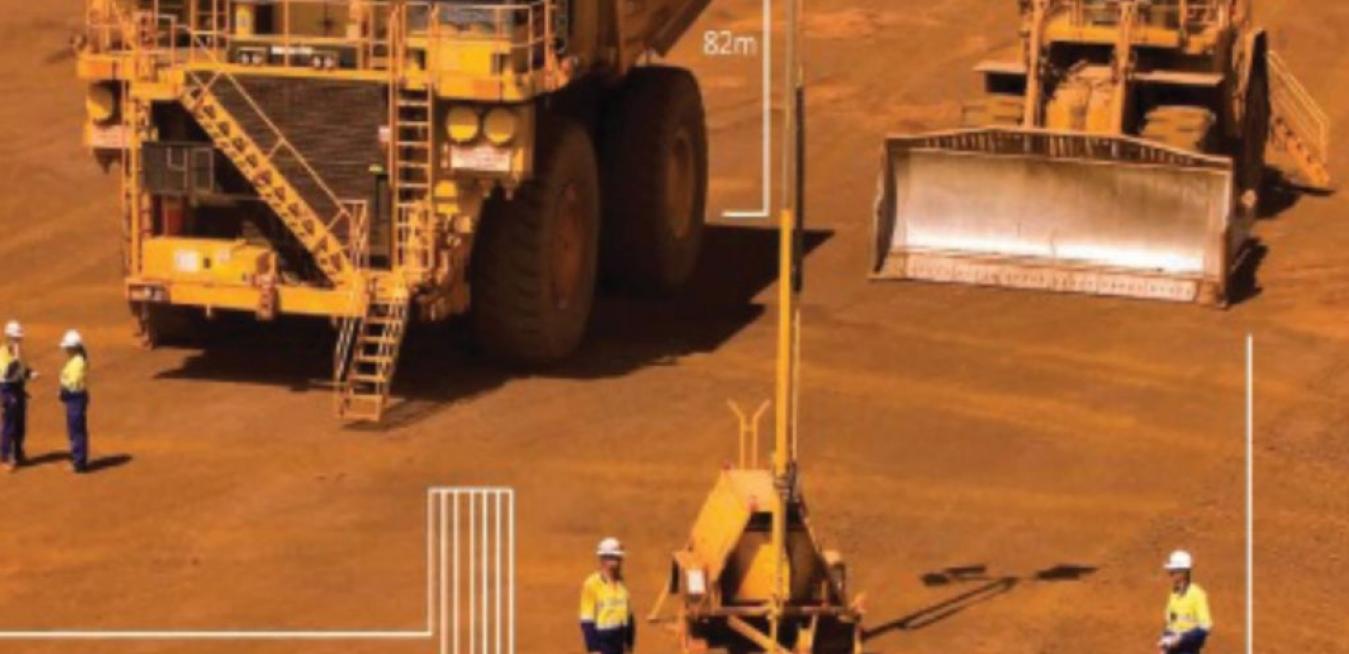
Seeing around corners: helping save lives under ground



Even though the vehicles move slowly underground, the operators cannot rely solely on their senses, to see what vehicles or people are in their blind spots.
Above ground operators use collision avoidance technology based on a combination of radio frequency proximity detection with context-based alarms, cameras to provide operators with vision of blind spots and GPS technology for long-range predictive proximity alarms and vehicle tracking.
Underground is a different matter.
The sun doesn’t shine, GPS signals don’t penetrate the earth’s crust, and the radio frequency signals used on the surface don’t work effectively in the narrow roadways as they require line of sight for operation. To complicate matters, people work in close proximity with vehicles in these enclosed, low-light spaces, making collision avoidance more crucial still.
However, detecting people and other vehicles underground is possible through a collision avoidance system that uses a combination of low-frequency electromagnetic transmitters and receivers that penetrate the strata, helping operators to literally “see around corners”.
Developed in Australia initially for use in underground coal mines, this system provides close-range detection.
Personnel and vehicles are enclosed in a “magnetic bubble” of low-frequency electromagnetic signals.These signals transmit through rock, coal and steel, and trigger an alert when vehicles pass too close to people or other vehicles.
Typically alerts are generated in multiple zones up to 15 to 20 metres distance. If the operator fails to react, the system can cut power to the engine and apply brakes, effectively preventing collisions and helping save lives.
This technology will also ultimately be added to existing above-ground collision avoidance systems.
Proper training and safe operating procedures are ‘must haves’ to reduce the risk of collision. The Collision Avoidance System is just one part of an overall safety management program.
“We can improve safety on mine sites, by enabling the equipment operators to literally see through their own equipment to help detect personnel at risk,” says Craig Hoffmann Product Manager, Collision Avoidance & Geospatial Systems at GE Mining Equipment. “That means safer, more productive mine sites, above ground, and below.”