Nature is the mother of invention: stealing nature’s best tricks for scientific innovation



First, take your frog...
Repurposing a frog’s sticky defence system
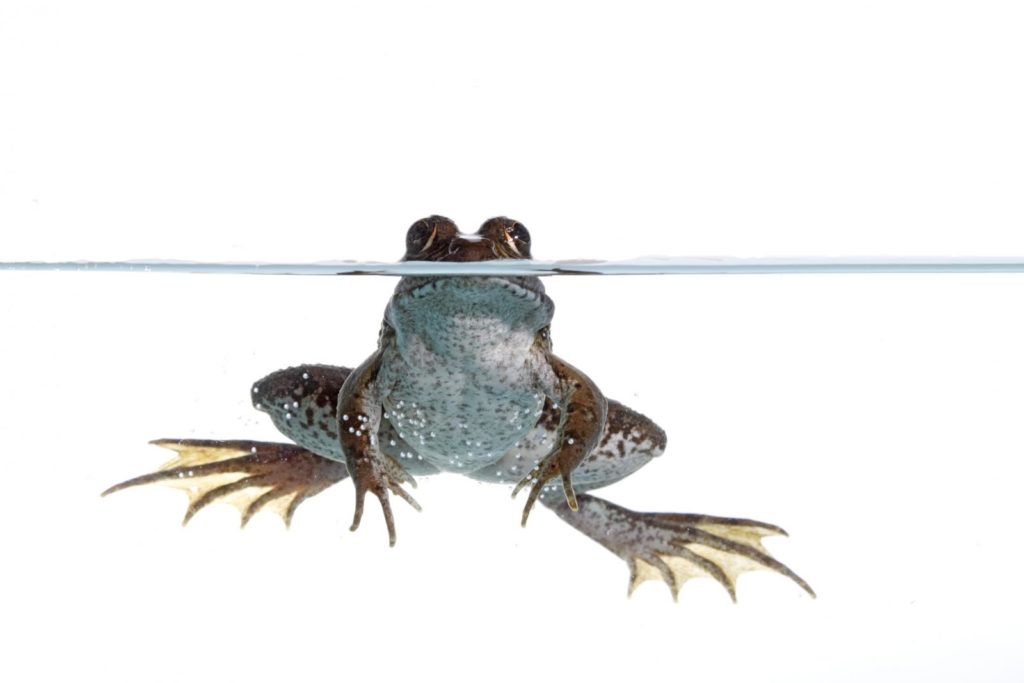
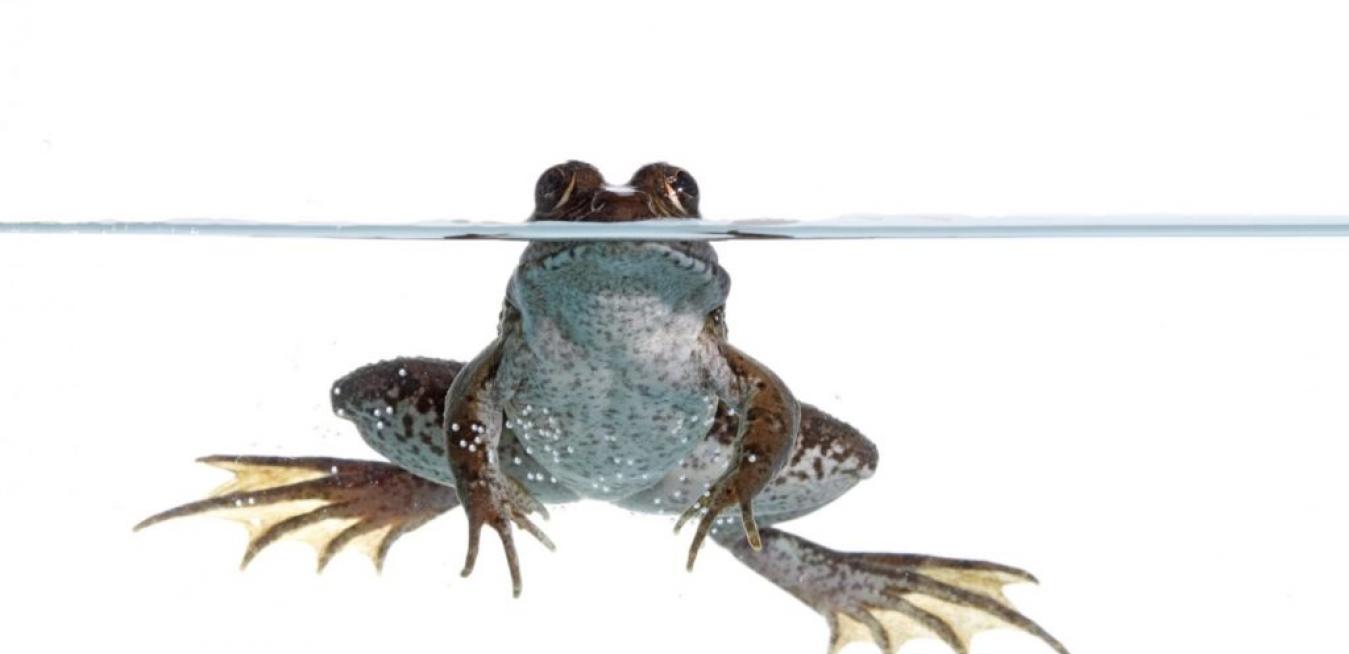
The Australian Holy Cross frog is certainly a prince, even though it has fairly ghastly table manners. Say it gets attacked by ants (and it does!), in response, it secretes a proteinaceous exudate, or sticky substance, from its skin; the ants get glued to the frog, unable to chew. Once or twice a week, the frog sheds his skin and eats it—ant sprinkles add to the protein hit. Medical scientists are working on synthesising the amphibian’s super-gluey secretions to help in the repair of human musculoskeletal injuries where the tendon has been torn from the bone. They’ve already tested live-frog glue on repairing sheep shoulders. Picture this bizarre scene: surgeon, dead sheep, panicky frog, all together in the lab. The surgeon uses a surgical anchor to attach tendon to bone, provokes the frog, and then quickly transfers a bit of frog glue to enhance the surface contact of muscle to bone. Tests comparing the strength of the binding with that offered by other glues showed that only a version of Super Glue was stronger but, being toxic, it is not a surgical contender. In other experiments, dissolved frog glue successfully adhered collagen-coated perfluoropolyether lenses to debrided bovine corneas, which supported epithelial regrowth. A synthesised version of our frog’s excretions is expected to find many applications for putting injured people together again.
That’s cheetah-ing!
Borrowing the moves of the fastest cat in town
Researchers at the Massachusetts Institute of Technology (MIT) have built a robotic cheetah. Easy. In fact it’s a breakthrough because they mimicked the bounding action of the big cat—its front legs move together and its back legs move together, at the same time—by creating an algorithm that controls the force of each leg as it hits the ground. This bounding gait allows the bot to, so far, run at 16 kilometres an hour, and to leap over objects 30 centimetres high. It may not be as fast as its Boston Dynamics-engineered cousin, which can run at 45.5 km/h. But the Boston bot runs on a noisy hydraulic-pump-based motor, whereas the MIT bot is cat-stealthy with a virtually silent battery-powered electric motor—essential for the military operations it’s potentially slated for. Researchers at MIT say their cheetah may soon be capable of a 48 km/h pace. Next step? The robotics engineers envisaged their stealthy metal moggy being able to weave and dodge around boundless objects without falling over. They investigated the action of a cheetah’s tail as part of the balancing mechanism that helps it to stabilise when veering and turning under speed, and they pinned one on their nuts-and-bolts cat. Pretty swish!
Totally zen about cleaning
The leaf of Nelumbo nucifera holds the key to no-scrub clean surfaces
The lotus leaf is ever-clean. Dip it in a muddy pond, and it will come out zing green. The plant’s biological gift for avoiding grubbiness is known as superhydrophobicity, and is due to microscale landscapes of papillae (or bumps) on the surface of the leaf, as well as nanoscale forests of waxy asperities on the papillae. In the spaces or “valleys” between these delicate protrusions, there’s air. Droplets of water are thus suspended above the leaves, and when they roll off, they take any particles of dirt or other contaminants with them. At Sydney University Associate Professor Chiara Neto, a physical chemist, has successfully mimicked the action of the lotus’s pristine surface cells using carpets of nickel nanowires. While this might not yet solve the problem of dirty dishes in a share-house sink, it could make cleaning windows redundant, and keep ships’ hulls clean of barnacles and other marine build-up without the need for polluting chemicals.
Have a gecko at this
Lizard feet step up to the task of keeping spacecraft ship-shape
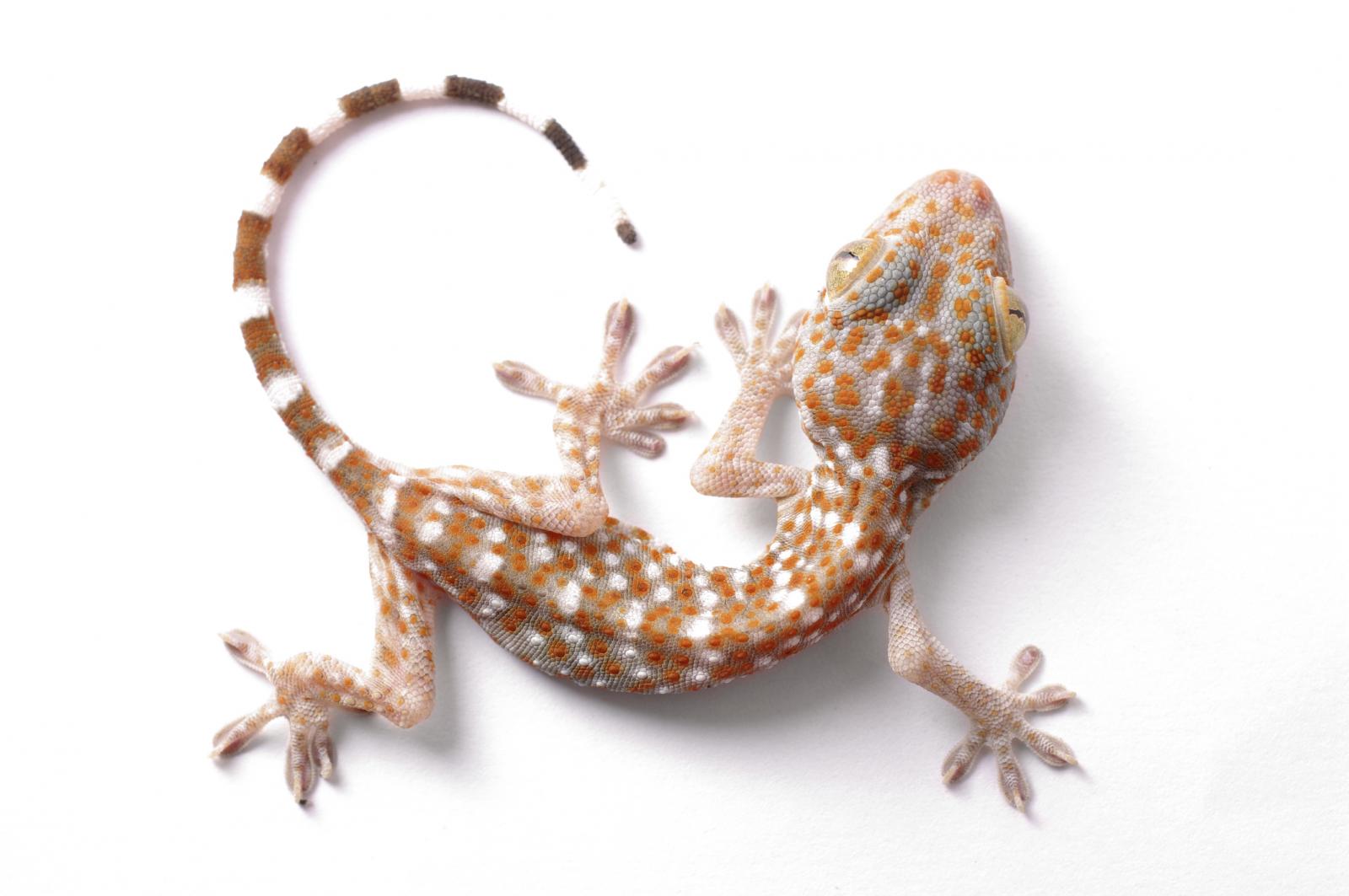
In an orbit far, far away, space tourists barely blink at the site of a crew of geckos doing odd jobs around the satellites and George Clooney can breathe a sigh of relief knowing he’ll never again have to dangle outside to repair a spacecraft. Yes, we’re a little ahead of ourselves, but scientists at the European Space Agency (ESA) this year tested a mechanical gecko, with sticky feet copied from the original lizard footwear. The idea: automated space handymen. The mechanical mini-reptile performed brilliantly in a space-like environment of vacuum and extreme high and low temperatures, so they’re optimistic that it will manage to maintain its grip on the external surfaces of spacecraft. Geckos, it turns out, have hairy toes, and those ultra-fine hairs, or setae, have a molecular attraction to other surfaces. Known as van der Waals force, this attraction was exploited by engineering science graduate Mike Henry and a team at Canada’s Simon Fraser University, to create a number of six-legged climbing robots, all called Abigaille. Their feet use microfibre treads to dry-adhesive effect. The Abigailles’ legs also have four degrees of movement, which enables the bots to easily transition from horizontal to vertical surfaces—just like the lizards in your favourite Indonesian warung. Of course, military labs are onto the gecko idea, too, hopeful of conferring Spider-Man-like capabilities on combatants in urban environments of the future.
Beak performance
How two avian hunting adaptations got a fast train on track
Bullet trains have long captured the imagination, but what happened when the 300 km/h capabilities of a new bullet train outstripped environmental noise standards, leaving the latest locomotive at the station? Eiji Nakatsu, an engineer with Japan Rail West, combined bird-watching and train plotting (compatible pursuits!) to give the train a kingfisher beak. He also applied some feather tech from the silently swooping owl family to its pantograph—the bit that sticks up on top of the train to receive electricity from wires overhead. Nakatsu’s thinking came from his observation that, in pursuit of lunch, kingfishers rapidly transition from a low-resistance air environment to the high-resistance water environment; the bird is at the thick end of a wedge, which allows water to flow past it rather than being pushed in front of it. In this way, the 500-series bullet train, with its super-streamlined 15-metre-long steel kingfisher bill, now allows the atmospheric pressure wave it encounters in any tunnel to flow over it, minimising the sonic boom as it exits the tunnel. JR West engineers also applied bird-informed thinking (not bird brain!) to the pantograph by adding structural elements to it that create many small vortices, rather than one large one. This treatment takes its cue from the serrations on an owl’s primary feathers, which facilitate the bird’s stealthy approach to prey. The 500-series train can’t sneak up on fish or mice, but it’s definitely onto something: it’s not only quieter, but its reduced wind resistance means it travels 10 per cent faster and uses 15 per cent less electricity than the original prototype.
Making a bee line for the horizon
Accurately assessing which way is up is important to bees—and planes
We may take it for granted that aeroplane guidance mechanisms know which way is up. But they’re directed by gyroscopes, which are not always reliable. Enter the honeybee, which orientates its complex flight paths by watching the horizon. Researchers at The Vision Centre at the Queensland Brain Institute, working with the School of Information Technology and Electrical Engineering at The University of Queensland have devised a plane-guidance system that mimics the bee’s. First, they programmed, or trained the system to differentiate between sky and land, by feeding it hundreds of images of horizon. Then they fixed low-resolution, wide-angle cameras to either side of the front of the plane—as if they were eyes—and connected them to the system. It could then compare the data it was receiving with its databank of images. “Our system, which takes 1000ths of a second to directly measure the position of the horizon is much faster at calculating position and more accurate [than a gyroscope],” says Vision Centre researcher Saul Thurrowgood. Testing the system involved an unmanned aircraft which was directed to perform a barrel roll, an Immelmann turn and a full loop, which it completed with flying colours. The technology has obvious application in drones, but also in manned aircraft.
The seeing-eye mantis shrimp
How a crustacean could help us see off cancer
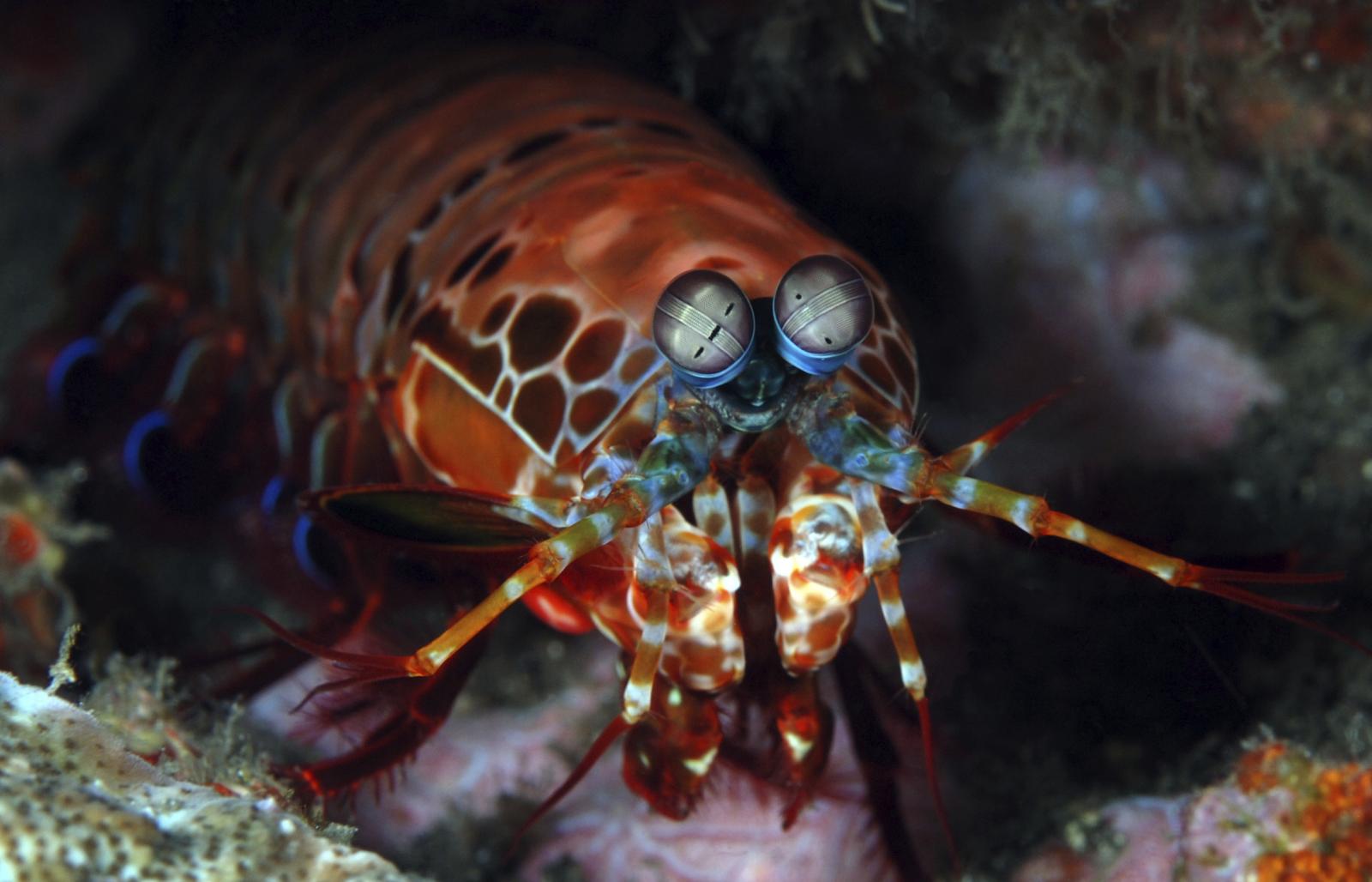
Mantis shrimp, with their goggly eyes on top of their brilliantly coloured heads, have an interesting way of looking at things: they have 20 different photoreceptors (compared with humans’ three colour receptors) and use polarised light to detect and discriminate between objects. Polarised light can be used to see things in our bodies that human eyes can’t, such as cancerous tissue, because cancerous tissue reflects light differently than does the healthy tissue around it. At University of Queensland, researchers from a multidisciplinary international team have applied their knowledge of the polarised light vision of mantis shrimps to cancer-detection mechanisms, namely to cameras that can convert polarised light into images that humans can interpret. Professor Justin Marshall of UQ’s Queensland Brain Institute says that his group aims to use this shrimp-inspired technology to improve non-invasive cancer-detection methods, such as endoscopes, and that their research could eventually lead to the redesign of smartphone cameras to allow people to self-monitor for the development of some cancers. Who were you calling "shrimp"?