The power of an image: Best practices for examining dense breasts



A new global study from GE Healthcare, The Value of Knowing, canvassed 10,000 adults across 10 countries. The Australian results show that 48 percent of respondents said they would be “very or fairly” confident of being able to name the main symptoms of breast cancer, but a surprisingly high 47 percent responded that they were “not” or “not at all” confident of being able to do so (with 5 percent saying they “don’t know”).
One knowledge gap appears to be around dense breasts: how to know whether or not you have this kind of breast tissue, and how to best approach both regular and diagnostic screening if you do. The research found that only 8 percent of respondents have seen, heard or read anything about dense breast tissue in the media in the past six months. Many women don’t even know whether or not they fall into this category, as diagnosis of dense breast tissue can only be made by a mammogram. The survey found that while 74 percent of respondents replied that a mammogram can diagnosis dense breast tissue, 58 percent erroneously thought they could also find out by asking a doctor, and 57 percent thought they could also find out by checking for lumps.
One thing is clear from the global study: there’s still a lot of confusion around breast cancer.
“We believe that more education is needed around dense breast tissue and other risk factors so that women can have more informed discussions with their physicians about their risk profile and the management of their health,” says Dr Tim O’Meara, Regional Research Manager, Australia & New Zealand, GE Healthcare.
“I tell all my patients if they have dense breasts,” says Dr Leonard Bank, medical director at Chatswood Diagnostic Centre in Sydney. “Women have an idea because their breasts feel dense, they feel more lumpy. But they may not know what it means.”
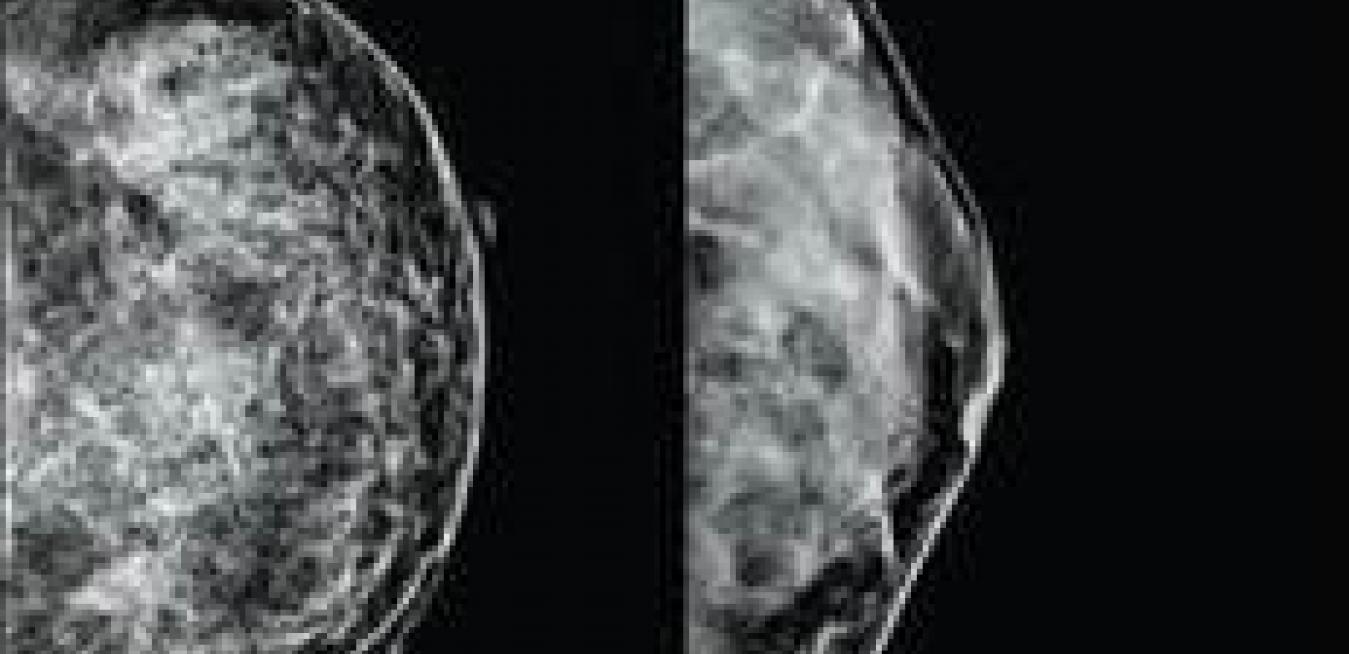
Those who are aware that they have dense breast tissue will likely know that it makes cancer harder to detect. Screening via a mammogram remains a key weapon in the breast cancer fight, but dense breast tissue makes tumours much harder to find in a simple mammogram. “It’s literally like looking for a snowball in snowstorm,” says Dr Jessie Jacob, chief medical officer for breast health at GE Healthcare in the United States.
Chatswood Diagnostic’s Dr Bank has a useful metaphor for how standard breast imaging literally doesn’t cut it for dense-breast tissue. “If you can imagine the breast like a bag of jelly, and the X-ray’s like a marble,” he says. “And to get through the ‘jelly’, you need a certain amount of energy, and the denser the ‘jelly’, the more energy you need to get through the breast. Most machines cannot increase the energy of the beam, so the only way they can get through [dense] breasts is to throw lots and lots of ‘marbles’ at them. But because the ‘marbles’ are low energy, they get stopped at the skin, at the beginning of the ‘jelly’, and only a few get through—and it’s a very high dose [of radiation].”
Dr Bank’s centre uses GE’s SenoClaire 3D, the first of its kind to be operational in Australia, and he explains how it assists in scanning dense breast tissue. “It puts a test exposure through the breast, and if the breast is dense, it changes the setting,” he says, adding:
“On the GE machine, the ‘marbles’ have more energy and they can get through the skin, through the ‘jelly’, and you get a better picture and you do not get the high dose.”
The SenoClaire 3D mammography assists in imaging through dense breast tissue because it allows for electronic separation of overlaying dense breast tissue, affording the radiologist a very clear picture of detailed breast structures, which would be hidden in traditional mammography. “You can see what the underlying structures are,” explains Dr Bank. “We have got a double advantage. We can change the energy of the beam, and we can also analyse the breast tissue a lot more thoroughly.”
The other aspect of dense breast tissue that Dr Bank is eager to highlight is its occurrence in young women. A woman’s breast tissue is more likely to be dense when she is young, and doctors do not recommend regular mammograms until the age of 40, when they should be performed annually. However, even for women “under the age of 40 or even 30, if a woman finds a nodule in their breast, they should not be discouraged from having a mammogram,” says Dr Bank. “In a 20- or 25-year-old, I would do an ultrasound first, because mostly in that age group it is going to be a cyst or something not bad. If the ultrasound doesn’t make the diagnosis, then they should have a mammogram.”
Dr Bank reminds women that monthly self-checks are essential, though he agrees many patients tell him they do not know what to look for. His advice is if women commit to regular self-checks, they’ll notice a difference when they feel it. “If you examine yourself at the same time every month, after your period, after a while, you will know what you’re feeling,” says Dr Bank. “You are looking for change, you are not looking for how many lumps or bumps you have. I say to my patients, it is like driving home: You do it so often you do not think about where you are going, but if there is something new and different on the road, you notice it very quickly.”
Women over the age of 40 (or of any age with lumps or nodules) should also ask their GP about the density of their breast tissue. “I tell my patients who are over the age of 40 that they need to have a mammogram and an ultrasound every year, not just a mammogram, especially if they have dense breasts,” says Dr Bank. “You need both.”