Clear air for clean energy



In this short video, Peter Cowling, general manager of renewables sales for GE Asia-Pacific, discusses why it is so vital for Australia to encourage investment in clean energy.
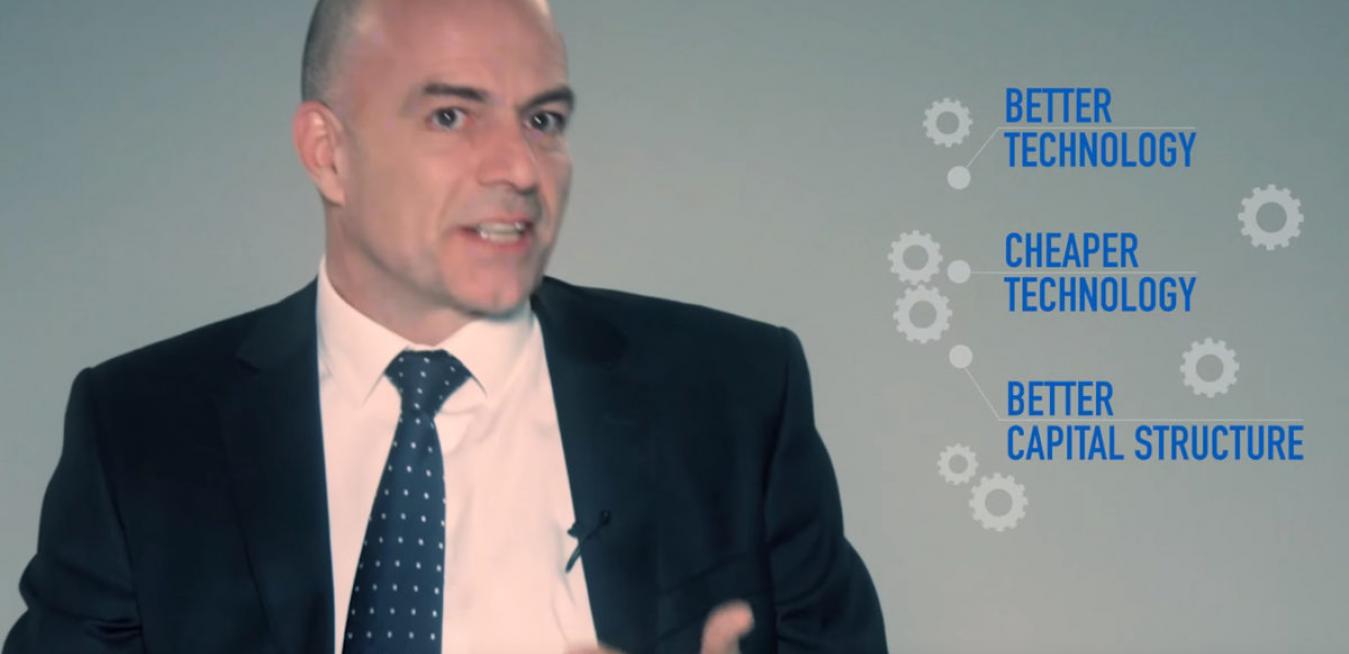
“There’s not much we do that won’t be affected by decarbonisation at some point,” explains Cowling in the video, which was filmed in collaboration with the Australian Financial Review for “Australia’s Energy Future”. Cowling, who earlier this year shared with GEreports his assessment of renewables policy and activity in other countries, says that having certainty in place around the RET will unlock essential investment in clean-energy technology. He says that GE’s push is to come up with “better technology, cheaper technology and better capital structures” for renewable energy. In short: “smarter ideas all round”.
For Australia, the urgency is to get serious renewables projects up and running.
“If Australia doesn’t transition, we could easily find ourselves facing issues in competitiveness, simply because we carry a heavy carbon load,” Cowling says. “And it needn’t be the case.”
Cowling predicts storage will be the next big thing for renewable technology. “It will be a few years before it makes sense to generate from your solar during the day and release it to your house at night, but not that many years,” he says. “Penetration levels from renewables, particularly intermittent renewables, in Australia aren’t really high enough for storage to be essential … we’ve got a long way to go before you need to worry too much about that. But if we’re going to get to a generally decarbonised energy sector, storage is going to be essential … I’m super-excited by it.”
The future of the energy grid is another area that gets Cowling pumped. “I liken the future of the grid to what we’ve seen happen with communications,” he explains. “We’ve gone away from copper wires, and person-to-person wire connections. We’re cutting stuff up now into digital packets and shooting it around the world. The grid is not dissimilar to that: we’re going to have a really interesting combination of different sources. With the advent of storage and really clever demand management, you put all that together and actually you’ll get a synthesised base load, which was never possible back in the day.”
Cowling remained optimistic through the many months that the RET target was first being reviewed and then remained locked in a stalemate as bipartisan support for a new target was negotiated. “It’s been a very difficult period without consensus around the RET,” he says. “We can see the need for renewables in Australia, and we can see the resource. The missing piece has been the direction, the vision, the framework to work within. With that restored, I think people will be impressed how fast things move across the renewables sector in Australia. Certainly it’s going to be an exciting time for GE.”
With the new RET now passed into law, the forecast is fining up for clean energy.