
Clever Country Code: 5 coding solutions paying it forward



Talk, talk, talk. Computers are becoming increasingly interactive, communicating with each other and with us. Here are five disparate projects, all local examples of how code contributes. Talk about brilliant.
Saving billions of litres of water, by data representation
There’s nothing lost in translation, or in leaks, with the School Water Efficiency Program (SWEP). From the data logger attached to a school’s water meter, to the school’s computer system, to the graphics interface presented to students and school managers, this deceptively simple water-use monitoring application has, since March 2012, saved Victorian schools more than $3.5 million. SWEP was developed by August digital marketing agency in Melbourne, in collaboration with two Victorian government departments, to help students learn and change their behaviour around water management—it presents data in a beautiful, informative, interactive way, and gives maths studies a real and meaningful context. Spikes in graphed data indicate water leaks or taps left running; and the effects of water-saving initiatives are instantly displayed. Students and schools can then correlate water saved into money banked—money freed for other purchases on the schools’ wish lists.
The Schools Water Efficiency Program (SWEP) is a voluntary program which is open to all schools within Victoria. The program enables schools to continuously track their water usage through a water data logger. Credit: Department of Environment and Primary Industries, Victorian State Government
At McClelland Secondary College in Frankston, assistant principal Steven Capp says, “We’ve saved more than 7 million litres of water a year since participating in the SWEP program and that equates to more than $15,000 a year.” With 500-plus schools in Victoria using SWEP, plans are underway to roll out the system to at least another thousand, and to extend its application to an electricity-saving program. In 2014, SWEP was a finalist in Sustainia100, a Scandinavian initiative that publishes a guide to the world’s top-100 solutions in innovation and sustainability. Data meets coding meets maths that makes dollars, and sense.
Bringing brain-cell imaging onto one platform
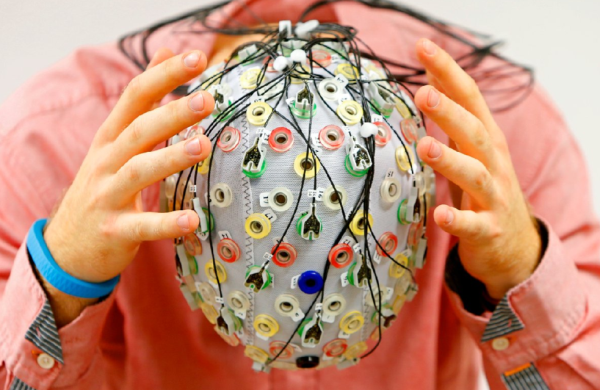 BigNeuron, a global project to help unravel the mysteries of the human brain.
Organised by the Seattle-based Allen Institute for Brain Science, this mind-blowing mega-computing project is aiming to identify the best algorithms for 3D reconstruction of single neurons from computer-generated images. So far, global brain-research centres have worked largely in isolation, doing individually brilliant work to understand the neuron—foundation component of the brain, spinal cord and nervous system. But such data can’t be compared as a whole because each research group typically bases its work on a different software platform. Aggregating what we know so far will provide opportunities for correlation, and comparison, and reveal insights that will lead to improved brain health for all.
“Each of the nearly 100 billion neurons in a human brain is shaped like a miniaturised tree, with thousands of ultra-thin branches that can span from ear to ear, enabling neurons to connect, process information and learn,” says Giorgio Ascoli, PhD, and author of Trees of the Brain Roots of the Mind (The MIT Press, 2015). “These arbors are so diverse that, after three decades of manual reconstructions from microscopic imaging in countless labs worldwide, no-one knows yet the number of distinct types or shapes even in the nervous systems of mice or flies. BigNeuron’s success will provide the community with much needed reliable, repeatable, high-throughput, quantitative data to begin piecing together the complex neural puzzle.”
BigNeuron fired the starter’s gun for the gathering and benchmarking of international neuron datasets in March 2015. Between 20,000 and 100,000 sets of research imagery are expected to be included.
What’s in an algorithm? Algorithms are at the heart of computer processes and communications: follow its instructions step by step and you’ll solve a problem.
Googling the body from surface to cellular level
We’re familiar with the ability to zoom on Google Maps from, say, a view of the Asia-Pacific region to a view of the street where we live. In March this year, at a meeting of the Orthopedic Research Society in Las Vegas, Professor Melissa Knothe Tate, the Paul Trainor Chair of Biochemical Engineering at the University of New South Wales, unveiled a collaboration between her department, Google Maps, Zeiss imaging technology and three US research facilities to do the same for the human body. That is, they have captured images from, say, the length of a hip joint, down to the level of a single cell within that joint; and the resulting terabyte-sized datasets are crunched by Google’s algorithms to allow zooming between these vastly different scales—centimetre scale to nanometer scale. Previously, such images of different scales had to be viewed virtually in isolation. “Google Maps algorithms are helping us take this tremendous amount of information and use it effectively,” explains Knothe Tate.
Prof Melissa Knothe Tate and her team at UNSW Biomedical Engineering are zooming in and out of the human body right down to single cells, just as you would with Google maps. Credit: University of New South Wales
The computing feat has allowed Knothe Tate’s team to view relationships between cells and surrounding tissue—how they are connected in conditions such as osteoarthritis. A leading cause of disability in older people, osteoarthritis affects some 1.8 million Australians, and using zoom-in body mapping Knothe Tate has been able to show that development of the disease is linked to a breakdown in cellular communication. She has also been to able observe, she says, how “different health and disease conditions affect the joint over time, saving us thousands of experiments”. She estimates that analysis that might previously have taken 25 years, may now be compressed into a matter of weeks. In turn, this will lead to accelerated development of preventative health measures and more effective treatments for debilitating diseases.
Coding for accuracy in driver-fatigue detection
 Compumedics, a Melbourne-based company with expertise in sleep, brain and ultrasonic blood-flow monitoring, and Professor Thomas Penzel, from Charité University Hospital in Berlin, Germany.
The combined reading of various indicators, made possible by complex algorithms which cross-reference the data signals received, is what sets the team’s work apart from current devices. Most existing fatigue alarms focus on how the car is moving—veering or slowing down, for example—or whether the driver’s eyes are closing, or their head is nodding. As Lal points out, “If you’re nodding off, it’s already too late.” She’s aiming to be able to alert drivers to fatigue before it gets to that stage, with indicators that include muscle activity and heart rate.
In 2011 the Australian Transport Council estimated that 20% to 30% of fatal crashes on Australian roads are due to driver fatigue, and Lal is hoping to see devices such as she is working on become compulsory in all vehicles. Their accuracy and trustworthiness will be essential to widespread use and to their acceptance by drivers.
Wireless scenario-setting for users of hearing aids
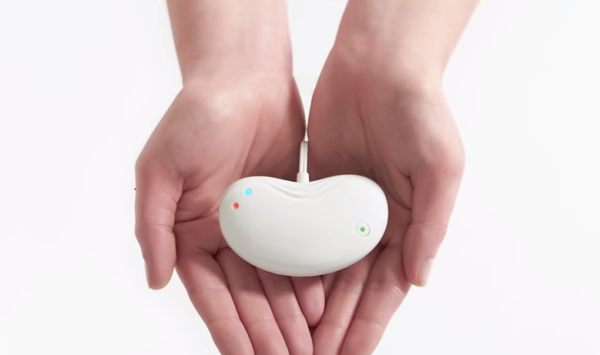 Blamey Saunders
Take your average sports-loving barista who uses a hearing aid. Her or his requirements for easy listening are different at work, where the hiss and rumble of the coffee machine are best muted to allow people’s orders and banter to filter through; than they are at home, where the calling of TV-broadcast games or discussion of scores and play over dinner may be the auditory focus. Previously, programming adjustments to hearing aids had to be made by an audiologist. A new discreet device launched in April 2015, provides a software intermediary that allows hearing-aid users to program their own unique hearing profiles, and switch between them via a simple app on their smart phones.
The Incus wireless bluetooth device is the brainchild of Professor Peter Blamey (of Cochlear fame), and Dr Elaine Saunders, who now head up Blamey Saunders hears. “I call it the audiologist in your pocket,” says Saunders of Incus, the little kidney-shaped device, which works in tandem with the company’s IHearYou software. “By using it there’s no need for a face-to-face meeting with a real audiologist in order to adjust your hearing aid.” And there’s no need to hard-wire the ear-bud-to-app connection—no awkward fiddling in social situations, just the push of a button on your phone, like any other app. That’s code for cool.
Let us know about other projects that are code for good … we’ll Tweet them on!