
Quenching a thirst for health in remote communities



In the outback cluster of houses that is Ali Curung, a red-earth central-Australian community more than 1000 kilometres remote from Darwin, council employees reckon the water that flows from their taps tastes better than water on tap in the northern capital. John Grey, field service engineer for GE Power & Water, says Ali Curung’s bore-sourced water, which comes from underground salty and sometimes high in naturally occurring minerals, is now more potable than what’s piped to his home in Perth. Taste expectations may have been blown out of the water, but importantly, anecdotal reports of health benefits of the community’s new treated supply—such as diminished skin irritations—are starting to trickle in.
As part of its determination to bring water quality in remote communities up to the standard that city people take for granted, Northern Territory Power and Water Corporation (PWC) recently pumped up the purity of water flowing to three far-flung indigenous communities—Ali Curung, Kintore and Yuelamu—by installing GE Electrodialysis Reversal (EDR) water-treatment plants.
The benefits of their fresh water supply is evident every time they drink from the tap, and will flow into better long-term health outcomes far into the future.
“This is the first time that advanced treatment technology is being used to reduce levels of naturally occurring nitrate and fluoride in remote communities in the Northern Territory,” said PWC’s Indigenous Essential Services Annual Report, 2013, when it announced installation and testing of the new facilities.
“We’ve deployed this technology around the world and in several remote sites in Australia,” says Irshaad Hakim, APAC regional executive for GE Water & Process Technologies, of the self-cleaning, durable, membrane system. “It’s a very niche application, but if you find the right niche, no other technology can beat it.”
The landscape of Barkly Shire, an area 42% larger than Victoria, has been working on creating its niche brand of water for the past 10,000 years, and you wouldn’t bottle it. Many communities’ main water supply comes from aquifers that are rarely or never replenished by rainfall; rather, the water has travelled through various geological strata to arrive at a place of pooling. On its journey, this water has collected different combinations and concentrations of minerals from the rocks it flows through. Ali Curung, Kintore and Yuelamu groundwaters are not only salty but can contain higher than acceptable levels of nitrates and fluoride than are recommended by the Australian Drinking Water Guidelines.
A dentist’s dream in the right amounts, fluoride in over supply causes brittle bones and teeth. Nitrates, which can break down into nitrite ions in poorly oxygenated water, are a potential carcinogen. In infants, nitrates can cause methaemoglobinaemia, or blue-baby syndrome; in the bloodstream, nitrates compete with oxygen for binding sites on haemoglobin molecules, resulting in shortness of breath and commonly making babies’ hands, feet and lips turn blue.
In 2011, the 500 or so residents of Ali Curung received an update on their water supply, published in PWC’s Water Quality Fact Sheet. It recommended that formula for babies under three months of age should be prepared with bottled water, and explained that high levels of calcium and sodium were causing the salty taste of local water, and were also the reason that soap wouldn’t properly lather up under the region’s taps. PWC had also begun calling for proposals for water-treatment solutions that could process the local water to a much higher standard.
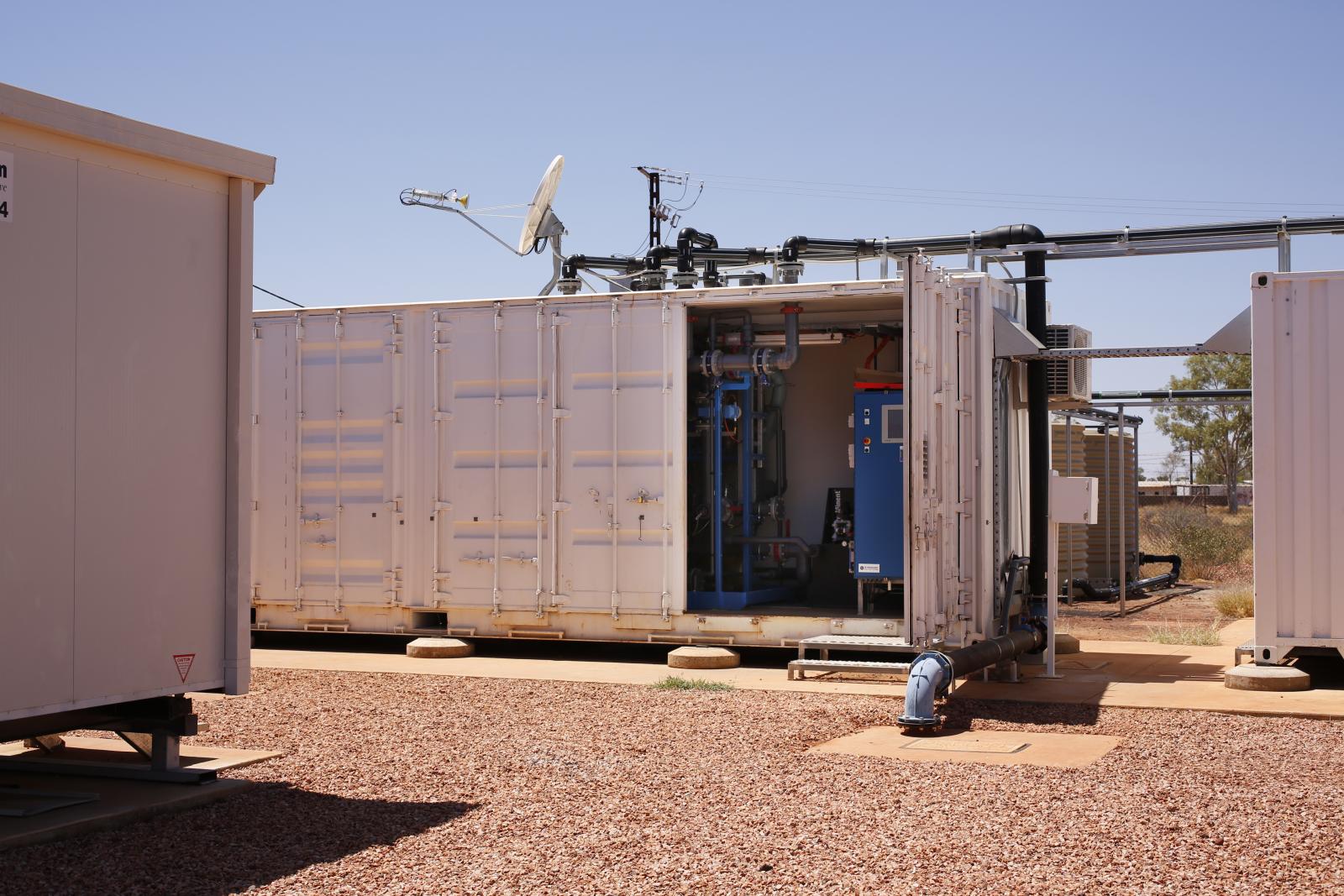
Hakim immediately saw how GE’s innovative “niche” product would fit the bill for some communities. “In remote places, building infrastructure is expensive. Our EDR system can be delivered fully assembled inside a shipping container that gets trucked in and then plugged in,” he says.
 InSight, a GE Water & Process Technologies software platform that provides easily understandable and comparable graphed representations of information. “It enables you to do preventive maintenance, predict when the machine needs a clean, or the chemical tank is low, and plan your visits to the site, which makes a big difference in remote situations,” says Richard Phillips, commercial manager, GE Power & Water.
For the three communities, the benefits of their fresh water supply is evident every time they drink from the tap, and will flow into better long-term health outcomes far into the future. “Clean water is almost everything in terms of healthy living,” says Len Griffiths, PWC Executive Manager, Regions.