
Watch this airspace



In Qantas Integrated Ops, they’re monitoring the twitter feed for aviation news and will hop into the conversation: “Just waiting for an incoming flight to clear. We’ll have you in the air in five minutes.” Soothed by social media, you open the newspaper. There’s nothing like knowing what’s going on.
The bigger news is that aviation, the high-speed way of bringing people to people, and goods to markets, is set to soar in coming decades. Analysts predict the Asia-Pacific region will be one of the biggest drivers of growth in overall global air travel. Airport Council International recently reported a 7.4% growth in passenger traffic in the region from 2012 to 2013 (only the Middle East ranked higher, with a 9.2% increase).
As immigration swells Australia’s population, the need for families and friends to be connected trans-globally will be one driver of growth in air passengers, says Kevin O’Connor, professorial fellow in urban planning at the University of Melbourne. “A lot of air traffic is family communications,” says O’Connor. “A subset of this is the mobility of people created by international education. The behavioural base of our society is such that international connections are growing.”
A Deloitte Access Economics report, Connecting Australia: The Economic and Social Contribution of Australia’s Airports, is a reminder that with cities separated by great distances and being far flung from international destinations,
“Australia relies on an efficient and reliable aviation sector and airport network for its citizens to remain physically ‘in touch’ with each other and the rest of the world.”
Sydney-Melbourne is the world’s fifth-busiest sector, according to the Amadeus travel data centre, with more than 7 million passengers a year flying the route, whether it’s to critique the other city’s restaurants, visit interstate offices, attend sporting or cultural events, or to shop in the wake of business meetings. The Sydney-Brisbane route ranks 12th in the world, with around 4 million passengers. Deloitte predicts an annual 3.5% increase in Australian domestic and international travel, until at least the year 2025, from a base of 118 million passengers flying annually from Australia’s top 11 airports.
Kevin O’Connor says such regional trends will continue, as markets and manufacturing in China and India expand, as deregulation brings more low-cost carriers into the Asia-Pacific airline sector, and as a growing Asia-Pacific middle class demands connectivity. “The emergence of the low-cost carrier is gradually extending into the long-haul international market. Restrictions and regulations have restrained it for a while but it’s coming.”
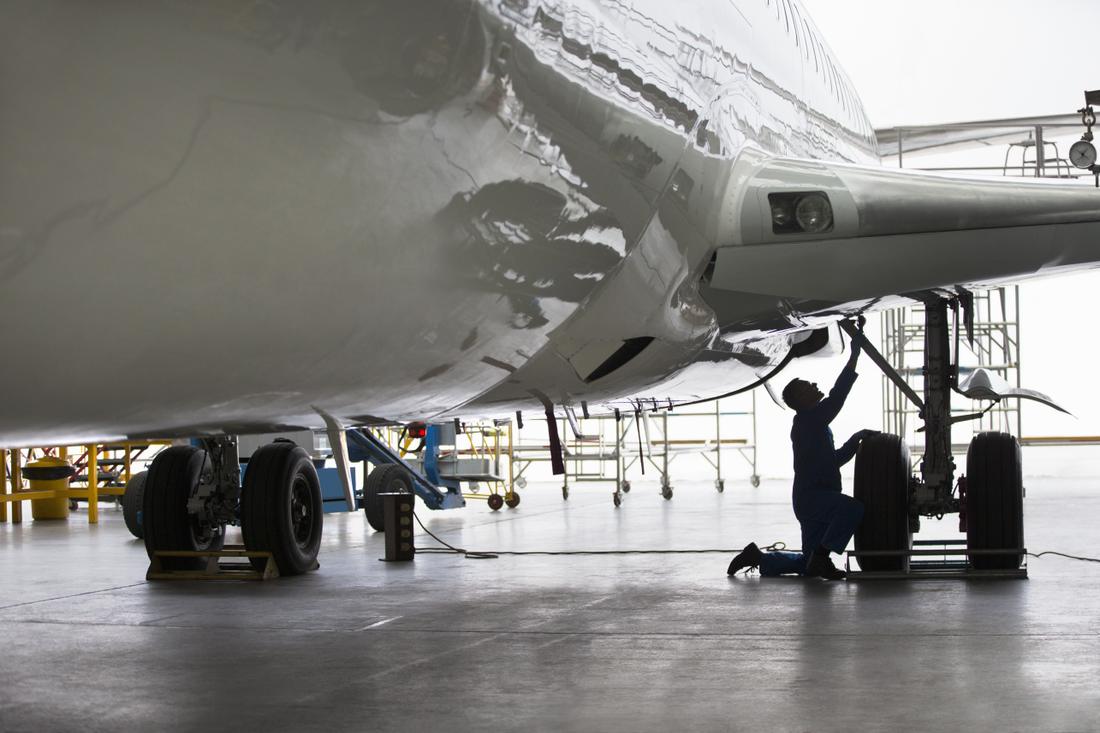
It seems obvious that cumbersome, carbon-heavy air travel should give way to the virtual connectivity offered by digital communications - effortless video conferencing, Skyping and FaceTime phone calls. But nothing beats being there in person, whether it's for a deal or a dinner, and you still can't send a parcel via Skype (at least, not at the time of writing...).
Yet aviation flies at the front of new technology and is ever-evolving. Rob Freestone, professor of planning in the faculty of the built environment at the University of New South Wales, likes the metaphors employed by US aviation cheerleader Dr John Kasarda. “Kasarda is all about how airports are the 21st-century version of 19th-century canals, 20th-century railways, mid-20th-century cars,” says Freestone. “In other words, they’re a technological medium, a breakthrough that’s enabling connectivity and productivity to increase at a globally interconnected scale.”
Airports, airlines and aviation industries are in an intense development phase as they strive to improve efficiencies and meet growing demand, and Qantas headquarters, just outside Sydney airport, is the perfect place to see it all in action.
From check-in to baggage collection, from the components of jet engines to flight-navigation systems, Qantas is harnessing technology to help it squeeze every last drop of value from its fuel bill and aircraft reliability, all the while upping the ante on customer service.
At the seven-month-old Qantas Integrated Operations Centre, data interpreters and systems controllers sit at a sea of desks, ignoring the lure of soft caterpillar-green sofa nooks. They are tuned to monitors showing flight departures and arrivals, security alerts, cabin- and flight-crew rosters, and myriad other performance factors. Overarching screens constantly flick back to the facility’s ultimate measure of success: the percentage of flights running on time (a metric that can, and does, change within seconds).
Qantas has topped the ontime performance ratings among Australia’s major domestic airlines for the past five years. Paul Fraser, head of Qantas Integrated Ops, which until recently sprawled over several floors and buildings, describes some of the crucial indicators that are now electronically meshed to maintain his company’s lead.
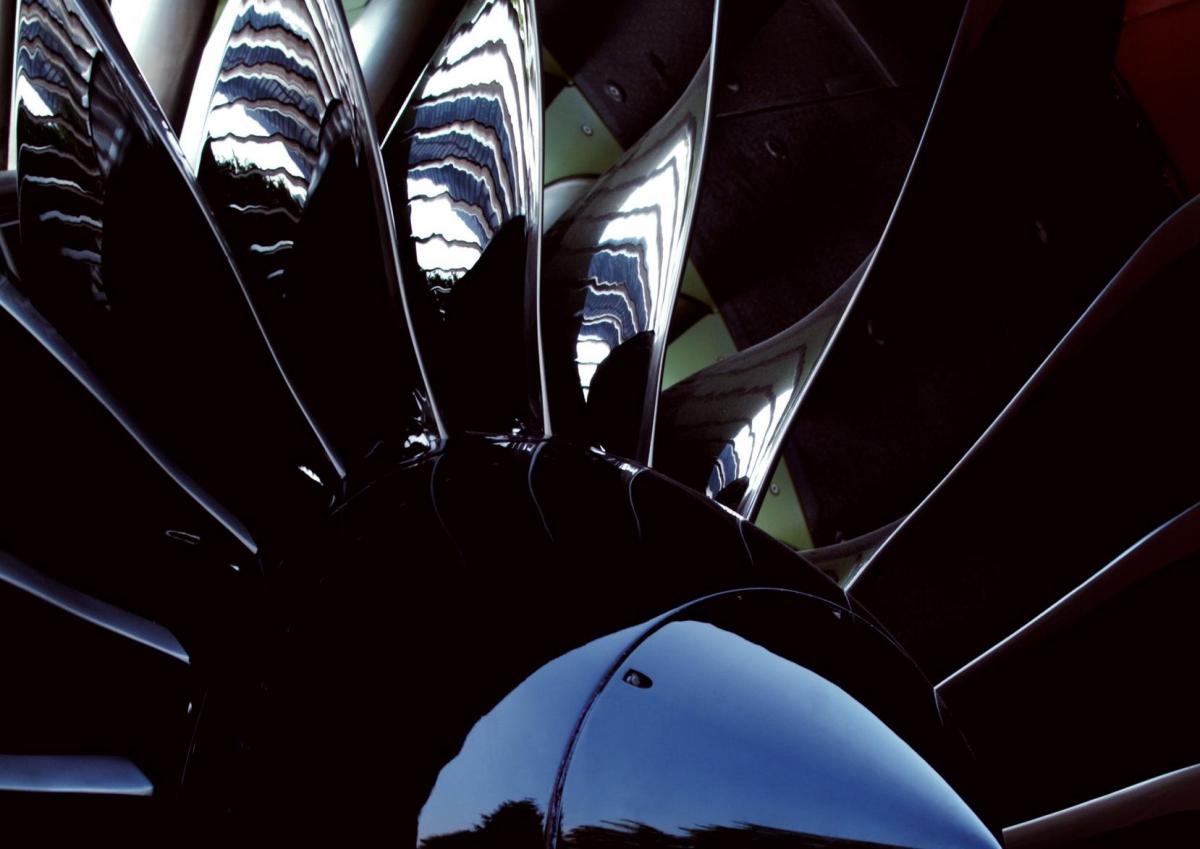
As they take an air-bridge across the tarmac at Sydney airport, homeward-bound Melburnians might not be able to tell the difference between the whine of a jet engine with metal components, and that of a jet engine that’s spinning ceramic plates. Not pottery, but new composite ceramic components which may soon take over the skies.
Pioneered by General Electric at its Global Research Center in New York state, ceramic matrix composites (CMCs) are more durable than metal in the face of the extreme heat generated within high-pressure turbines.
Alan Milne, Qantas head of engineering, explains that such durability reduces the time aircraft must spend in the repair hangar, without compromising safety. CMCs are also lighter than currently used nickel alloys, and a lighter plane requires less fuel to get off the ground.
And when it comes to whining, Qantas aircraft are world-class, says Milne. That is, they’re programmed to report back to base that this or that part will soon need replacing. These latest generation aircraft literally self-diagnose – wired for hypochondria, if you like – to enable scheduled repairs long before emergencies arise that might endanger passengers or derail the ontime schedule.
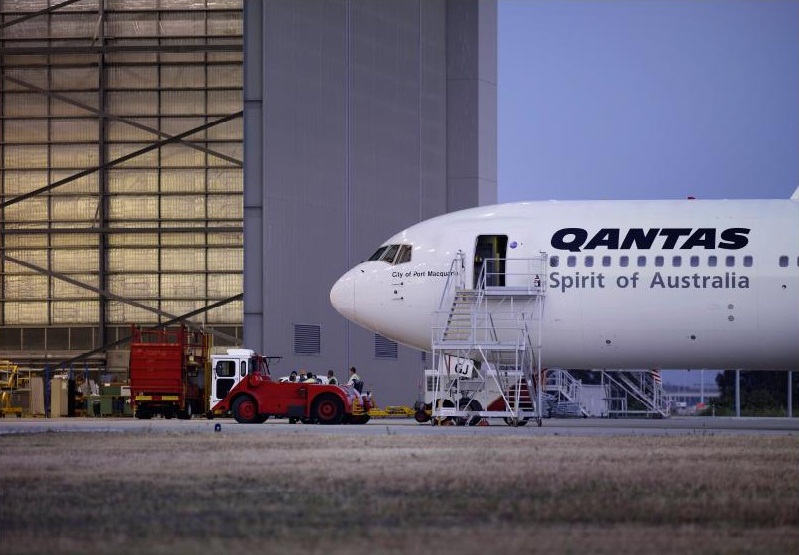
Rob Freestone refers to “the cloud that’s arisen over air travel, primarily in relation to global warming and the impact of emissions from gas-guzzling planes on the atmosphere”.
On the economic side, Deloitte’s study of airports says that, in 2011, “Australia’s airports generated a total economic contribution of around $17.5bn” and generated around 115,200 full-time-equivalent jobs. Aviation also supported export and tourism industries, shifting some $38bn worth of export cargo, and contributing to the $34.6bn (in 2012) tourist trade.
So what would make all this economy-boosting jetting about a win-win for the environment, too? There’s a global carbon-offset scheme in the works for the aviation industry, but given that it’s in aviation’s interests to become less dependent on petroleum, it's worth betting on technological innovation to come to the rescue. Boeing, for example, is working on a hybrid electric plane.
 theguardian.com