How to Parallel Park a Ship on Stormy Seas? There is a School for It.



A storm is brewing 200 miles off the coast of Brazil in the foamy swell and chop of the Atlantic Ocean. The sea in the Santos Basin is dark—and miles deep. It’s tough drilling for the rig workers who live out here. But today, they’re battening down the hatches and hoping their promised supplies arrive before the tempest.
They’re in luck. Both their supply vessel and drill ship are fitted with GE’s dynamic positioning (DP) technology. It allows their captains to plot an almost inch-perfect course through rough seas, until their hulls bob next to one another like two mallards.
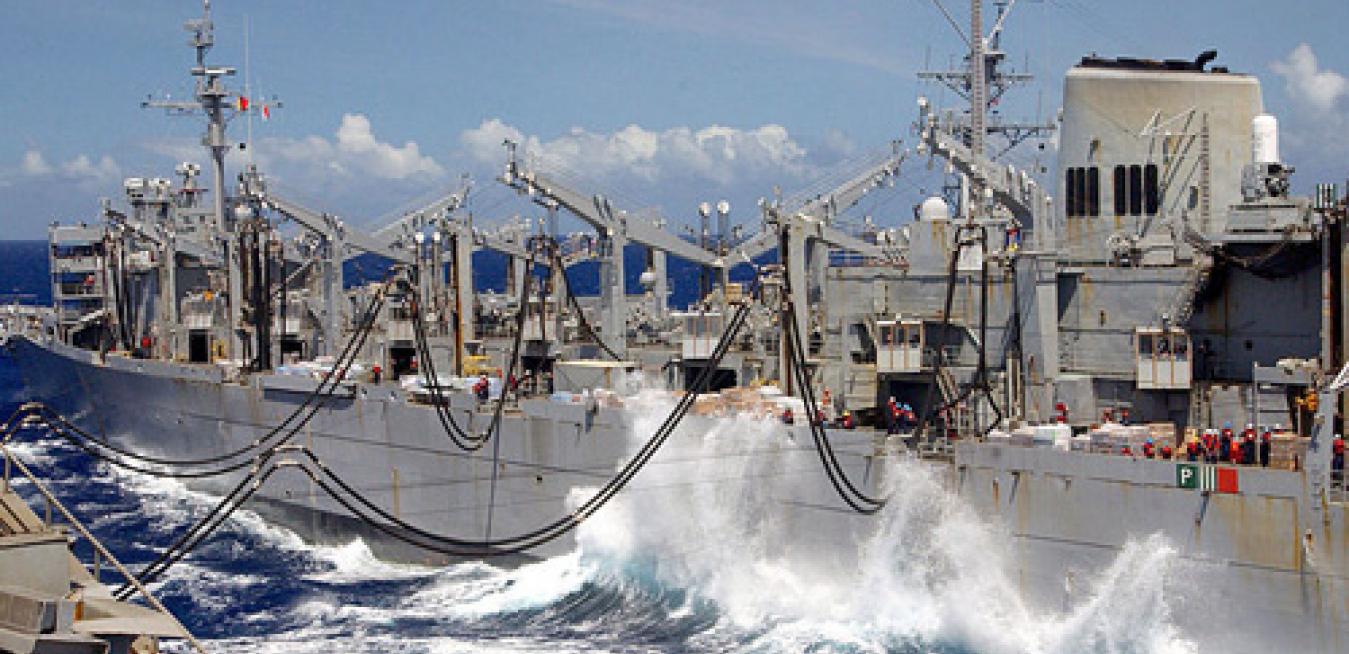
Dynamic positioning is like a parallel parking system for the high seas. Image credit: U.S. Navy
DP is like a highly sophisticated parking system. It allows sea vessels to stay stationary and transfer vital goods like diesel, drilling fluids, and food and water for the seaborne team. No need to drop anchor—which is impossible anyway in sea depths of up to two miles. DP relies on a suite of sensors, from the compass and GPS to laser range finders and orientation sensors, to track the roll and the pitch of the ship and feed the data to an on-board computer.
The computer creates a mathematical model of the ship and sends orders to the engine room. The engines run the propellers and turn the rudders just so that the ship follows the captain’s precise course. “There’s a constant chatter between DP’s sensors and the vessel’s propulsion systems, thrusters and rudders,” says Chris Bannigan, an engineer in GE Energy’s Power Conversion business. “It’s a highly intelligent system that is constantly reacting to conditions such as wind and waves and correcting the vessel’s position. Ships can immediately establish themselves without anchors or tugs.”
The demand for DP, and trained workers, is so high that GE just opened a new “DP driving school” in Egypt. The school is the first fully accredited DP training school and vessel-control simulator in the middle east.
Over the years, GE’s power conversion business has supplied more than 900 DP systems, outfitting tiny offshore support vessels measuring only 60 meters long, all the way up to cruise and navy ships. Most of its customers are in the offshore exploration business in the Gulf of Mexico, Brazil, North Sea, West Africa and Russia.
Not all the offshore exploration involves oil. At least one Florida-based treasure hunter uses GE’s DP when searching the oceans for shipwrecks and sunken treasure. “That’s one of the technology’s more colourful uses,” Bannigan says.